To spot a bad PPF or ceramic coating install in Calgary, inspect the car in direct sunlight before you pay and check for these 7 red flags: dry "silvery" air pockets (permanent, unlike clear water bubbles that evaporate in 1-2 weeks), trapped dirt or hair, lift lines, bunched edges, exposed edges with gaps of 1/4 inch or more, razor cuts scored into your clear coat, and ceramic high spots or hazing. A genuine ceramic coating must bead water tightly; if water sheets or pools flat right after pickup, you likely got a cheap spray sealant that only lasts about 3 weeks instead of the 5-year coating you paid for.
The excitement of picking up your freshly protected vehicle can quickly turn into disappointment if you spot a flaw. While no installation is microscopically perfect, there is a massive difference between "industry standard" and a "botched job."
Investing in Paint Protection Film (PPF) or a professional Ceramic Coating is a significant financial decision. You are paying for perfection, protection, and peace of mind. Unfortunately, the detailing industry is unregulated, meaning anyone can buy a roll of film or a bottle of coating and call themselves a "pro."
We have seen it all at Calgary PPF Pros—from razor cuts in the paint hidden under film to ceramic coatings that look like greasy smears. The worst part? Many vehicle owners don't realize they've received a substandard installation until it's too late to get a refund.
This comprehensive guide is your weapon. We will teach you exactly how to audit the work before you drive off the lot, ensuring you get the premium finish you paid for.
Part 1: How to Spot a Bad PPF Installation
Paint Protection Film is transparent, which is both its greatest strength and its biggest weakness for installers. It hides nothing. If there is dirt, a scratch, or an air pocket underneath, it will be visible forever. Here are the most common signs of a poor PPF job.
1. The "Silver" Bubble vs. Water Bubble
This is the #1 confusion for customers. When PPF is applied wet, small amounts of moisture can get trapped.
- Water Bubbles (Normal): These look like tiny, clear blisters. They are filled with installation fluid and will naturally evaporate through the film's pores over 1-2 weeks.
- Air Pockets (Defect): These look "silvery" or dry. If the film is not squeegeed correctly, air gets trapped. Air cannot breathe through the film like water can. These will never go away and often grow larger with heat.
2. Contamination: The "Dirty Shop" Sign
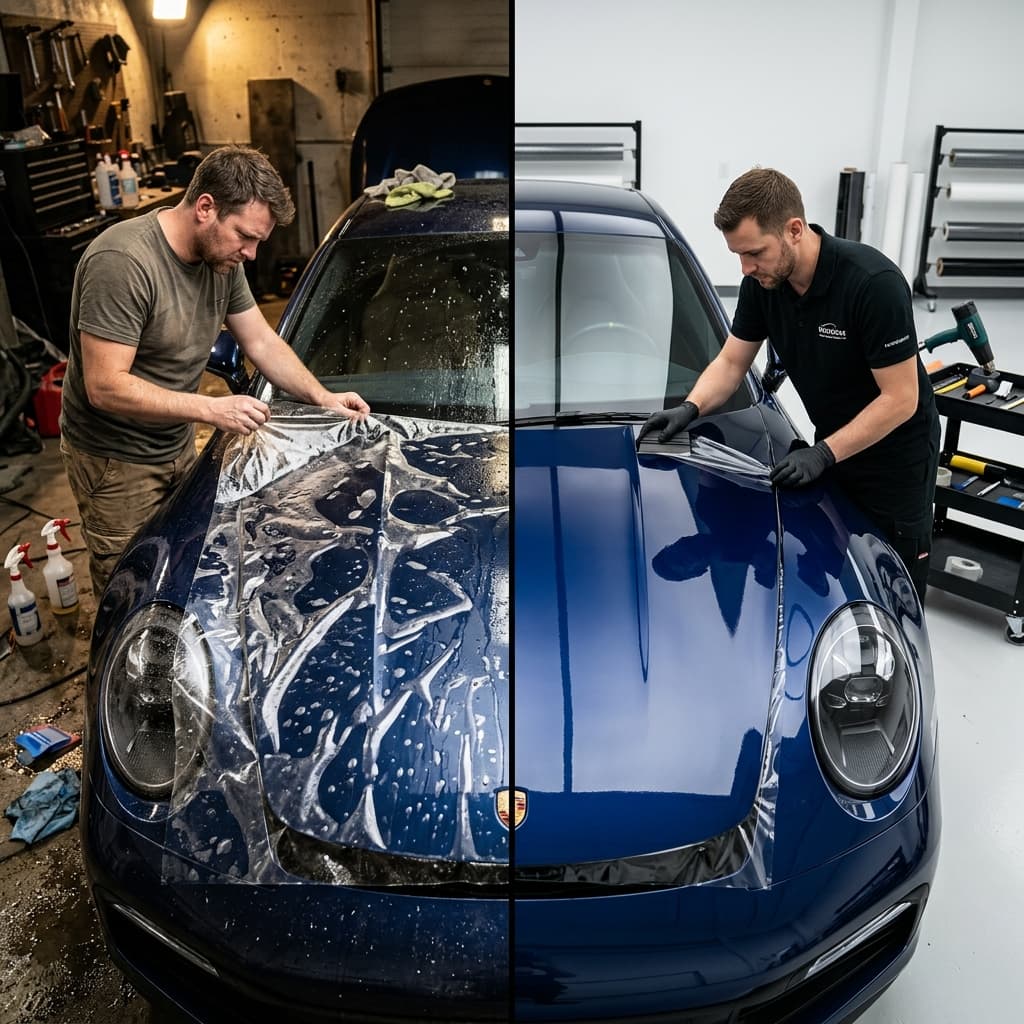
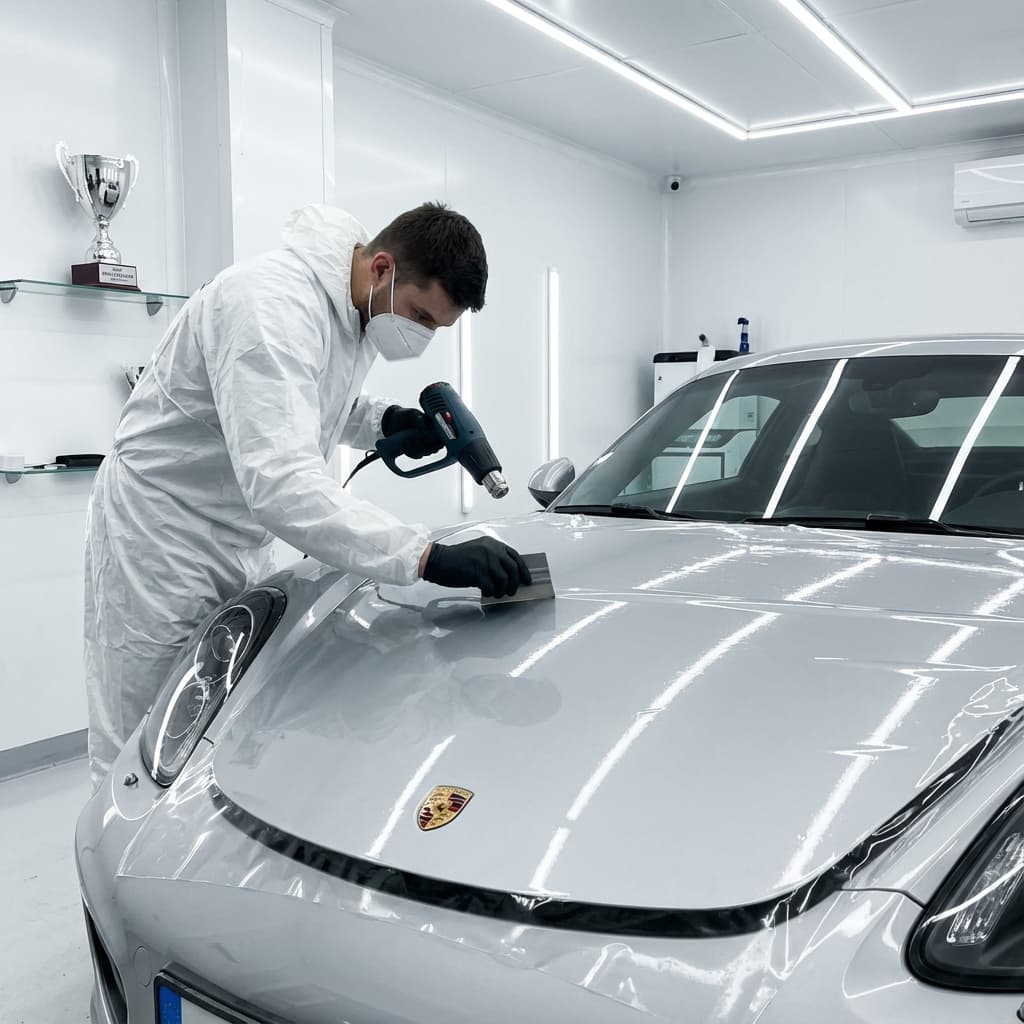
PPF installation requires a clinically clean environment. At Calgary PPF Pros, we use air filtration and sealed bays. Budget shops often install film in the same room where they are vacuuming carpets or polishing paint.
What to look for: Look closely at the hood and fenders. Do you see tiny black specks, white lint, or even hair trapped under the film? These are called "tents"—the contaminant lifts the film slightly, creating a tiny air pocket around it. Over time, these tents become weak points where the film can lift or tear.
3. Lift Lines and "Fingers"
A "lift line" occurs when the installer lifts the film to reposition it after the adhesive has already started to bite. This disrupts the clear adhesive layer, leaving a visible, distorted line or "vein" in the finish.
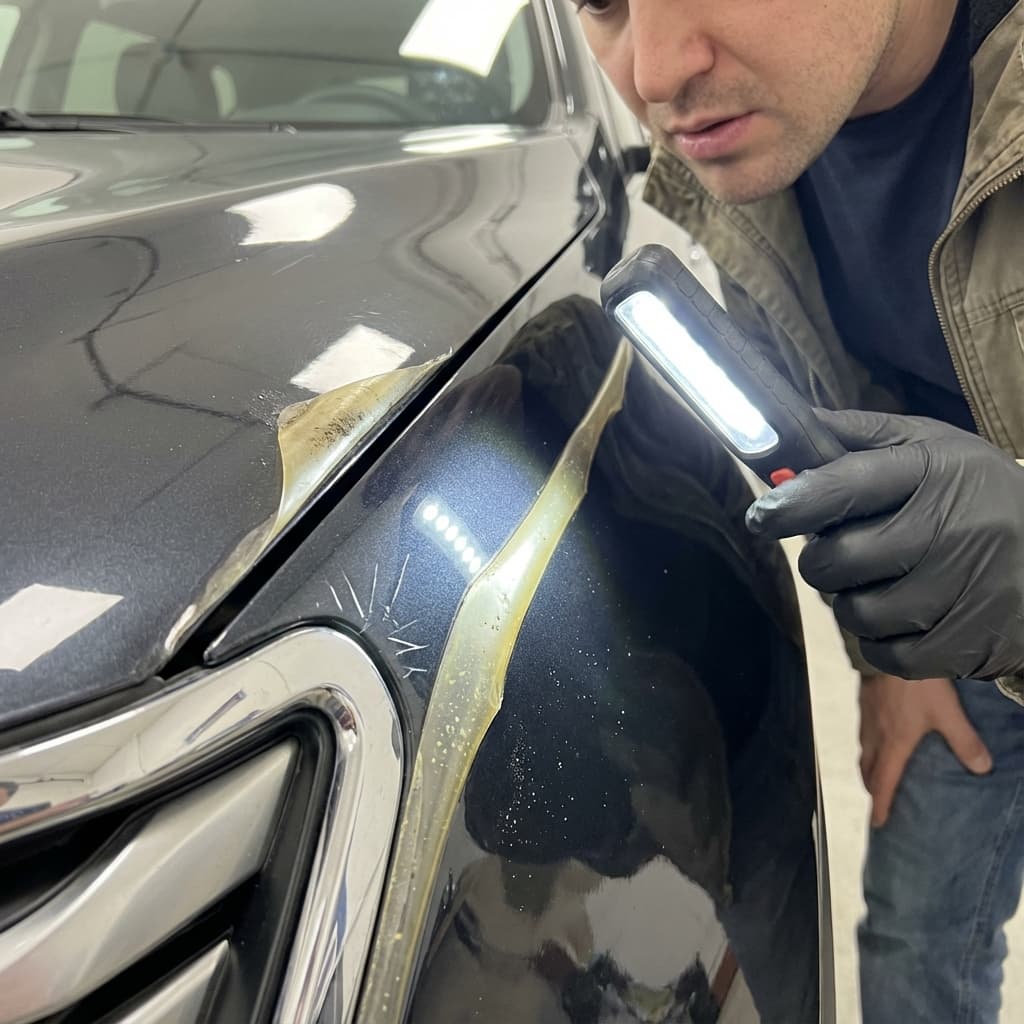
"Fingers" are areas at the edge of the panel where the film is bunching up and refusing to lay flat. If you see these at pickup, they will almost certainly peel up within a month once dirt gets underneath. See our PPF troubleshooting guide on lifting edges for the mechanism — a rushed edge finish that looks acceptable on day one is what fails at year two.
4. Exposed Edges vs. Wrapped Edges
This is the difference between a $500 hood job and a $1,500 hood job.
| Feature | Budget Install (Bad) | Premium Install (Good) |
|---|---|---|
| Corner Coverage | Exposed corners collecting dirt | Fully wrapped corners |
| Edge Gap | Large visible gap (1/4" or more) | Zero gap or wrapped completely |
| Relief Cuts | Visible "V" cuts on curves | Seamless forming / hidden cuts |
| Alignment | Crooked lines that don't follow body panels | Symmetrical, precise alignment |
5. Razor Cuts: The Nightmare Scenario
This is the most dangerous defect because you often can't see it until the film is removed years later. Inexperienced installers using bulk film (trimming by hand on the car) may cut too deep, slicing through the film and into your clear coat.
How to check safely: Run your fingernail very gently across the edge of the film. If your nail "catches" in a groove on the paint right where the film ends, the paint has likely been scored. This requires a repaint to fix.
A lot of the rescue jobs that come into our bay are cars that were filmed in a dusty garage during one of our gritty Chinook-and-gravel weeks, and the contamination tells on itself within a month. The defect I warn Calgary owners about most isn't the bubble they can see—it's the razor score hiding under a lifting edge, because our freeze-thaw cycles pry at that weak spot until the film peels and exposes the scored clear coat. When I take an edge down to re-do a hood, that thin groove in the paint is almost always why the corner started lifting in the first place.
— Amro, Calgary PPF Pros
Part 2: Signs of Bad Ceramic Coating
Ceramic coating defects are different—they are visual imperfections in the shine or texture of the paint.
High Spots (Shadows)
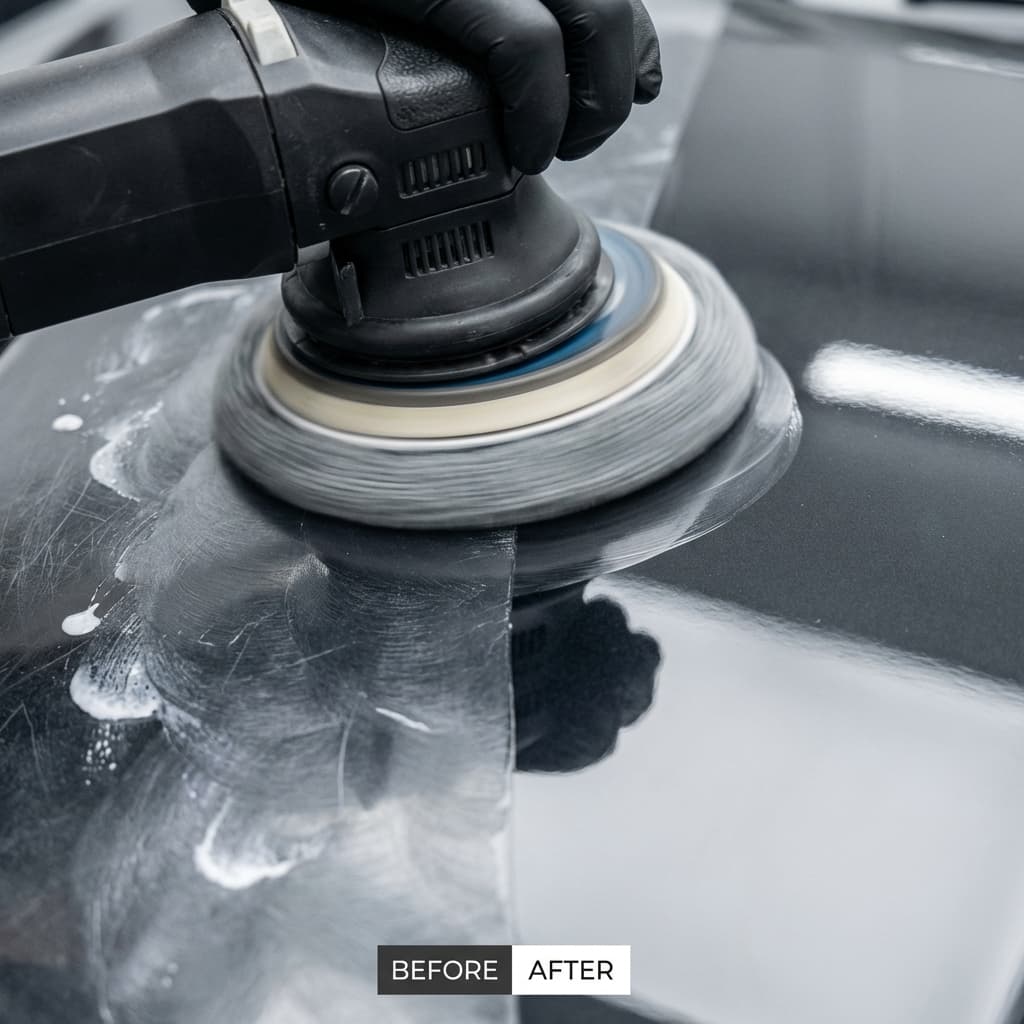
Ceramic coating must be "leveled" (buffed off) after application. If the installer misses a spot, the coating hardens into a thick, uneven ridge.
The Look: Darker, oily-looking patches or rainbow smears that don't wipe off.
Hazing / Cloudiness
This happens when coating is applied in high humidity or removed too late. It makes your metallic paint look dull or "foggy."
The Look: A lack of clarity or sharpness in the reflection.
The "Fake" Coating Scam
Some shady shops apply a cheap spray sealant (which lasts 3 weeks) and charge you for a 5-year ceramic coating.
The Water Test: A real ceramic coating is hydrophobic. Water should bead up tightly and fly off the panel. If water "sheets" slowly or pools flat on the surface immediately after pickup, you likely did not get a real ceramic coating.
The Ultimate Pickup Checklist
Don't sign the paperwork or hand over the final payment until you have done this 5-minute walk-around.
The "Sunlight" Reveal
Never inspect a car in a dark shop. Ask them to pull it outside into direct sunlight. The sun reveals swirls, high spots, and holograms that indoor lights hide.
The Flashlight Scan
Use your phone's LED light to scan the edges of the PPF. Look for lifting corners or white adhesive lines.
The "Pop the Hood" Check
Open the hood. Are the edges of the film wrapped underneath? Or do you see a jagged cut line right on top of the fender? Wrapped edges are a sign of quality.
The Door Cup Inspection
Check inside the door handle cups. This is a tricky area. Is the film centered? Are there fingerprints trapped underneath?
What If You Find a Defect?
If you find issues during your inspection, point them out immediately. A reputable shop will own the mistake and offer to fix it.
Shop Responses: Green Flags vs. Red Flags
The Pros
- Acknowledges the defect immediately
- Offers to re-do the panel (not just trim it)
- Explains the cure time for water bubbles honestly
- Has a written warranty policy
The Cons
- Claims 'that's just how PPF looks'
- Tries to heat-gun a dry air pocket (won't work)
- Refuses to pull the car into sunlight
- Says 'it will shrink later' for major gaps
Don't Risk Your Investment
Fixing a bad install costs twice as much—you have to pay for removal and re-installation. Trust Calgary's experts to get it right the first time.
Frequently Asked Questions
How long does it take for PPF bubbles to settle?
Can a bad PPF installation be fixed without replacing it?
What do high spots look like on Ceramic Coating?
Is it normal to see seams in PPF?
Experience The Best.
Don't let another commute compromise your vehicle. Get a quote from Calgary's Consumer Choice Award winner today.
Explore Our Services