Heat gone. Glare gone.
Window tinting in Calgary — 3M carbon and ceramic film, fronts from $249.
3M ceramic tint rejects up to 98% of infrared heat. Any shade goes on the rear windows; up front we offer an optically clear IR film (no visible darkening) and explain what Alberta's Vehicle Equipment Regulation means for your vehicle before you book. Front windows from $249, full car from $449.
- Up to 98% IR heat rejection
- Sedans done in 2–3 hours, same day
- Alberta tint rules explained before you book
- 3M lifetime film warranty + our lifetime workmanship guarantee

- 98%IR heat rejected, top 3M ceramic
- 99%UV blocked (3M rating)
- $249Fronts from
What does window tinting cost in Calgary, and what's legal?
Window tinting in Calgary runs from $249 for front windows to $649 for a full ceramic perimeter, priced by coverage zone with 3M film. Alberta law allows any shade behind the driver but no aftermarket darkening on the fronts or windshield. Up front we offer an optically clear IR film (no visible darkening): Alberta's Vehicle Equipment Regulation restricts coverings on front glass, and we explain what that means for your vehicle before you book.
- Fronts
- No aftermarket darkening; optically clear IR film offered: $249 carbon / $299 ceramic
- Rears
- Any darkness: $399 carbon / $499 ceramic
- Full perimeter
- $449 carbon / $649 ceramic
- Performance
- Up to 98% IR heat rejection and 99% UV block (3M film ratings), no signal interference
- Install time
- Sedan 2–3 hours, SUV or truck 3–4 hours
- Studio
- #2 - 239 61 Ave SE, Calgary · Sat-Thu 9am-5pm, closed Friday
- 5.0 starsacross 100+ Google reviews
- Consumer Choice Award4-time winner
- Film we install: 3M
- 3M Lifetime Tint Warranty
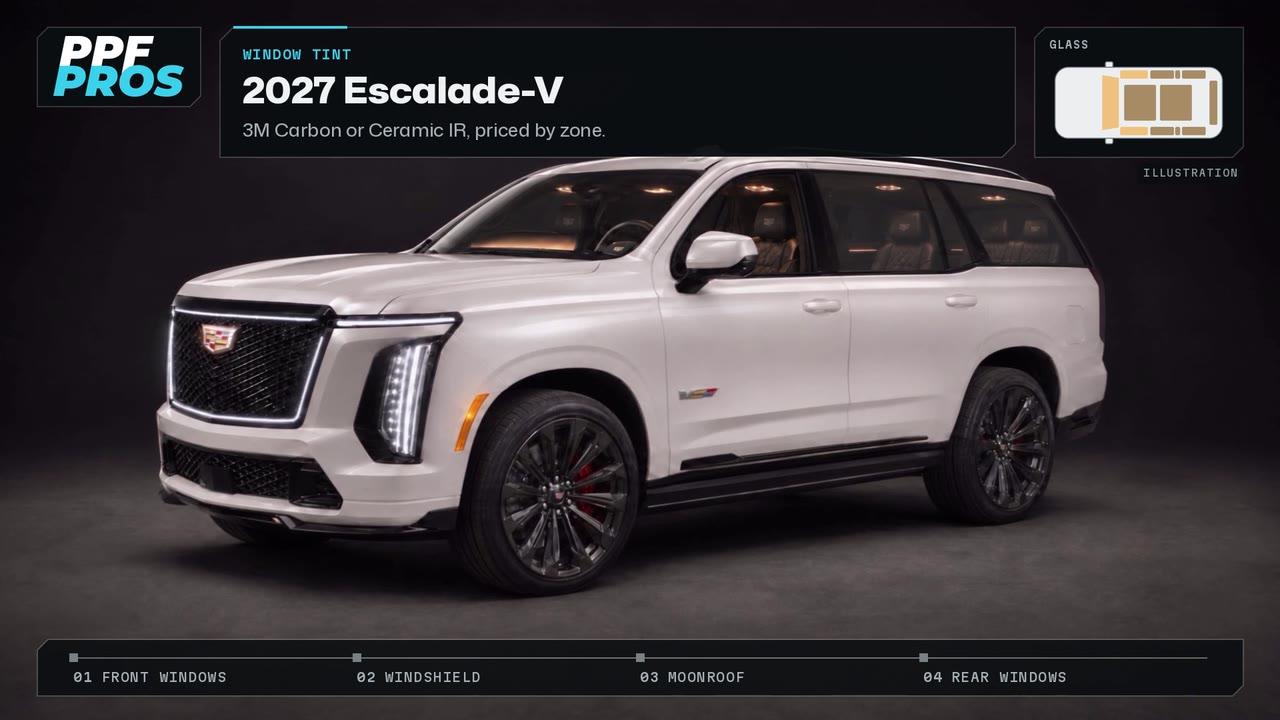
Window tint prices in Calgary, by coverage zone
Front Windows
We RecommendDriver & front passenger
Alberta permits no aftermarket darkening on the fronts. What we offer here is an optically clear IR film (no visible darkening) — heat and UV rejection with zero visible shade. Read the note on the rules under the price table before you book.
- Carbon
- $249
- Ceramic IR
- $299
Rear Windows
Rear doors & back glass
Privacy and heat control behind the driver, at any darkness you like. 15–20% VLT is the usual pick.
- Carbon
- $399
- Ceramic IR
- $499
Full Perimeter
Every side window + back glass
Whole-cabin heat rejection: any shade on the rears, clear IR film on the fronts. Every side window and the back glass in one visit.
- Carbon
- $449
- Ceramic IR
- $649
Windshield
Full windshield, clear film
The biggest pane of glass in the car, and where the most heat comes in. Optically clear IR film (no visible darkening); the same note on the rules applies as on the front windows.
- Carbon
- $195
- Ceramic IR
- $295
Sunroof / Moonroof
Single-panel or large glass roof
One price each, with no carbon / ceramic split: the sunroof price is for a single-panel sunroof, the moonroof price for a large or two-panel glass roof.
- Sunroof
- $149
- Moonroof
- $249
Carbon or ceramic?
3M rates both films to block 99% of UV, and neither touches your GPS or cell signal. Carbon rejects a solid share of heat with a clean matte look: good value if the car lives in a garage. Ceramic IR (our ceramic line is led by 3M Ceramic IR) rejects up to 98% of infrared heat with the clearest optics. That is the difference you feel on a July commute down Deerfoot. If your car sits in an open lot all summer, buy ceramic once and forget it.
| Feature | Ceramic IR (3M) | Carbon | Dyed (budget) |
|---|---|---|---|
| Infrared heat rejection | Up to 98% | Moderate | Low |
| UV blocking | 99% | 99% | Varies |
| Signal interference | None (no metal) | None | None (metallic films can interfere) |
| Optical clarity | Clearest, day and night | Good, matte look | Can look hazy |
| Colour stability | 3M's lifetime film warranty | Will not fade | Fades and turns purple |
| Coverage zone | Carbon film | Ceramic IR film | Alberta rule |
|---|---|---|---|
| Front windows | from $249 | from $299 | No aftermarket darkening — optically clear IR film offered* |
| Rear windows | from $399 | from $499 | Any darkness |
| Full perimeter | from $449 | from $649 | Any shade on the rears + clear IR film on the fronts* |
| Windshield | from $195 | from $295 | No aftermarket darkening (no AS-1-line exception) — optically clear IR film offered* |
| Sunroof (single panel) | $149, one price (no carbon / ceramic split) | We explain it before you book | |
| Moonroof (large or two-panel glass roof) | $249, one price (no carbon / ceramic split) | We explain it before you book | |
Starting prices for standard vehicles, in Canadian dollars, before 5% GST. Oversized or complex glass is quoted at booking. Tint is priced by coverage zone, not body type: minivans and 3-row SUVs pay the same zone prices.
Old tint coming off first? Removing the old film is $50, added to your booking, so the new film goes on in the same visit.
Smoked headlights or taillights? We fit STEK smoked film from $150 a pair. The time is confirmed when you book.
*Optically clear IR film (no visible darkening). The regulation's wording covers clear film too, and enforcement is at the officer's discretion. We explain it before you book, and you decide.
Tint film manages heat and glare; it does not stop rock chips. For that, see windshield protection film in Calgary.
Ready to book your tint?
Send us your vehicle for a written price within one business day, or take a slot straight off the live calendar. Most bookings are 1–2 weeks out.
Front windows, 3M carbon filmFrom$249
What Calgary drivers say about their tint
Google reviews from tint customers, word for word.
- Google reviews
- 100+
- Average Google rating
- 5.0
- UV blocked (3M film rating)
- 99%
- Vehicles protected
- 2,000+
- Consumer Choice Award winner
- 4-Time
- Protecting Calgary vehicles
- Since 2021
“I had my Range Rover fully tinted with premium ceramic window tint, including the windshield and sunroof, and the experience was great from start to finish. Ahmed did an awesome job — super clean work, no bubbles, and the attention to detail really shows. The cabin stays much cooler now, and the added privacy is a huge bonus. Definitely recommend them if you're looking for quality window tinting.”
“Fantastic customer service, and got the job done on time. Really appreciated their recommendations for the right level of tint that I was looking for on my car. After the paint protection and window tinting my car looks great.”
“Had my 2024 BMW X5 protected here, and I couldn't be more impressed! Took it straight from the dealership, and now it looks even glossier than when I picked it up. The team was thorough, professional, and explained everything in detail, making sure I knew how to maintain the PPF and ceramic coating. Also got windshield protection film, headlight PPF, and front window tint, and the results are flawless. Incredible workmanship and top-tier service.”
Alberta tint rules, window by window
- No tint allowedNo darkeningOptically clear IR film offered
Windshield
No tinted film and no visor strip — Alberta's regulation has no AS-1-line exception.
Ticketable offence, fails inspection
Our answer: Optically clear IR film (no visible darkening). Alberta’s Vehicle Equipment Regulation restricts coverings on front glass; we explain what that means for your vehicle before you book.
- No tint allowedNo darkeningOptically clear IR film offered
Front side windows
No aftermarket tint of any darkness.
Ticketable offence, fails inspection
Our answer: Optically clear IR film (no visible darkening). Alberta’s Vehicle Equipment Regulation restricts coverings on front glass; we explain what that means for your vehicle before you book.
- Tint legalAny darkness15–20% VLT is the usual pick
Rear side windows
Any darkness is legal behind the driver.
Our answer: Most Calgary drivers pick 15–20% VLT for privacy and heat control.
- Tint legalAny darknessMatched to the rear sides
Back window
Any darkness is legal, provided the vehicle has two working side mirrors.
Our answer: Match the rear sides so the glass looks factory, not aftermarket.
| Glass zone | Aftermarket tint legal? | Rule | Penalty |
|---|---|---|---|
| Windshield | No | No tinted film or visor strip (no AS-1-line exception) | Ticket; fails inspection |
| Front side windows | No | No aftermarket tint at any darkness | Ticket; fails inspection |
| Rear side windows | Yes — any darkness | No VLT restriction behind the driver | — |
| Back window | Yes — any darkness | Both side mirrors must be present and working | — |
Source: Alberta Vehicle Equipment Regulation (AR 122/2009) under the Traffic Safety Act. The full breakdown is in the Alberta window tint law guide linked above.
Pick your shade
Slide through the five shades we install. Each one shows where Alberta law lets it go. Then get a quote on the one you like.
Where this shade is legal in Alberta
Rear side windows & back window — any shade is legal (back glass needs outside mirrors on both sides)
Front windows — Alberta permits no aftermarket darkening, so 20% can't go on the fronts (a ticketable offence). For the fronts we offer an optically clear IR film (no visible darkening) and explain the regulation before you book.
- Light let through
- 20%
- Light blocked
- 80%
3M rates every shade to block 99% of UV. Heat rejection comes from the film (carbon or ceramic), not the darkness. No GPS or cell interference.
How we install window tint: the film is half the job
A great film installed badly still peels. The other half is pattern accuracy, a clean bay and edges. Here's what that means in practice.
No blades near your glass
Every panel is computer-cut from the pattern for your exact year, make and model before it touches the car. Hand-cutting on the vehicle risks scored glass and nicked seals, so we keep the blade off the car.
Factory-match patterns
The plotted patterns account for wiper sensors, dot-matrix borders and compound curves, so the film lands on the factory glass line, not near it.
Micro-edged, factory-flush
A conventional install leaves a visible gap at the edge of the glass. We shave each edge to sit flush, so from outside the car the film reads as factory-tinted glass.
Macro photos from our own installs. The edge is where good and great tint part ways.
How a tint install works, in four steps
Most cars are tinted and back to you the same day. The only waiting is the cure window.
- 01
Pick shade & film
Choose your rear-window darkness and carbon or ceramic film. We explain Alberta’s front-glass rule before you commit to anything. - 02
Book it
Send a quote request, book online, or call (403) 830-3311. Most bookings are 1–2 weeks out. - 03
Install day
Drop off in the morning: a sedan takes 2–3 hours, an SUV or truck 3–4. Computer-cut patterns, a clean bay, same-day pickup. - 04
Let it cure
Windows stay up 3–5 days in warm weather, 5–7 in winter. A little haze while curing is normal and clears on its own.
Window tint warranty: 3M covers the film, we cover the install
Between the two, bubbling, peeling and purple fade are ours or 3M's to fix, not yours.
Manufacturer film warranty
The 3M film itself carries 3M’s lifetime warranty (3M’s own term) against fading, purpling and delamination.
Lifetime workmanship guarantee
Our side: if an edge lifts, a bubble appears or dirt shows up under the film, we redo the panel free for as long as you own the car.
For the original owner
Both are for you as the original owner; neither transfers when you sell the car. We say so up front so nobody is surprised at resale.
Window tinting in Calgary: the full guide
Films, heat numbers in plain terms, why cheap tint fails, and tinting in winter.
Read the full guide
What window tinting actually is
Window tint is a thin film bonded to the inside of your glass. What separates a bargain tint job from tinted windows that still look right years later is what's inside the film and who lays it down. Dyed film just darkens the glass. Carbon film adds real heat control. Ceramic film uses non-conductive nano-particles that reject most infrared heat and, by 3M's rating, 99% of UV, without touching your GPS, Bluetooth or cell signal.
The old metallic films rejected heat well and blocked signals just as well. We don't install those. And the film is only half the job. The other half is the install: clean pattern-cutting, tight edges and a dust-controlled bay. A great film installed badly still peels. That's the part you're really paying a shop for.
Heat rejection in real terms
Every shop quotes a heat-rejection number, so here is the translation. Much of the heat you feel through glass is infrared, and that's the wavelength ceramic film is built to reject: up to 98% of it on the top 3M ceramic films we install. In plain terms: on a hot Calgary afternoon the seatbelt buckle is warm instead of untouchable, and the A/C catches up sooner.
Two honest caveats. First, VLT (how dark the film looks) and IR rejection (how much heat it stops) are not the same thing. A light ceramic can out-perform a dark dyed film on heat, which is why an optically clear IR film (no visible darkening) still cuts heat. We explain the front-glass rule before you book. Second, no tint makes a black car parked in full sun feel like a fridge. It takes the edge off, protects your interior and cuts the glare. That's the realistic promise, and in a city this sunny and this high up, it earns its keep.
Ceramic vs carbon vs dyed
No sales pitch. Dyed film is the cheap stuff: fine on day one, then it fades and turns purple because the dye can't handle the UV. We don't install it. Carbon is the honest middle: real heat rejection, a clean matte look, no purple fade. Ceramic is what we'd put on our own cars: the best heat performance with the clearest optics. We install 3M tint only, and pick the film line for the car.
| Feature | Ceramic film | Carbon film | Dyed film |
|---|---|---|---|
| IR heat rejection | Up to 98% | Moderate | Low |
| UV block | 99% (3M rating) | 99% (3M rating) | Varies |
| Fading | Doesn't purple | Doesn't purple | Fades and turns purple |
| Signal interference | None (no metal) | None | None (metallic films can interfere) |
| Full perimeter price | from $649 | from $449 | Not offered here |
Why cheap tint peels, bubbles, and turns purple
That bubbling back window you've seen is rarely the film failing on its own. It's usually one of three things, all avoidable: cheap dyed film (the purple is UV breaking down the dye), contamination during install (bubbles are dust sealed under the film, which is why we cut and lay every panel in a clean, climate-controlled bay), and rushing the cure (roll the windows down too early and the edge lifts; that peeling started on day two, not year two).
None of that is exotic. Good film, a clean bay, tight edges and the patience to let it cure. Do it once, do it right, and you don't think about it again.
Tinting in a Calgary winter
Yes, you can tint in January. We install in a heated studio year-round. The honest part: tint cures slower in the cold. Warm weather sets the adhesive in 3–5 days; mid-winter, give it 5–7 before a window rolls down. A little haze or a few tiny water pockets in that time are the mounting solution evaporating, not a defect. Clean the inside glass with ammonia-free cleaner only, because ammonia breaks down tint adhesive over time.
Calgary PPF Pros, #2 - 239 61 Ave SE, Calgary AB T2H 0R4. Protecting Calgary vehicles since 2021, 4-Time Consumer Choice Award Winner, 5.0 across 100+ Google reviews. Most sedan installs are done same-day. Serving all of Calgary plus Airdrie, Cochrane, Okotoks, and Chestermere.
Open Saturday–Thursday, 9am–5pm (closed Fridays). Call (403) 830-3311 or send us a message for a free tinting quote. Further reading: our 2026 Alberta tint law guide (window-by-window rules and medical exemptions) and what each tint zone costs.
Window tinting in Calgary: key facts
The quick-reference version: zone pricing, the Alberta rules, install time and warranty.
Show all 6 key factsHide the key facts
- Cost in Calgary
- Priced by coverage zone, not body type: front windows $249 carbon / $299 ceramic; rear windows $399 / $499; full perimeter $449 / $649; windshield IR film $195 / $295; sunroof $149 and moonroof $249, one price each with no carbon / ceramic split. Oversized glass quoted at booking.
- Alberta legal limit
- No aftermarket tint on the front side windows or the windshield, and no visor strip (Alberta has no AS-1-line exception) — both are ticketable. Rear side windows and the back glass may be any darkness (the back glass needs outside mirrors on both sides). For the fronts and the windshield we offer an optically clear IR film (no visible darkening); Alberta’s Vehicle Equipment Regulation restricts coverings on front glass, and we explain what that means for your vehicle before you book.
- How long it takes
- A sedan takes 2–3 hours, an SUV or truck 3–4 hours. Most vehicles are done the same day from a morning drop-off in our climate-controlled studio. Windows stay up 3–5 days after install (5–7 in winter) while the adhesive cures.
- Heat & UV performance
- The top 3M ceramic films we install reject up to 98% of infrared heat and, by 3M’s rating, block 99% of UV, with no interference to GPS, cell or Bluetooth. Shade darkness is separate from heat rejection: an optically clear IR film (no visible darkening) still cuts heat.
- Warranty
- 3M’s lifetime film warranty (3M’s own term) against fading, purpling and delamination, plus our lifetime workmanship guarantee against bubbling and peeling. Neither transfers on sale.
- Last verified
- Pricing and legal details on this page were last verified on .
Tesla Model 3 and Model Y window tint
Tinting a Model 3 or Model Y comes down to two Tesla-specific jobs: the oversized rear glass, and keeping the install water away from the electronics. The Model 3 rear window runs from the trunk lid up to the middle of the roof. We cut it from one sheet of a 60-inch roll, so there is no seam across your rear view.
Tint goes on wet. Before any water touches the glass we pack absorbent soak ropes along the pillars and lay towels over the dash, so nothing runs toward the electronics. A Tesla is priced by zone like any other car: rear windows are $399 in 3M carbon or $499 in ceramic. Our Model 3 and Model Y tint guide sets out the shades we recommend.
Window Tinting Questions.
Straight answers on Alberta tint law, ceramic vs carbon film, install time, old-tint removal and aftercare.
What window tint is legal in Calgary, Alberta?
Alberta allows any shade on windows behind the driver (rear sides and back glass), but no aftermarket tint on the front side windows or windshield, and no visor strip either, because Alberta’s regulation has no AS-1-line exception. Rear-glass tint also needs outside mirrors on both sides. Front tint is a ticketable equipment offence; the fine is set by the province. For front-glass heat control Calgary PPF Pros offers an optically clear IR film (no visible darkening), and we explain the front-glass rule before you book.
How much does window tinting cost in Calgary?
Tint at Calgary PPF Pros is priced by coverage zone: front windows from $249 (carbon) or $299 (ceramic), rear windows from $399 / $499, full perimeter from $449 / $649, and windshield IR film from $195 / $295. Sunroof tint is one price each, with no carbon / ceramic split: $149 for a single-panel sunroof and $249 for a moonroof (a large or two-panel glass roof). Minivans and 3-row SUVs pay the same zone prices; oversized or complex glass is quoted at booking. Prices are in Canadian dollars, before 5% GST.
What is the difference between carbon and ceramic window tint?
Carbon tint rejects heat with carbon particles and has a matte finish: good value, no purple fading. Ceramic tint uses nano-ceramic particles for stronger heat rejection (up to 98% of infrared on the top 3M ceramic films we install), the clearest optics and no effect on electronics. 3M rates both to block 99% of UV. Ceramic is the one we’d put on our own cars.
Is ceramic tint worth it for Calgary summers?
Yes, if the car sits outside. Calgary is sunny and sits at high altitude, so UV and cabin heat are both strong. The top 3M ceramic films we install reject up to 98% of infrared heat, which keeps the cabin cooler and helps protect leather and trim from fading.
Will ceramic tint affect my GPS or cell signal?
No. Older metallic films interfered with signals, and we don’t install those. Nano-ceramic tint uses non-conductive particles, so GPS, cellular, Bluetooth and radio work as before. It has no effect on backup cameras or heated rear windows.
Does tint reduce night visibility in Calgary winters?
It depends on the shade and the film. A good ceramic film at 35% or 50% VLT stays clear from the inside out; cheap dyed films go murky. If you drive a lot on dark winter nights we steer you toward a lighter shade on the rears, and the front glass gets no darkening at all.
How long does window tint installation take?
A sedan takes 2–3 hours; an SUV or truck with larger glass takes 3–4 hours. Most vehicles are done the same day from a morning drop-off at our SE Calgary studio.
How long until I can roll my windows down?
Wait 3–5 days after installation in warm weather and 5–7 days in winter cold. The mounting solution needs to evaporate and the adhesive needs to cure; rolling a window down early is how edges start to peel. Light haze while it cures is normal and clears on its own.
Can you tint over the dot matrix on my rear window?
Yes, but it may not look perfect. The dot matrix is a raised ceramic frit; film can't sit fully flush between the dots, which often leaves a faint light border. That is normal on most vehicles, not an install flaw, and we point it out before we start.
Is summer the best time to tint my car in Calgary?
Summer is when tint pays off most, and warm weather cures the film faster (3–5 days against 5–7 in the cold). But we install year-round in a heated studio, and a winter install means the car is ready before the first hot week.
What warranty comes with window tint?
Two layers. 3M warrants the film itself for life (3M’s own term) against fading, purpling and delamination, and our lifetime workmanship guarantee covers the install: if an edge lifts or a bubble appears, we redo the panel free. Both stay with the original owner; neither transfers on sale.
Do you remove old window tint?
Yes. Removing old tint at Calgary PPF Pros is $50, added to your booking. We steam the old film and its adhesive off so the rear defroster lines stay intact, then clean the glass, so the new film can go on in the same visit to our SE Calgary studio.
Can you tint a Tesla glass roof?
Yes. A Tesla has a lot of glass overhead, and on a sunny Calgary day it lets heat into the cabin. Ceramic tint suits the roof because it rejects heat without needing a dark shade, so a light shade cuts the heat on your head and keeps the open feel. A glass roof is quoted with your vehicle.
Do you tint home or office windows?
No. We tint vehicles only: cars, trucks and SUVs, in 3M carbon and ceramic film at our SE Calgary studio. We do not install home, office or security window film. The one home service we offer is countertop protection film for kitchen and bathroom stone.
Get your tint quote
Any shade on the rears, clear IR film up front with the rules explained, 3M carbon or ceramic film and a lifetime workmanship guarantee. Tell us what you drive and we reply within one business day, or book straight off the live calendar.
The calendar is live: pick a real opening. A deposit secures your slot. Rather talk it through? Call (403) 830-3311
- 5.0across 100+ Google reviews
- WrittenPrice confirmed in writing before you book
- 1 dayWe reply within one business day
Window tint guides
Tint law, film choice and cost, written for Calgary drivers
Pairs Best With
Ceramic Coating
Gyeon and Gtechniq coatings that add gloss and shed water and road film.
Makes winter washes quicker
Paint Protection Film
Self-healing film that takes the rock chips so your factory paint doesn't.
A firm flat rate for your exact vehicle
Windshield Protection
Clear ExoShield or ClearPlex film that takes the rock strikes before the glass does.
12-month film and workmanship warranty