Can I Go Through a Car Wash with PPF? The Complete Safe Washing Guide
Touchless car washes: ✅ Safe. Brush/roller automatic car washes: ❌ Avoid. Hand washing: ✅ Best option. Wait 48–72 hours after installation before any wash. Use pH-neutral soap and soft microfiber mitts. Keep pressure wands away from film edges. That's the whole rule set.
Car washing is the most common maintenance concern from new PPF owners — and it's one of the most misunderstood. Let's settle this definitively.
Car Wash Types: Safe vs. Not Safe for PPF
| Car Wash Type | Safe for PPF? | Risk Level | Notes |
|---|---|---|---|
| Hand wash (two-bucket method) | ✅ Yes — Best | None | Gold standard for PPF |
| Touchless automatic wash | ✅ Yes — Safe | Low | Avoid strong edge-directed pressure |
| Rinseless wash at home | ✅ Yes | Very Low | Use PPF-safe solution |
| Waterless wash (light dust only) | ⚠️ Careful | Low–Medium | Only safe on light contamination |
| Soft-touch foam/cloth roller wash | ❌ No | High | Mechanical friction damages edges |
| Brush automatic car wash | ❌ No | Very High | Destroys film edges rapidly |
| High-pressure wand at edges | ❌ No | High | Causes edge lifting |
Why Brush Car Washes Damage PPF
Traditional automatic car washes use rotating brushes, foam pads, or cloth rollers that make direct mechanical contact with your vehicle's surface. This is the exact mechanism that damages PPF:
Edge Lifting from Brush Pressure
Brushes catch film edges — especially on lower-quality installations where edges are flush-cut rather than wrapped under trim. Each brush pass applies lateral force that pulls at the film edge. Over time (and sometimes immediately), this causes progressive lifting that creates a pathway for water and salt to get under the film.
Micro-Scratches from Trapped Grit
Automatic brush car wash equipment rarely rinses clean between vehicles. Grit, sand, and debris from the previous car gets trapped in the brushes and transferred to yours — acting like sandpaper on the PPF top coat. This creates micro-scratches that accumulate faster than self-healing can address.
Harsh Detergents in Automated Systems
Many automated car wash systems use high-alkaline or acidic detergents to cut through grime quickly. These are not pH-neutral and can degrade PPF's top coat, accelerate yellowing, and attack the adhesive layer at film edges — especially when used repeatedly.
The Perfect Hand Wash Process for PPF
Pre-Rinse with Gentle Water Flow
Step 1Before touching the paint, rinse the entire vehicle with a moderate water flow from top to bottom. This removes loose dirt, sand, and grit that would scratch the film if rubbed during washing. Do not use maximum pressure — aim for a strong shower, not a pressure blast.
Prepare Two-Bucket System
Step 2Fill one bucket with pH-neutral PPF-safe car shampoo and water. Fill a second bucket with clean rinse water. Add a Grit Guard insert to the rinse bucket. The two-bucket method ensures your wash mitt is always depositing dirt into the rinse bucket — never back onto the car.
Wash Top to Bottom with Microfiber Mitt
Step 3Work from the roof down to the lower panels. Use a clean microfiber wash mitt with light, straight-line strokes — never circular motions. Rinse the mitt in the clean water bucket before reloading with soap. Use separate mitts for lower panels (more contaminated) and upper panels.
Pay Attention to Film Edges
Step 4When washing near panel edges and film transitions, use extra-gentle pressure and ensure the mitt moves toward the edge rather than catching and pulling it. Avoid scrubbing at film edges with hard bristle brushes for jambs or trim areas.
Thorough Rinse — Remove All Soap
Step 5Rinse completely from top to bottom. Soap residue left on PPF — especially at edges — can cause streaking and accelerate degradation. Use a moderate flow directed downward, keeping the nozzle at least 30cm from any film edges.
Pat Dry with Clean Microfiber Towels
Step 6Use premium waffle-weave or plush microfiber drying towels and pat the surface dry rather than dragging across it. Never use chamois on PPF — the rubber material can stick and pull at film edges. Compressed air or a leaf blower on low setting helps remove water from crevices without contact.
Touchless Car Wash: What to Know
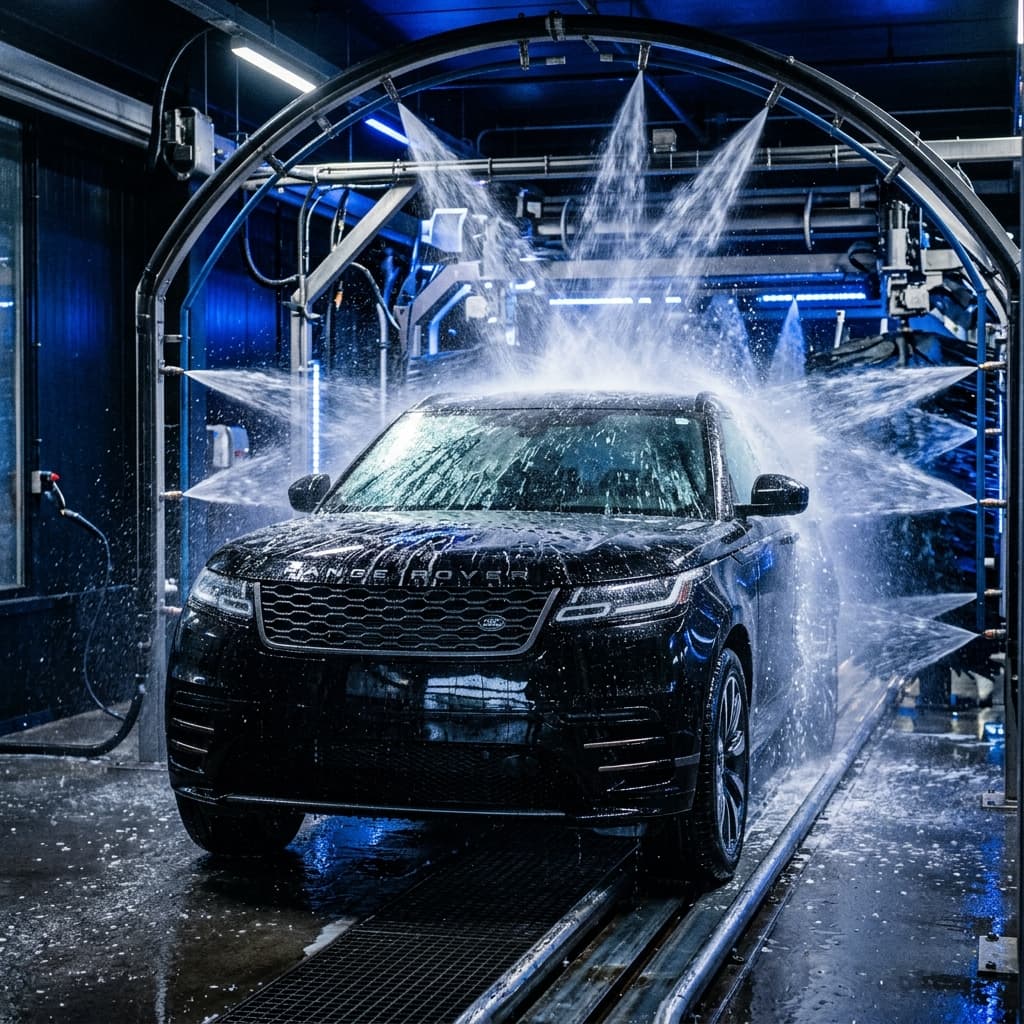
Touchless (no-touch) car washes use high-pressure water jets and detergent spray without any mechanical contact. These are generally safe for PPF — but with important caveats:
Safe aspect: No mechanical contact means no brush grit dragging, no edge-catching, no abrasion from pads. The water pressure alone is unlikely to damage PPF film surface.
Watch for: High-pressure jets aimed directly at film edges. If you're using a self-serve touchless wand, keep it moving and avoid holding it pointed at film edges or seams for more than 1–2 seconds.
Check detergent type: Some touchless wash detergents use strong alkaline formulations. If using frequently, consider running a clean water rinse afterward at home. High-alkaline soap used repeatedly can dull the PPF top coat over time.
Special Calgary Winter Washing Guide
Calgary's winters create a specific challenge: road salt and pickle mix accumulate rapidly and need frequent removal, but cold temperatures and ice complicate washing. Here's the winter-specific PPF care protocol:
Wash Every 1–2 Weeks During Salt Season (Oct–Apr)
Salt left sitting on PPF for weeks can begin attacking film edges and reduce the film's optical clarity. More frequent washing during winter prevents salt accumulation from becoming a maintenance problem. Touchless washes are acceptable and convenient for this frequency.
Use Warm (Not Hot) Water
In winter, warm water helps activate PPF's self-healing properties while safely removing road salt. Avoid very hot water directly on cold film — extreme temperature differentials can stress the film. Lukewarm is ideal. Most indoor touchless washes heat their water, making them especially effective in winter.
Target Wheel Wells and Lower Rockers
Salt accumulates most heavily in wheel wells and along rocker panels — exactly the areas PPF is protecting. Give extra rinse time to these zones, flushing salt deposits from crevices around film edges. A focused hose or pressure rinse of wheel wells significantly reduces salt contact time on the film.
Recommended Products for PPF Washing
| Product Category | Recommended Type | Products to Avoid |
|---|---|---|
| Car Shampoo | pH-neutral, PPF-safe (e.g., Gyeon Bathe, Carpro Reset) | Dish soap, citrus degreasers, high-alkaline |
| Wash Mitt | Premium microfiber wash mitt | Sponges, brushes, chamois |
| Drying Towel | Waffle-weave or plush microfiber | Terry cloth, chamois, paper towels |
| Quick Detailer | PPF-safe spray detailer (e.g., Gyeon Q2M Cure) | Products with wax fillers or dyes |
| Bug & Tar Remover | PPF-safe bug remover (let soak, don't scrub) | Petroleum-based solvents directly on film |
| Iron Remover | pH-neutral iron remover spray | Acid-based wheel cleaners |
The Game Changer: Ceramic Coating Over PPF
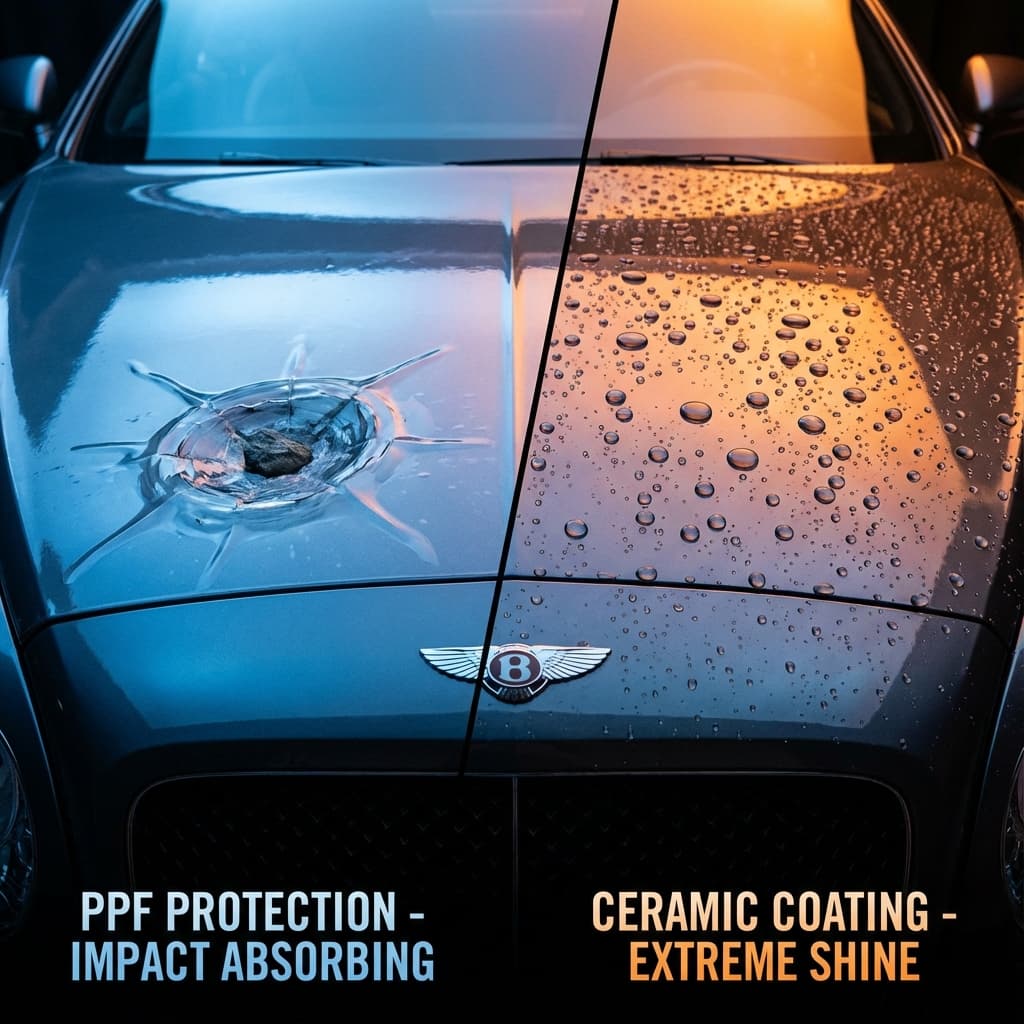
The single best thing you can do to make PPF washing easier is to have ceramic coating applied over the PPF at installation time. Here's why it changes everything:
Dirt and salt sheet off with rain alone, reducing how often you need to wash
Bird droppings and bug acid can't penetrate the ceramic layer to reach the PPF beneath
Less frequent washing needed, quicker wash sessions, better results with less effort
Vehicles with ceramic coating over PPF can safely use touchless car washes even more frequently without concern for detergent types, because the ceramic layer acts as an additional chemical barrier. Learn more about our PPF + Ceramic Coating packages →
The Pros
- Touchless automatic car washes: safe and convenient for weekly winter washes
- Two-bucket hand wash: best results, full control over pressure and products
- Warm water rinse after winter driving: activates self-healing, removes salt fast
- Ceramic coating over PPF: makes all washing easier and more effective
- Rinseless wash at home: excellent for light contamination between proper washes
- Microfiber everything: mitt, drying towel, quick detailer cloth
The Cons
- Brush/roller automatic car washes: avoid completely
- High-alkaline detergents: use pH-neutral products only
- Pressure washing edges directly: keep wand moving, 30cm+ distance
- Chamois for drying: rubber sticks and pulls at film edges
- Dish soap: strips wax, damages PPF adhesive layer over time
- Scrubbing at bird droppings: soak and blot, never scrub
PPF + Ceramic = Wash Less, Protect More
Ask us about applying ceramic coating over your PPF at installation. It's the single biggest upgrade you can make for long-term ease of maintenance — and it extends PPF lifespan by 2–3 years.
Get a QuoteFrequently Asked Questions
Experience The Best.
Don't let another commute compromise your vehicle. Get a quote from Calgary's Consumer Choice Award winner today.
Explore Our Services