How to Choose the Right Window Tint (Dyed vs. Carbon vs. Ceramic)
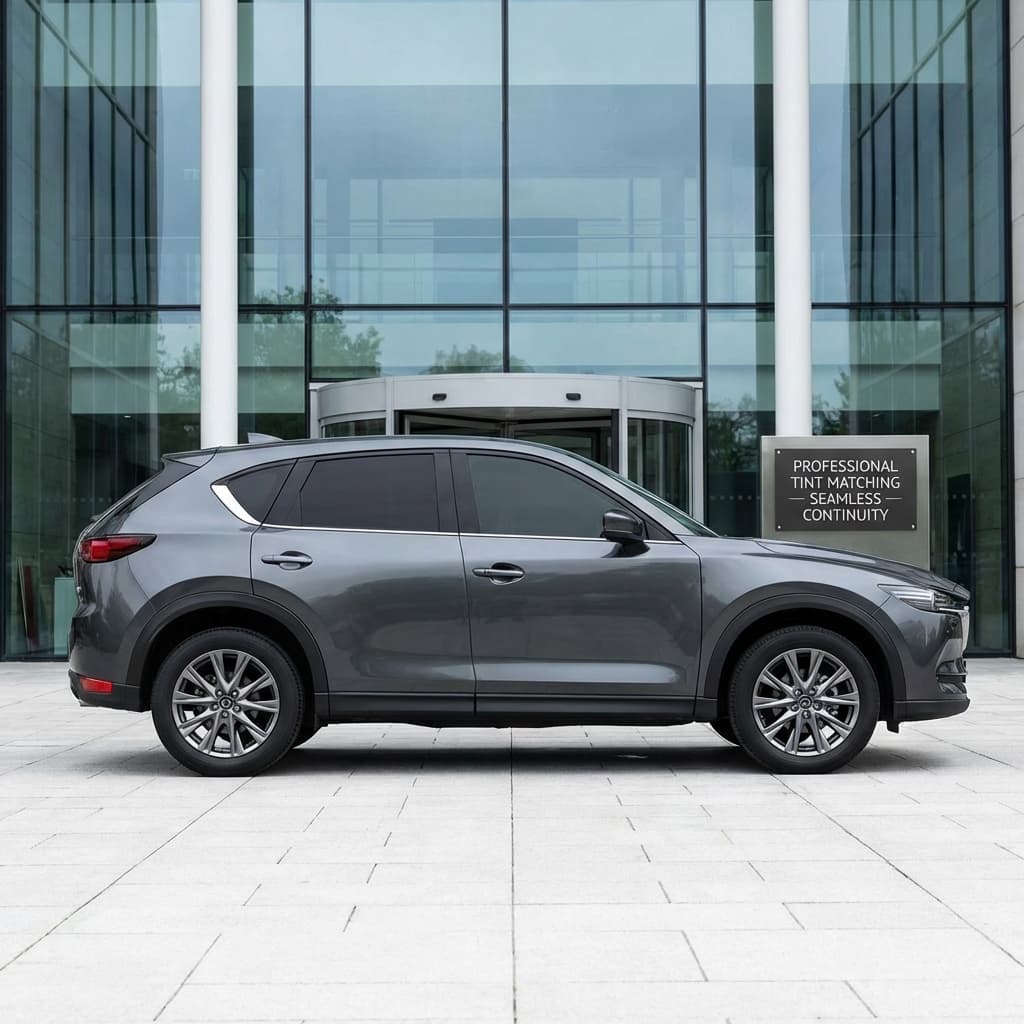
Window tint comes in three main technologies: dyed, carbon, and nano-ceramic. Dyed film only adds privacy and rejects roughly 10% of heat while fading to purple, so it's best avoided; carbon film is fade-proof and blocks about 40% of heat as a solid budget option; and nano-ceramic (such as the 3M, LLumar and Global Window Films ceramic lines we install) filters infrared radiation to reject up to 88% of heat, making it the best choice for Calgary. A 20% dyed and 20% ceramic film look identically dark — the difference is the heat you feel. Modern non-metallic ceramic tint blocks 99% of UV and won't interfere with GPS, cell signal, or Tesla screens.
Not all tint is created equal. That $99 Groupon tint job will turn purple in 2 years.
Here is the definitive guide to understanding the three main technologies of window film so you don't get ripped off.
Type 1: Dyed Film (The Basic) - Avoid in Calgary
It's just a sheet of polyester dyed black. It provides privacy, but zero heat rejection. It essentially absorbs heat and radiates it into the car.
Verdict: Avoid.
Type 2: Carbon Film (The Middle Ground)
Carbon particles are embedded in the film. It won't fade to purple and rejects about 40% of heat. A solid choice for budget builds.
Verdict: Good.
Type 3: Nano-Ceramic (The Best for Calgary)
Ceramic particles filter out Infrared Radiation (IR), which is the part of the spectrum that carries heat. It can block up to 98% of heat.
Verdict: Excellent. Ceramic is what we install; our tint films come from 3M, LLumar and Global Window Films. For how the brands compare, read our tint brand comparison.
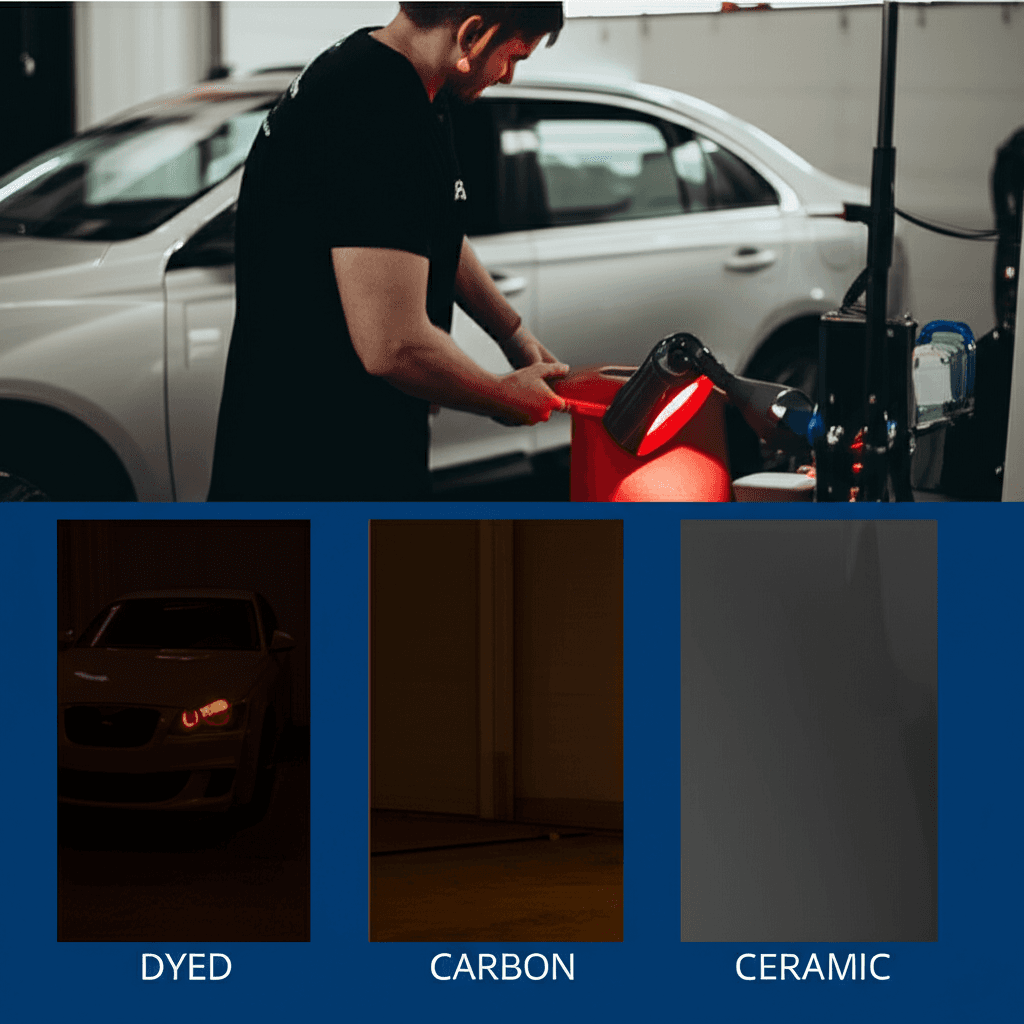
The demo I do for hesitant customers settles the dyed-versus-ceramic debate faster than any spec sheet. I hold a heat lamp behind a sample of 20% dyed film and a sample of 20% ceramic — identical shade, you genuinely cannot tell them apart by eye. Then I have them put a hand behind each, and the dyed one radiates heat through almost immediately while the ceramic stays cool. In a Calgary car that bakes in a south-facing parkade all afternoon and then has to defrost at -25°C that same week, that heat rejection is what you're actually paying for, not the colour.
— Mostafa, Calgary PPF Pros
Two Tint Myths Worth Clearing Up
- "The dotted border means a bad install." False. Most rear windows have a raised ceramic dot pattern (the frit) around the edge. Film can't sit perfectly flat over the raised dots, so a slightly whitish border is normal and not a sign of poor workmanship.
- "Tint makes it hard to see at night." Partly true. Cheap dyed film looks murky and distorts light, and very dark film does reduce night visibility. Good ceramic film is optically clear, and choosing a sensible shade on the rear glass keeps night driving comfortable.
Tint Tech Specs Comparison
| Feature | Dyed | Carbon | Ceramic (Premium) |
|---|---|---|---|
| Heat Rejection (IR) | 10% | 40% | 88% |
| UV Block | 99% | 99% | 99% |
| Signal Safe (GPS) | Yes | Yes | Yes |
| Fade Resistant | No (Turns Purple) | Yes | Yes (Lifetime Warranty) |
Why Heat Rejection Matters in Calgary
Frequently Asked Questions
Is front window tint legal in Calgary?
Does ceramic tint look different?
Will tint interfere with my GPS?
Experience The Best.
Don't let another commute compromise your vehicle. Get a quote from Calgary's Consumer Choice Award winner today.
Explore Our Services