How to Fix PPF Scratches (Self-Healing)
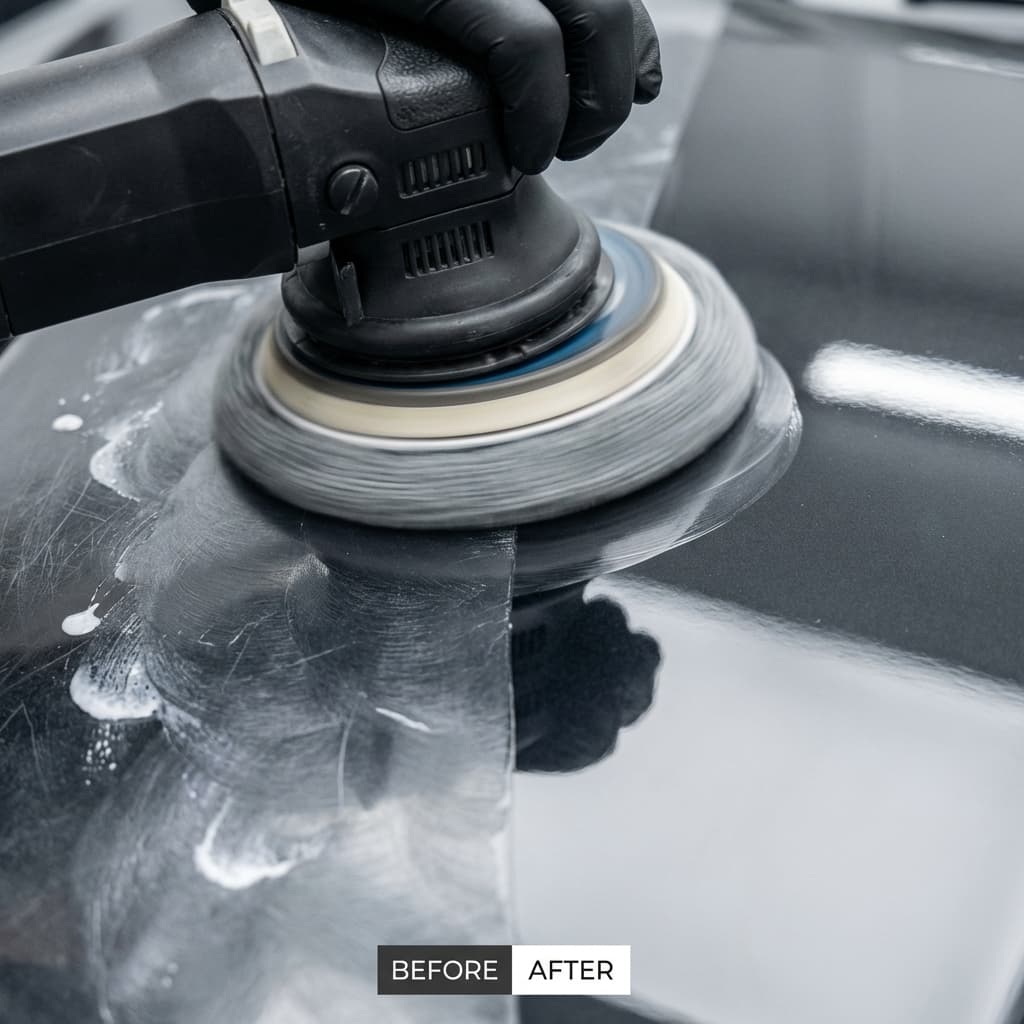
Yes, PPF can be polished, but only as a last resort and with extreme caution—its self-healing top coat is just a few microns thick, so aggressive polishing burns through it permanently. Try heat healing first: roughly 85–90% of “swirls” in PPF are temporary indentations that vanish when warmed by sun, a heat gun, or boiled water (the most reliable method in Calgary winters). If you must polish, use only an ultra-fine finishing polish on a DA machine at speed 1–2—never a rotary, cutting pad, or heavy compound, which haze the film instantly.
Your PPF has some light scratches or embedded dirt from Calgary's harsh roads and winter conditions. Can you treat it like paint and polish it? The answer is yes, but with extreme caution. In this comprehensive guide, we'll walk you through everything you need to know about safely polishing PPF, when to attempt it yourself, and when to call in the professionals.
Understanding PPF Top Coat Structure
Quality PPF (like STEK DYNOshield or GSWF Defender Platinum) features a sophisticated multi-layer construction designed to protect your vehicle's paint while maintaining optical clarity. The outermost layer—the self-healing elastomeric top coat—is a thin layer of specially formulated urethane that gives PPF its remarkable properties.
Key Properties of the Top Coat
- • Self-Healing: Minor scratches disappear when exposed to heat (sunlight, hot water, or heat gun)
- • Hydrophobic: Repels water and contaminants, making cleaning easier
- • UV Resistant: Prevents yellowing and degradation from sun exposure
- • Soft Texture: More pliable than clear coat, making it prone to marring
The critical factor to understand is that this top coat is extremely thin—often just a few microns thick. If you polish it too aggressively, you will burn through this protective layer, permanently ruining the self-healing properties and potentially creating cloudy, hazy spots that cannot be reversed.
When a client brings in a panel they're sure needs polishing, the first thing we do is warm it — and the vast majority of the time those "scratches" simply vanish. In a heated bay through a Calgary winter we'll often just leave the car indoors overnight and the top coat reflows on its own by morning, no machine required. The handful of cases where polishing was truly warranted came in already burned through from someone who reached for a rotary and a cutting compound first; once that haze is in the film, there's no bringing it back, so we always exhaust heat healing before anything touches the surface.
Reviewed by Mostafa — Calgary PPF Pros, protecting Calgary vehicles since 2021.
Common Causes of Swirls in PPF
Before attempting to polish your PPF, it's essential to understand what caused the swirls in the first place. This knowledge helps prevent future damage and determines whether polishing is actually necessary.
| Cause | Description | Preventable? |
|---|---|---|
| Automatic Car Washes | Brushes trap dirt and scratch the soft PPF surface | Yes |
| Dry Wiping | Wiping dust off with a dry cloth creates micro-scratches | Yes |
| Dirty Wash Mitts | Reusing contaminated mitts without proper rinsing | Yes |
| Road Debris | Sand, salt, and gravel from Calgary roads | Partially |
| Improper Drying | Using rough towels or improper technique | Yes |
Step 1: Try Heat Healing First
Before you even consider polishing, attempt heat healing. Calgary's variable climate—with hot summer days reaching 25-30°C and cold winters—can actually work in your favor for this technique.
Heat Healing Methods
Method 1: Hot Water
Pour freshly boiled water (carefully) directly over the scratched area. The heat causes the urethane to reflow, eliminating minor swirls.
Method 2: Sun Exposure
Park your vehicle in direct sunlight on a hot Calgary summer day for 1-2 hours. The ambient heat naturally activates the self-healing process.
Method 3: Heat Gun
Use a heat gun on low setting, keeping it 12-18 inches away. Move constantly to avoid overheating any single spot.
Method 4: Steamer
A clothes steamer held 6-8 inches away provides controlled, gentle heat perfect for targeted healing.
Most light "swirls" in PPF are actually just temporary indentations in the soft top coat, not permanent scratches. Heat will cause the urethane to reflow and these marks will disappear completely—no polishing required.
Pro Tip: In Calgary's winter months when sun exposure is limited, the hot water method is most effective. Just ensure the panel is clean before applying hot water to avoid trapping debris.
Step 2: The Safe Polishing Method
If heat healing doesn't resolve the issue, and the swirls are truly embedded in the film, you may proceed with cautious polishing. This is where most DIY attempts go wrong—using the wrong products or techniques can cause irreversible damage.
Essential Equipment & Products
Required
- Machine: Dual Action (DA) polisher set to speed 1-2
- Pad: Soft foam finishing pad (black or white)
- Polish: Ultra-fine finishing polish only
- PAD Conditioner: Keep the pad moist
Never Use
- Rotary Buffer: Too aggressive, generates excess heat
- Wool/Cutting Pads: Will haze the film immediately
- Heavy Compounds: 105, M105, or similar cutting compounds
- High Speeds: Never exceed speed 3 on DA
Recommended Polish Products
| Product | Cut Level | Best For |
|---|---|---|
| Menzerna 3800 | Ultra-fine | Final gloss enhancement, very safe |
| CarPro Reflect | Ultra-fine | Finishing polish, PPF-safe |
| Rupes UNO Pure | Ultra-fine | One-step finishing, minimal cut |
| Meguiar's M205 | Fine | Use with extreme caution, light pressure only |
| Meguiar's M105 / 3D ACA 500 | Heavy Cut | NEVER use on PPF |
The Polishing Technique
- Clean the Surface: Thoroughly wash and clay bar the PPF to remove all contamination.
- Test Spot: Always start with a small inconspicuous area to gauge results.
- Work Cool: Keep the panel cool. Take frequent breaks—excessive heat will permanently distort the urethane.
- Light Pressure: Let the polish do the work. Use minimal downward pressure.
- Speed Setting: Never exceed speed 2 on a DA polisher.
- Work Time: Limit each section to 30-45 seconds maximum.
- Check Often: Wipe and inspect frequently to monitor progress.
What Cannot Be Polished Out of PPF
Understanding the limitations is crucial. Some damage to PPF simply cannot be corrected through polishing and requires replacement of the affected panel.
Deep Gouges & Tears
If the film is physically torn or the texture feels rough like sandpaper, the urethane structure is compromised. Polishing will only make it worse by thinning the already damaged area. The piece needs professional replacement.
Staining & Discoloration
Hard water spots, bird etching, or chemical stains that have penetrated the top coat cannot be polished away. These require either panel replacement or professional restoration services.
Burn-Through from Previous Polishing
If someone has already over-polished your PPF, creating cloudy or hazy spots, this damage is permanent. The top coat has been removed and cannot be restored.
Impact Damage
Rock chips that have penetrated through the PPF into the paint, or severe abrasion from road debris, cannot be fixed by polishing the film itself.
DIY vs. Professional Assessment
| Scenario | Recommendation | Reasoning |
|---|---|---|
| Light swirls, film under 2 years old | DIY Heat Healing | Self-healing properties are at peak effectiveness |
| Minor marring, film 2-5 years old | Professional Polish | Requires expertise to avoid damage |
| Deep scratches, any age | Professional Assessment | May require panel replacement |
| Film 5+ years old, widespread dullness | Consider Replacement | Top coat degradation, limited benefit from polishing |
| Warranty concerns | Professional Only | DIY polishing may void manufacturer warranty |
Professional Recommendation
If your PPF looks dull or swirled, we strongly recommend bringing it to our Calgary facility for a professional assessment. Our technicians can determine whether the damage is correctable or if replacement is the better option.
Often, what appears to be scratches requiring polishing is actually just embedded contamination that can be resolved with a professional chemical decontamination and a ceramic booster spray. This restores gloss without any of the risks associated with polishing.
Why Choose Professional Service?
- Warranty Protection: Work performed by certified installers maintains your manufacturer's warranty
- Correct Diagnosis: We distinguish between true damage and correctable issues
- Proper Equipment: Access to professional-grade products and tools
- Risk Elimination: Zero chance of damaging your investment through inexperience
Prevention: Keep Your PPF Looking New
The best way to deal with swirls is to prevent them entirely. Follow these maintenance best practices to keep your PPF in pristine condition:
- Two-Bucket Wash Method: Always use separate buckets for wash and rinse, with grit guards.
- Premium Microfiber: Use high-quality, clean microfiber mitts and towels exclusively.
- Avoid Automatic Washes: Never use brush-based automatic car washes.
- Dry Properly: Use a blower or high-quality drying towel with pat-dry technique.
- Regular Maintenance: Apply ceramic boosters or sealants designed for PPF every 3-6 months.
- Quick Detailer: Use PPF-safe quick detailers between washes to maintain slickness.
- Annual Inspection: Have a professional inspect your PPF annually for early issue detection.
Key Takeaway: Polishing PPF should always be a last resort after attempting heat healing. When polishing is necessary, it requires specialized knowledge, correct products, and extreme caution. When in doubt, consult with Calgary PPF Pros—we're here to help protect and maintain your investment for years to come.
Frequently Asked Questions
Does polishing remove the self-healing layer?
Can I use compound on PPF?
Is it better to replace the film or polish it?
How often can PPF be polished?
Will polishing void my PPF warranty?
Experience The Best.
Don't let another commute compromise your vehicle. Get a quote from Calgary's Consumer Choice Award winner today.
Explore Our Services