How to Remove Bugs, Tar, Tree Sap & Bird Droppings Without Damaging Paint or PPF
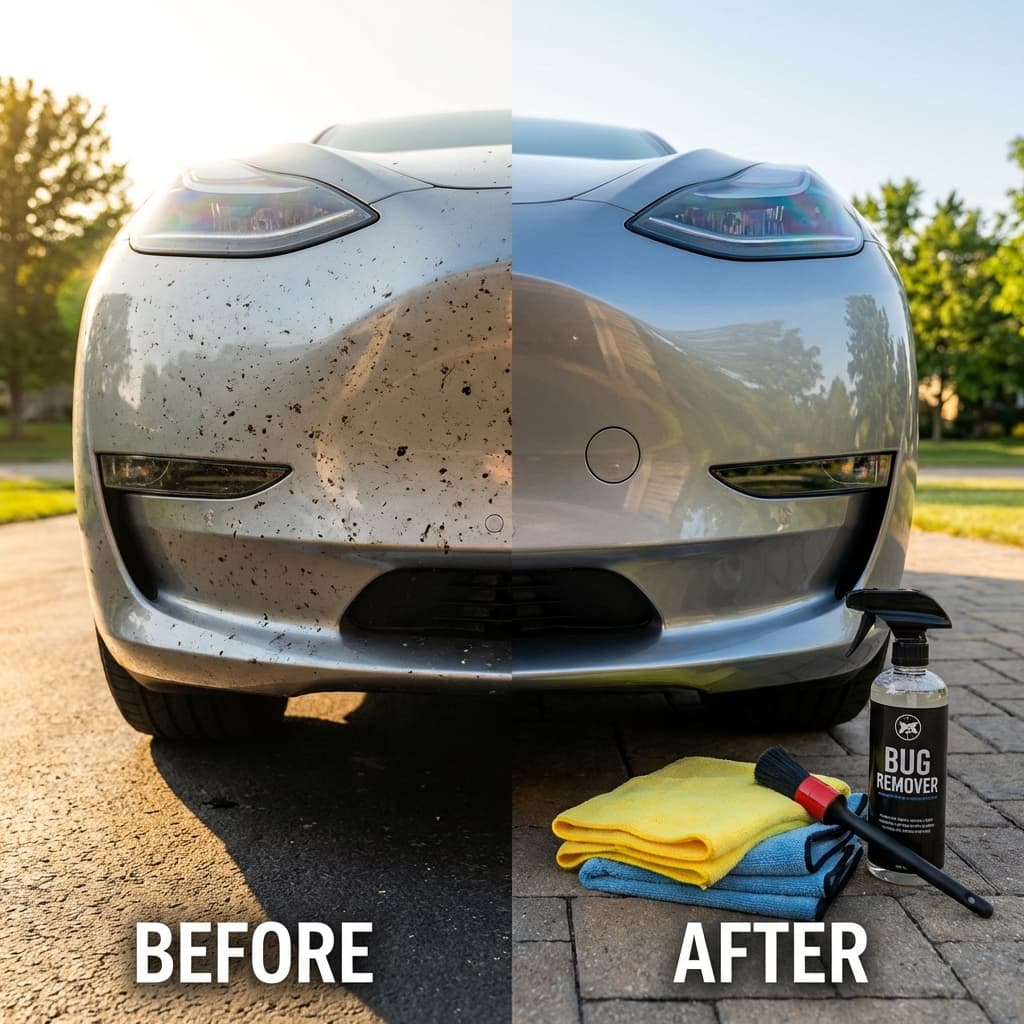
To safely remove bugs and tar from PPF, soak — don't scrub — because friction mars the film's soft self-healing top coat. For acidic Calgary bug splatter, pre-soak with pH-neutral bug remover or lay a hot wet microfiber towel over baked-on spots for 5-10 minutes, then wipe gently; for petroleum road tar, use a citrus-based tar remover or 50-70% isopropyl alcohol and never acetone, lacquer thinner, or gasoline. Tree sap and bird droppings follow the same soften-then-lift rule, and droppings should come off the same day. Remove contaminants within days to avoid permanent etching, and add a ceramic coating over your PPF so bugs and tar rinse off with minimal effort.
Calgary summers are synonymous with three things for drivers: road construction, swarms of insects, and the slow drip from mature cottonwoods overhanging every Bowness and Inglewood street. Drivers parking under those river-valley canopies can check our Calgary service areas and drive times. While your Paint Protection Film (PPF) acts as a sacrificial barrier against rock chips and scratches, it also becomes the frontline defense against sticky, acidic contaminants like bug splatter, road tar, and tree sap. (Tree sap and bird droppings follow their own etch timelines — see their sections below.) However, the very durability that makes PPF so effective can lull owners into a false sense of security when it comes to cleaning. Aggressive scrubbing or using the wrong chemicals can damage the film's self-healing top coat, leading to premature aging, hazing, or even permanent staining. This guide covers the safe methods to remove bugs, tar, tree sap and bird droppings from your PPF and paint without compromising either.
Why Special Care is Needed
PPF is not paint. It is a porous, urethane-based material designed to absorb impact. This porosity can sometimes hold onto contaminants more stubbornly than clear coat. Furthermore, the self-healing top layer is heat-sensitive and softer than paint, making it susceptible to marring if scrubbed with abrasive materials. Treat your PPF like high-end skin care, not like a kitchen floor.
The Chemistry of Contamination: Why Bugs and Tar Are Dangerous
Understanding what you are trying to remove is the first step in doing it safely. Bugs and tar are chemically different, but both pose significant risks to your film if left untreated.
Bug Splatter (Acidic)
Insect remains are highly acidic. As they decompose on your bumper or hood, they release enzymes and acids that can etch into the surface of the PPF. In hot Calgary weather, this reaction is accelerated. If left for days or weeks, "bug etching" can occur, where the outline of the splatter becomes a permanent ghost mark in the film.
Road Tar (Petroleum)
Tar is a petroleum-based substance picked up from freshly paved roads or construction zones. It bonds physically to the film and hardens as it cools. Trying to pick or scrape tar off usually results in stretching or tearing the film's surface. Unlike bugs, tar requires a chemical solvent to dissolve the bond safely.
The Golden Rule: Soak, Don't Scrub
The most common way vehicle owners damage their PPF is by trying to scrub bugs off during a regular wash. Friction is the enemy here. The goal is to chemically break down the organic matter or petroleum bond so it can be wiped away with zero pressure.
Step-by-Step Bug Removal Process
Cool the Surface
Never attempt to clean a hot car in direct sunlight. The cleaning chemicals will evaporate too quickly, leaving spots, and the heat softens the film, making it easier to mar. Pull into the shade or a garage and let the hood cool down.
The Pre-Soak Strategy
Before touching the paint, spray a dedicated insect remover (pH-neutral is best for PPF) or a generous amount of soapy water onto the affected area. Let it dwell for 2-3 minutes. Do not let it dry on the surface.
The "Hot Towel" Trick (Pro Secret)
For baked-on bugs that won't budge with spray alone, this is the safest removal method known to detailers.
- Soak a clean microfiber towel in hot tap water (hot, but not boiling).
- Fold the wet, hot towel and lay it directly over the bug splatter.
- Let it sit for 5-10 minutes. The heat and moisture rehydrate the dried bugs, turning them into a soft jelly.
Gentle Agitation
Once softened, use a dedicated microfiber wash mitt with plenty of car shampoo to gently wipe the area. The bugs should slide right off. If they don't, repeat the soak step. Never use scrubbing pads, "bug sponges," or melamine foam (Magic Erasers) on PPF. These are abrasives and will dull the finish instantly.
Safely Dissolving Road Tar
Tar requires a different approach. Water won't touch it. You need a solvent that breaks down petroleum, but one that is safe for urethane films.
SOLVENT WARNING
Not all solvents are safe for PPF. Harsh industrial solvents can cloud the clear coat or cause the adhesive to fail at the edges.
- Lacquer Thinner
- Acetone
- Kerosene (undiluted)
- Gasoline
- Brake Cleaner
- Citrus-based Tar Removers
- Mineral Spirits (sparingly)
- Isopropyl Alcohol (diluted 50-70%)
- Dedicated PPF Cleaners
Tar Removal Steps
- Wash First: Clean the area of loose dirt to prevent scratching while you work on the tar.
- Apply Solvent: Spray your citrus-based tar remover onto a microfiber towel, not directly onto the film if possible (to avoid it running into seams). Dab the solvent onto the tar spots.
- Wait: Let the solvent work for 30-60 seconds. You will often see the black tar begin to "bleed" or turn brownish as it dissolves.
- Wipe Gently: Using a clean side of the towel, gently wipe the tar away. Roll the towel frequently to expose a clean surface so you aren't smearing tar back onto the film.
- Rinse Immediately: Once the tar is gone, wash the area with soap and water immediately to neutralize and remove any remaining solvent.
Tree Sap and Cottonwood Resin
Calgary's mature cottonwoods and balsam poplars — common along the river valleys and in older inner-city neighbourhoods — drop sticky resin and seed fluff through late spring and early summer (the City of Calgary's notes on poplar trees explain why). Sap hardens as the panel heats up, so the sooner it comes off, the easier it is. On a film-covered panel the sap sits on the PPF rather than the paint, but it can still leave a dull ring on the film if it bakes on for days.
- Wash the area first so loose grit isn't dragged across the surface.
- Let a solvent do the work: dampen a clean microfiber with diluted isopropyl alcohol (the 50-70% mix from the list above), lay it on the sap and let it dwell for 2-3 minutes. Dwell time matters more than pressure.
- Wipe gently in one direction, folding to a clean side of the towel for each pass.
- For sap that has hardened into a bead, switch to a dedicated bug-and-sap remover, give it a longer dwell (5-10 minutes) and lift the softened bead with a plastic tool — never a razor or anything metal.
- Re-wash with car shampoo to remove the solvent. On bare paint, reapply wax or sealant afterwards, because alcohol strips it.
Cottonwood fluff itself doesn't hurt paint, but it packs into the cowl, door seals and window channels and holds moisture and grit there. Blow or vacuum it out every week or so during peak fluff season. Consumer Reports' advice on removing sap and bugs follows the same soften-then-lift approach.
Bird Droppings
Bird droppings — in Calgary, mostly from the magpies and crows that perch over alleys, driveways and mature trees — are acidic and gritty, and they etch fastest on a hot panel in direct sun. Treat them as the most urgent contaminant on this page and remove them the same day.
- Cool the panel: move the car into shade and let the surface cool before you touch it.
- Soften, don't scrub: drape a microfiber soaked in lukewarm water (or quick detailer) over the dropping for 5-10 minutes.
- Lift, don't wipe back and forth: fold the towel and lift the softened dropping off in one direction, turning to a clean section for each pass, so the grit isn't dragged across the finish.
- Finish with a quick-detail spray and a clean microfiber, then check the spot at an angle in sunlight.
On film-covered panels the paint underneath stays protected. A mark left on the film itself can often be improved with heat (see "Bug Etching" below), and a badly stained section of film can be replaced without touching the paint.
Wildfire Ash and Pollen
Smoke-season ash and spring pollen are fine, gritty dusts. Never wipe them off dry — even a clean microfiber drags the grit across the film or paint. Rinse them off with plenty of water first (a touchless pre-rinse is ideal), then wash with a pH-neutral shampoo. During a multi-day smoke event, a plain hose rinse of the hood, roof and trunk every day or two keeps ash from sitting on the car through repeated dewy mornings.
Prevention: The Power of Ceramic Coatings
If you find yourself scrubbing bugs off your bumper every weekend, it might be time to upgrade your protection strategy. While PPF protects against impact, it is not inherently non-stick.
Why Coat Your PPF?
Applying a Ceramic Coating over your PPF is a game-changer for maintenance. The coating adds a hydrophobic (water-repelling) layer that fills the microscopic pores of the film. This creates an incredibly slick surface where bugs and tar struggle to bond.
- Bugs rinse off with just a pressure washer
- Tar spots wipe away with minimal effort
- Extra UV protection prevents film yellowing
Maintenance Difficulty
What To Do If You Have "Bug Etching"
Sometimes, despite our best efforts, a bug splatter sits too long and leaves a mark. On PPF, this often looks like a cloudy or dull spot in the shape of the bug.
The Heat Gun Fix
Because high-quality PPF (like the films we use at Calgary PPF Pros) is self-healing, minor etching can often be resolved with heat. Pouring hot water (near boiling) over the clean spot or leaving the car in the hot summer sun can trigger the top coat to reflow and heal the etch mark.
When to Call a Pro
If heat doesn't fix it, the acid may have penetrated deep into the film. Do NOT try to polish PPF with heavy compounds yourself, as you can alter the texture of the film. Bring it to us for an assessment. In worst-case scenarios, replacing a single panel of PPF is far cheaper than repainting a bumper.
Summary Checklist for Calgary Drivers
- ✓Keep a kit: Keep a bottle of quick detailer and a clean microfiber towel in your trunk for emergency bird dropping or bug removal on road trips.
- ✓Wash weekly: During bug season (May-September), wash your vehicle weekly to prevent buildup.
- ✓Trust chemicals, not muscle: Let sprays dissolve the grime. If you have to scrub hard, you are doing it wrong.
- ✓Consider Coating: Ask us about adding a ceramic coating layer to your high-impact areas for effortless cleaning.
Protect your investment properly, and it will keep your car looking brand new for years to come. Need professional detailing help or advice on products? Contact Calgary PPF Pros today.
Experience The Best.
Don't let another commute compromise your vehicle. Get a quote from Calgary's Consumer Choice Award winner today.
Explore Our Services