Spring Car Detailing Checklist for Calgary: Removing Winter Damage Before It's Too Late
- Written by
- By Ahmed
- Published
- Aug 29, 2025
- Updated
- Reading time
- 8 Minute Read

Detail your car as soon as Calgary temperatures stay above 5°C—ideally late February to early March—because magnesium chloride brine and road salt keep etching paint and rusting chips even after the roads clear. Work through an undercarriage flush, a pH-neutral two-bucket wash, chemical iron and tar removal, then a clay-bar decontamination, and address rock chips before they rust. Acting early protects $2,000–$5,000 in resale value, and finishing with paint correction (about $400–$800), ceramic coating, or PPF on high-impact panels prevents next winter's damage.
Winter in Calgary is beautiful—but brutal on your vehicle. From Deerfoot Trail's relentless gravel barrage to the corrosive cocktail of magnesium chloride brine and road salt, your car has survived months of punishment. As February transitions into March, Calgarians start to notice the evidence: paint chips, tar buildup, salt stains, and that stubborn layer of grime that won't wash off.
The question is: will you address it before permanent damage sets in?
This comprehensive spring detailing checklist isn't just about making your car look good—it's about preventing thousands of dollars in paint repairs, rust issues, and resale value loss. Whether you're planning to tackle this yourself or book professional detailing (see our 2026 Calgary pricing), here's everything Calgary drivers need to know about post-winter vehicle recovery.
Why Spring Detailing is Critical in Calgary (Not Just Cosmetic)
The Hidden Cost of "Waiting Until It Warms Up"
Many Calgarians assume they can wait until April or May to address winter damage. Here's why that's a costly mistake:
1. Road Salt Continues to Corrode
Even after the snow melts, magnesium chloride brine remains embedded in your paint's pores, wheel wells, and undercarriage. Every day you delay, it etches deeper into your clear coat—creating permanent water spots, hazing, and even rust nucleation points.
2. Tar and Asphalt Bonds Harden
Calgary uses tar-based sealants on winter roads. When fresh, tar can be dissolved with proper solvents. After weeks of UV exposure and heat cycles, it bonds permanently to your paint—requiring aggressive polishing (or worse, repainting) to remove. The same chemistry repeats every summer with fresh paving — see our guide to removing tar and bugs safely.
3. Paint Chips Accelerate Rust
Those "tiny" rock chips on your hood? They expose bare metal to moisture. Calgary's dramatic temperature swings (Chinook winds can swing 30°C in 24 hours) accelerate oxidation. By May, surface rust has often spread under the paint—invisible until it bubbles.
4. Your Resale Value Drops by the Week
Alberta's used car market is savvy. Buyers specifically check for winter damage: salt corrosion, paint chips, and neglected undercarriages. Addressing damage in February (before it's permanent) can preserve $2,000-5,000 in resale value.
The Calgary Spring Detailing Checklist: Week-by-Week Action Plan
Week 1 (Early February): Assessment & Deep Undercarriage Wash
Step 1: Inspect for Winter Damage
Before washing, document the damage:
- Paint Chips: Focus on hood, bumper, mirrors, rocker panels, and door edges
- Salt Buildup: Check wheel wells, door jambs, and undercarriage
- Tar & Asphalt: Common on lower doors, rocker panels, and rear bumper
- Headlight Oxidation: Yellowing reduces visibility by 40%
- Windshield Chips: Calgary gravel creates micro-cracks that grow with temperature swings
Pro Tip: Take photos in direct sunlight. You'll need these for insurance claims or to track improvement.
Step 2: Undercarriage Flush (Critical!)
Most Calgarians skip this—don't be one of them. Road salt loves to hide in:
- Frame rails and suspension components
- Brake calipers and rotors
- Exhaust heat shields
- Fuel tank straps
How to Do It:
- Use a high-pressure wand at a touchless car wash (not home pressure washer—insufficient flow rate)
- Spray for 5-10 minutes continuously, focusing on cavities and seams
- Hit wheel wells, suspension, and exhaust from multiple angles
- Follow up with an oil-based undercoating or rust inhibitor (like Krown or Fluid Film)
Cost: $15-30 at a touchless wash vs. $2,000+ for frame rust repairs later
Week 2 (Mid-February): Exterior Deep Clean & Decontamination
Step 3: Two-Bucket Hand Wash (Do This Right)
Calgary's winter dirt isn't normal dirt—it's abrasive. A bad wash technique will create swirl marks that cost $300-600 to correct.
The Correct Process:
- Pre-Rinse: Remove loose grit with low-pressure water (don't rub it into the paint!)
- Foam Cannon: Cover the vehicle in pH-neutral foam (let it dwell 5 minutes to break down road film)
- Two-Bucket Method:
- Bucket 1: Soapy water with quality car shampoo (not dish soap!)
- Bucket 2: Clean rinse water with grit guards
- Work top-to-bottom, rinsing mitt after every panel
- Wheel Cleaning: Use dedicated wheel brushes—don't cross-contaminate with paint tools
- Final Rinse: Use filtered water if possible to avoid hard water spots — Calgary tap water runs 14+ grains per gallon and etches fast in sun (here's why and how to remove existing spots)
Products We Recommend:
- Meguiar's Gold Class Shampoo (pH-neutral, won't strip wax)
- Chemical Guys Honeydew Snow Foam (clings to vertical surfaces)
Step 4: Chemical Decontamination (Iron & Tar Removal)
This step is non-negotiable for Calgary cars. If your paint feels rough like sandpaper after washing, it's contaminated.
Iron Fallout Remover
Dissolves embedded brake dust and industrial fallout (purple bleeding effect).
Target: Wheels, lower panels, rear bumper
Tar Remover
Dissolves sticky tar spots safely without scrubbing.
Target: Lower doors, rocker panels, wheel arches
Step 5: Mechanical Decontamination (Clay Bar)
Clay barring pulls out remaining contaminants that chemicals missed.
Warning: Always use plenty of clay lubricant. Using clay on dry paint will cause massive scratching (marring) that requires machine polishing to fix.
Professional vs. DIY: What Should You Outsource?
| Task | DIY Difficulty | Risk Level | Recommendation |
|---|---|---|---|
| Basic Wash | Low | Low | Do It Yourself |
| Chemical Decon | Medium | Medium | DIY with care |
| Clay Bar | Medium | High (can mar paint) | Professional if unsure |
| Paint Correction | High | Very High (burn-through) | Professional Only |
| Ceramic Coating | High | High (high spots) | Professional Only |
If you need help with the heavy lifting—especially paint correction and ceramic coating—book a consultation with Calgary PPF Pros. We specialize in undoing winter damage.
Frequently Asked Questions
When is the best time to detail your car after Calgary winter?
The best time is late February to early March, as soon as temperatures consistently stay above 5°C. This allows you to address road salt corrosion, tar buildup, and paint chips before they cause permanent damage. Waiting until April or May means salt has more time to etch into your clear coat, and rust can begin forming in exposed paint chips. Calgary's dramatic temperature swings (Chinook winds) accelerate oxidation, making early spring detailing critical for paint preservation.
How do I remove road salt stains from my car paint?
Start with a thorough pre-rinse to remove loose salt, then use a pH-neutral car shampoo in a two-bucket wash method. For embedded salt stains (white hazing), follow up with a clay bar treatment using proper lubricant—this removes bonded contaminants that regular washing misses. Stubborn water spots may require a mild polish or compound. The key is acting quickly: Calgary's magnesium chloride brine continues to corrode paint even after roads are clear, so don't delay your spring wash.
Can I prevent paint chips next winter after spring detailing?
Yes, through paint protection film (PPF). Spring detailing removes existing damage, but it doesn't prevent future chips from Deerfoot Trail gravel and winter road debris. PPF is a clear, self-healing film applied to high-impact areas like the hood, bumper, fenders, and mirrors. It absorbs rock chip impacts that would otherwise damage your paint. Calgary drivers who install PPF after their first winter typically report zero new chips the following year, making it a worthwhile investment for long-term paint preservation and resale value.
What causes tar buildup on cars in Calgary winters?
Calgary uses tar-based asphalt sealants on winter roads to fill cracks and prevent water infiltration. These sealants get kicked up by traffic and bond to your vehicle's lower panels, rocker panels, and rear bumper. When fresh, tar can be dissolved with specialized removers like Goo Gone Automotive or WD-40. However, after weeks of UV exposure and temperature cycling, tar hardens and bonds at the molecular level—requiring aggressive polishing or professional removal. Address tar spots immediately during spring detailing before they become permanent.
Is professional paint correction worth it after a Calgary winter?
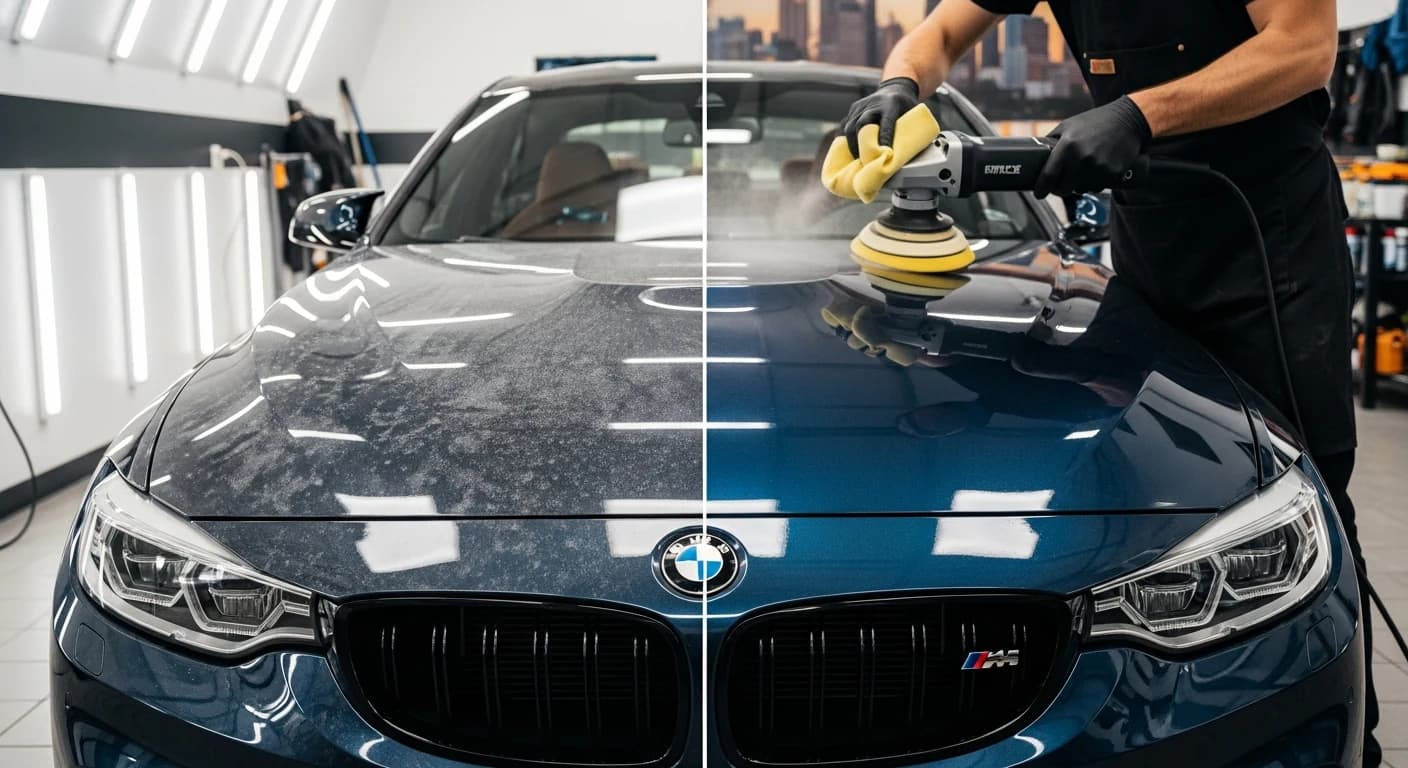
For most Calgary vehicles, yes—especially on darker colors (black, navy, dark gray) that show swirl marks easily. Professional paint correction removes a microscopic layer of clear coat to eliminate swirl marks, water spot etching, and oxidation caused by road salt and harsh washing. It costs $400-800 but restores showroom shine and provides a perfect base for ceramic coating or wax. DIY correction is risky—burning through clear coat on edges or curved panels can cost $800-1,500 per panel to respray. If your paint has visible swirls in direct sunlight, professional correction is the smart investment.