How Calgary's Winter Road Salt Destroys Your Paint (And How PPF Prevents It)

Yes, road salt damages car paint, and it does it two ways. Salty slush and the grit mixed with it sandblast the lower panels and chip the clear coat. Then brine sits in every chip and feeds rust on the metal underneath. Calgary's Chinooks make it worse by thawing and refreezing that brine again and again. Paint protection film (PPF) stops the first step: an 8 to 8.5 mil urethane layer takes the abrasion so the paint stays sealed. It does not protect the underbody, which is a job for undercoating. Every PPF package is a firm flat rate for your exact vehicle: .
Road salt keeps Deerfoot and Stoney Trail driveable in January. It is also the reason for the white crust on your rocker panels, the dull patches on the lower doors and, a few winters later, rust bubbling through the paint. Here is how salt does its damage in Calgary, which panels take the worst of it, and what film can and cannot stop.
We see what a Calgary winter leaves behind every spring. The damage is rarely the salt alone. It is the grit thrown up with it that chips the lower panels, and then the brine that gets into every chip. Film on the impact zones is what keeps the paint sealed through that.
Reviewed by Calgary PPF Pros (4-Time Consumer Choice Award Winner). Protecting Calgary vehicles since 2021.
Does Calgary use salt on its roads?
Yes. Calgary roads get road salt, magnesium-chloride brine and a salt-and-gravel blend known locally as pickle mix all winter. Salt lowers the freezing point of water so ice cannot bond to the pavement. The gravel in the mix adds traction, and it is also what chips paint.
Why Chinooks make Calgary salt worse
In a steadily cold city, salt mostly stays frozen in place. In Calgary, Chinook winds set up a freeze-thaw cycle:
- Temperatures swing from around -20°C to above zero within hours
- Melting snow turns road salt into concentrated brine
- Refreezing traps that salty water in seams, chips and crevices
- Each cycle re-wets the salt and restarts the corrosion
So the salt on a Calgary vehicle is rarely dry. It goes through wet-dry cycles all winter, which is when it does the most harm. Add the gravel on Highway 2 and the ring road, and most vehicles here face salt and rock chips together.
How road salt damages car paint
Salt attacks in two ways: abrasion and corrosion. The abrasion comes first, and it is what lets the corrosion in.
Abrasion: salt and grit as sandpaper
- Salt crystals and sand thrown up by tires scratch the clear coat
- Salty slush sprayed by the vehicle ahead hits the front end at highway speed
- Frozen chunks and gravel chip the paint on impact
- Your own tires blast the rocker panels and lower doors all winter
Corrosion: what brine does once it gets in
- Salt water conducts: it speeds up the reaction between oxygen and bare metal, which is rust.
- Chips are the way in: brine reaches the primer and metal through chips and deep scratches in the clear coat.
- Salt holds moisture: residue keeps the surface damp long after the road has dried.
- Rust spreads under the paint: once it starts at a chip, it creeps outward and lifts the paint into rust bubbles.
Where salt damage shows up first
Painted panels in the spray zone
- Rocker panels and lower doors: direct spray from your own front tires
- Front bumper and hood: spray and gravel from vehicles ahead
- Fender edges and wheel arches: trapped slush stays wet longest. Wheels take it too; see our wheel coating guide
- Side mirrors: spray from the next lane
- Rear bumper and the area behind the rear wheels: spray from your rear tires
Out of sight: the underbody
- Frame and subframes: structural rust is the hardest to repair
- Brake and fuel lines: corrosion here is a safety problem
- Exhaust: rusts through faster in salt
- Seams and cavities: brine collects where you cannot rinse
Film does not go here. This is what undercoating and rust proofing in Calgary is for.
What salt damage costs you
A chipped, salt-etched panel can be repainted, but a repaint means body-shop time, colour matching and a panel that is no longer factory paint. Buyers and appraisers check for repainted panels. Rust is worse: by the time it bubbles through, the metal underneath has to be cut out and repaired.
Prevention is simpler. Film takes the chips so the factory paint underneath doesn't, and paint that is not chipped gives brine nowhere to start. A full front PPF package is a firm flat rate for your exact car, truck or SUV, and this guide explains what sets each flat rate. Enter your year, make and model to .
How paint protection film stops salt damage
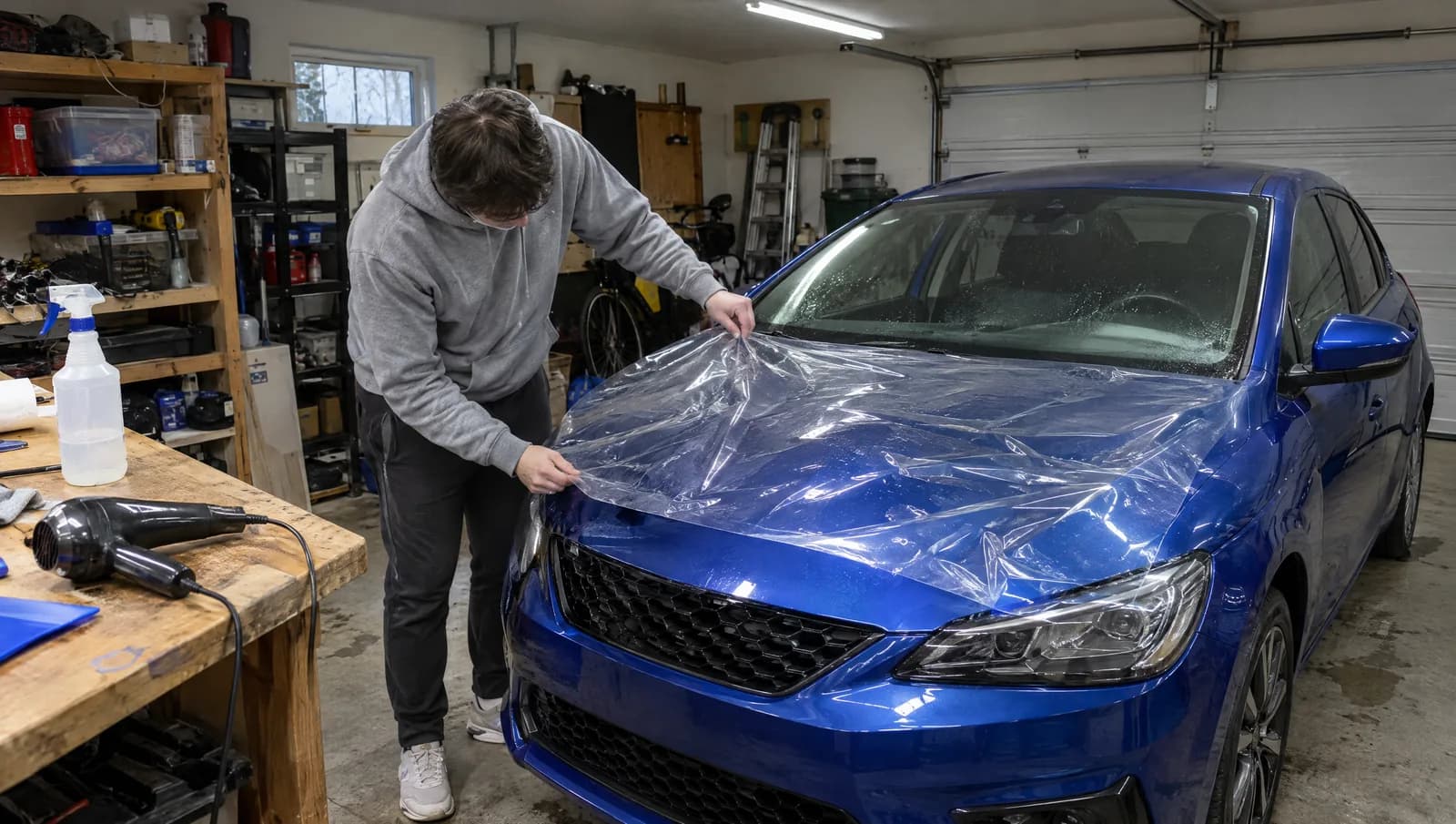
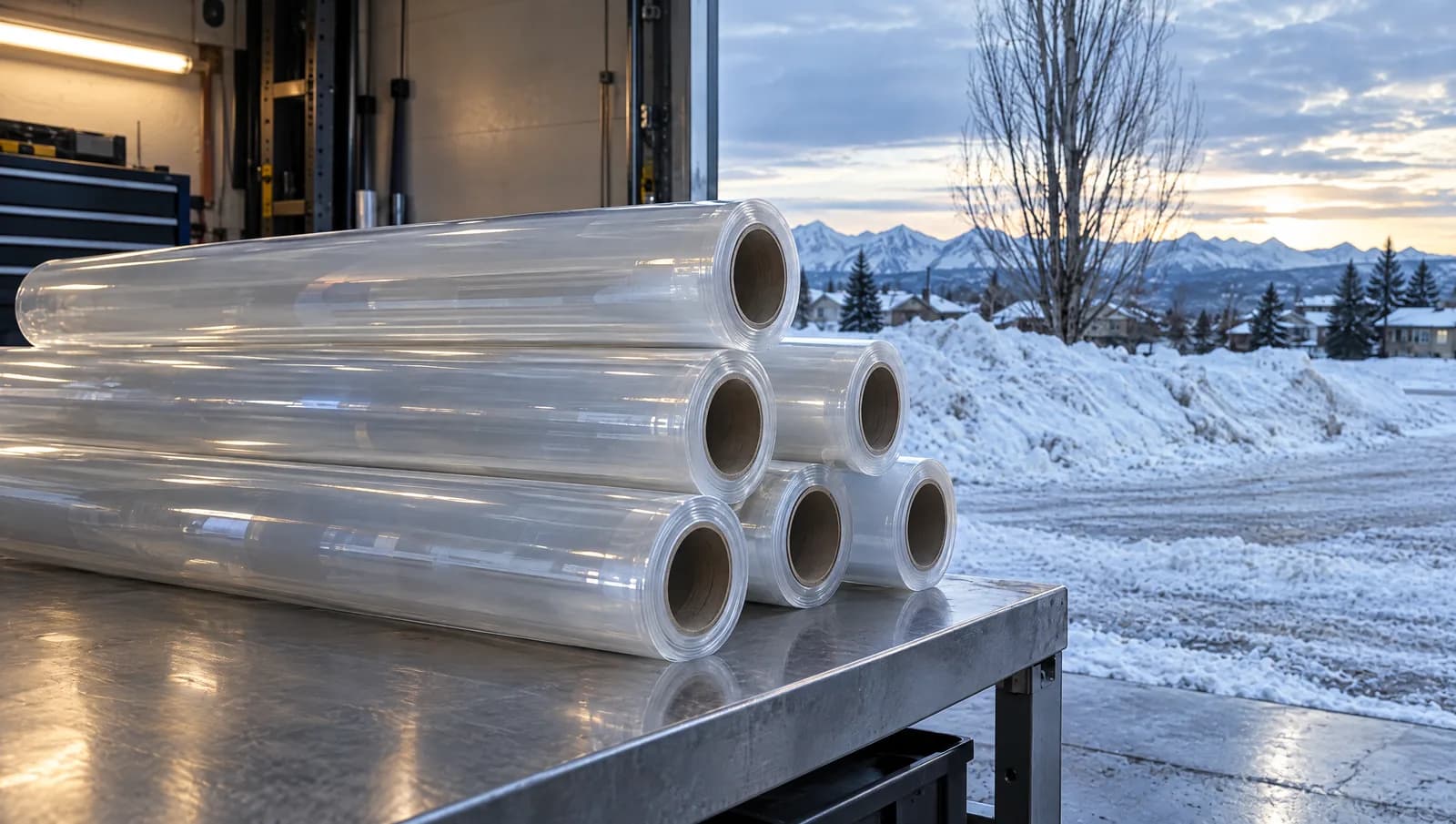
Paint protection film (PPF), sometimes called a clear bra, is a clear urethane film applied over the paint. We install ARK Defender and Fusion (8.5 mil), GSWF Defender Platinum, STEK DYNOshield, 3M Scotchgard Pro Series and Pure PPF.
- It takes the abrasionThe films we install are 8 to 8.5 mil thick. ARK Defender and Fusion, at 8.5 mil, are the thickest and our first pick for Calgary gravel. Salt crystals, sand and small stones hit the film, not the clear coat.
- It keeps brine off the paintUrethane does not react with road salt, and brine cannot reach the paint through the film. Covered panels have no chips for rust to start in.
- It heals light scratchesThe top coat is self-healing. Light scratches in the film from grit and washing close up with heat, so the surface stays smooth and easy to rinse.
What film does not do: it protects the panels it covers, nothing else. It will not stop rust that has already started under the paint, and it does not protect the frame, brake lines or wheel wells. You still need to rinse salt off through the winter, because brine left sitting works at film edges too.
PPF vs ceramic coating for road salt
| Factor | PPF | Ceramic coating |
|---|---|---|
| Stops rock chips and grit abrasion | Yes | No |
| Resists salt and brine | Yes | Yes |
| Makes winter washes quicker | Somewhat | Yes |
| Warranty | 10-year film warranty | 4 or 8 years by package |
| Covers | The panels in your package | All exterior paint |
The verdict: for road salt, film matters more, because the damage starts with a chip and only film stops chips. A ceramic coating is a good second layer that makes brine rinse off faster. Wax and spray sealants help for a few weeks at a time and need constant reapplying.
Which PPF package suits a Calgary winter?
A sensible minimum: The Standard
The leading 24 inches of the hood, partial fenders, mirrors and the full front bumper. It covers the area that catches spray and gravel from the vehicle ahead.
Most popular: The Signature (full front)
Front bumper, full hood, full fenders, mirrors, A-pillars and roofline. The whole front end is covered, with no film line across the hood.
Built for salt: The Velocity or The Masterpiece
The Velocity is The Signature plus the rocker panels and rear splash area, the two zones your own tires spray all winter. The Masterpiece covers every painted exterior panel.
See the flat rate for your exact vehicle
Enter your year, make and model to see your price. Like the number? Book the install online from the same screen, or send us your vehicle and we reply within one business day.
10-Year Film Warranty + Lifetime Workmanship Guarantee
The short version
Salt damage starts with a chip. Keep the paint sealed on the panels in the spray zone, rinse the brine off regularly, and protect the underbody separately. Our winter car protection guide for Calgary puts film, coating and undercoating together in one plan. Want a price for your vehicle? Get a free PPF quote and we reply within one business day.
Updated November 14, 2026: added a short questions section on road salt in Calgary.
Frequently Asked Questions
Does road salt damage car paint?
Yes, and it starts with chips. Grit in the slush chips the clear coat on the lower and front panels, and the brine that collects in each chip starts rust on the metal. Chinook freeze-thaw swings keep that cycle going all winter. Film on those panels (8 to 8.5 mil of urethane) keeps the clear coat unbroken, so the brine has nowhere to start.
- 4-Time Consumer Choice Award Winner
- 5.0 across 100+ Google reviews
- ARK Defender & Fusion 8.5-mil film
- GSWF, STEK, 3M & Pure PPF film
- 10-year film warranty
- Lifetime workmanship guarantee
- Written by the people who do the installs
Ready for a price on your vehicle?
Tell us what you drive and we reply within one business day with a written price. Ready now? Book straight off our live calendar. 4-Time Consumer Choice Award Winner, rated 5.0 across 100+ Google reviews.
The calendar is live: pick a real opening. A deposit secures your slot. Rather talk it through? Call (403) 830-3311
- 5.0across 100+ Google reviews
- Warranty10-Year Film Warranty + Lifetime Workmanship Guarantee
- 1 dayWe reply within one business day