Is Undercoating Worth It in Calgary for a Daily Driven Car?
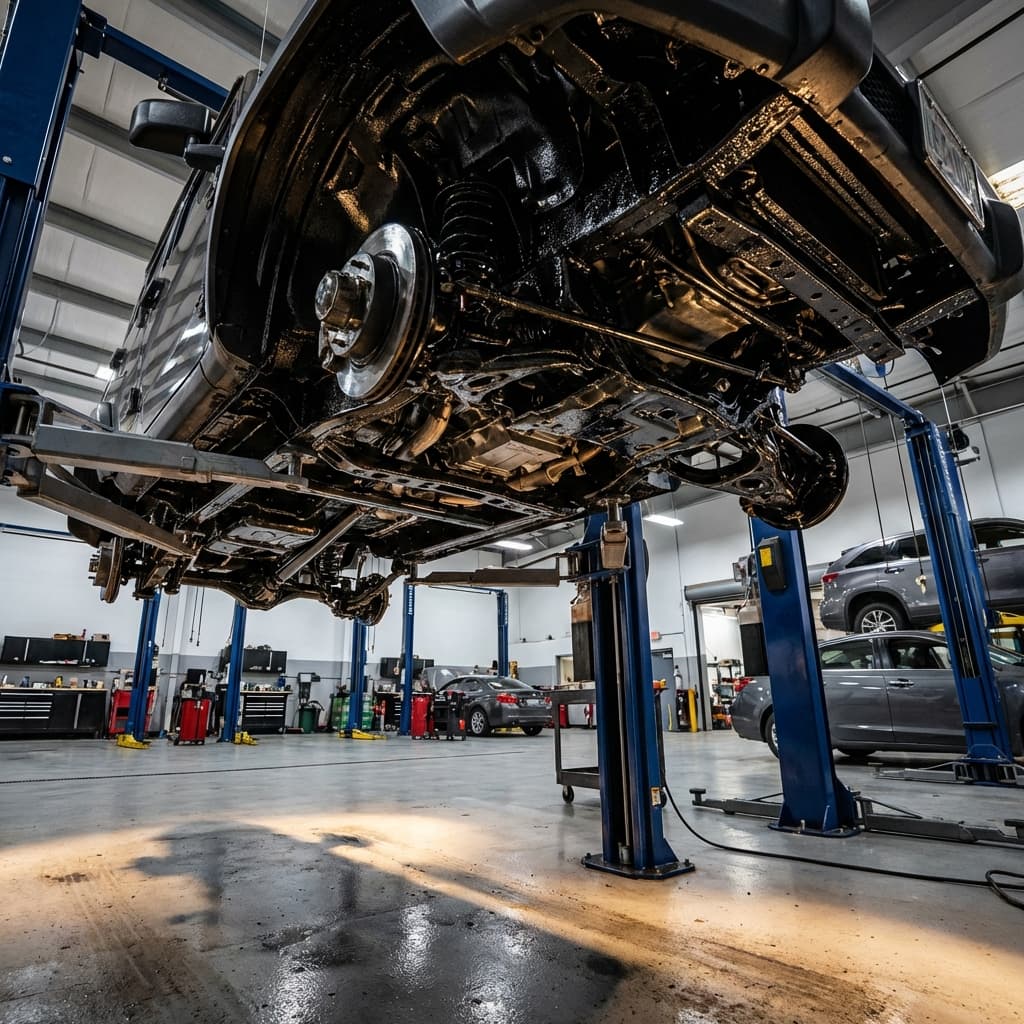
Yes, undercoating is worth it for any daily-driven car in Calgary you plan to keep more than 2 years, because the city de-ices with hygroscopic magnesium chloride (MgCl2) brine that clings to your undercarriage and attacks brake lines, fuel lines, and suspension year-round. An annual oil-based treatment runs roughly $150-$200, while ignoring rust can cut your 5-year resale value by $2,000-$5,000 and trigger repairs like a $1,500+ corroded control arm. For Calgary's conditions, oil-based undercoating is preferred because it penetrates seams, self-heals, and won't trap moisture the way hard rubberized coatings can.
In 2026, with vehicle lifespans extending and the insidious threat of Calgary's unique winter chemicals intensifying, the question isn't whether undercoating is a luxury, but whether it's a non-negotiable investment. If you own a modern vehicle in Calgary and plan to keep it for more than a few years, undercoating is not just 'worth it' – it's foundational to preserving your vehicle's integrity, safety, and most importantly, its resale value.
The Unrelenting "Mag-Chloride" Menace: Calgary's Unique Corrosion Challenge
Calgary's de-icing strategy heavily relies on Magnesium Chloride (MgCl2). This isn't your grandfather's rock salt. Mag-Chloride is a hygroscopic compound, meaning it actively attracts and retains moisture from the air, even on dry, sunny days. This creates a perpetual, corrosive brine that clings aggressively to every exposed metallic surface of your vehicle's undercarriage.
Unlike traditional salt, which might rinse off after a few days, Mag-Chloride's persistent nature ensures a continuous attack on your vehicle's vulnerable components. Modern vehicles, with their increasingly complex electronics, sensors, and lightweight alloy components, are more susceptible than ever to this corrosive onslaught. Plastic undertrays, once thought to offer protection, often exacerbate the problem by trapping the corrosive agents directly against the metal, preventing natural rinsing.
The financial implications of ignoring this are staggering. Beyond cosmetic rust, Mag-Chloride accelerates the degradation of critical safety components:
- Brake Lines: Pitting and corrosion can lead to catastrophic failure.
- Fuel Lines: Compromised lines are a fire hazard.
- Suspension Components: Control arms, sway bars, and mounting points lose structural integrity, impacting handling and safety.
- Electrical Connections: Corrosion in wiring harnesses can lead to expensive and intermittent electrical issues.
- Exhaust Systems: Accelerated rust-through means premature replacement.
Understanding Your Vehicle: Unibody vs. Body-on-Frame Protection in 2026
The type of vehicle construction dictates the approach to rust protection, but the need remains universal.
Body-on-Frame Vehicles (Trucks, Larger SUVs)
For traditional trucks and many larger SUVs, the body-on-frame construction means a separate chassis. These frames are typically hollow and prone to rusting from the inside out, where moisture and road salts collect undetected.
- Essential Protection: Our specialized rustproofing involves injecting a protective oil into the frame rails, cross-members, and other enclosed cavities. This creates a barrier that displaces moisture and prevents internal corrosion, a failure point often impossible to repair once advanced.
- Impact: Preserves structural integrity, prevents costly frame repairs or premature vehicle write-offs.
Unibody Vehicles (Cars, Crossovers, Smaller SUVs)
The majority of modern passenger vehicles utilize unibody construction, where the body and frame are integrated. While they lack a separate, rust-prone frame, unibody vehicles have complex subframes, suspension cradles, and numerous welded seams and pinch welds that are highly susceptible to corrosion.
- Highly Recommended: Undercoating for unibody vehicles focuses on these critical areas. Protecting subframes, control arms, brake/fuel lines, and all exposed metal surfaces is crucial. A single rusted control arm or a corroded subframe bushing mount can quickly escalate into a $1,500+ repair, not including potential cascading damage or alignment issues.
- Impact: Maintains ride quality, prevents costly suspension component failures, and preserves structural rigidity.
The Unbeatable Resale Value Equation: Undercoating as an Investment in 2026
The 5-Year Inspection: Your Undercarriage is Your Report Card
In 2026, the vehicle inspection process at dealerships and independent buyers is more rigorous than ever. When you bring in your car for trade-in, it immediately goes onto a lift. A rusty, neglected undercarriage is a glaring red flag. Dealers will instantly devalue your vehicle by thousands of dollars because a rust-ridden car is difficult, if not impossible, to resell. A meticulously maintained, clean, and undercoated chassis, however, commands top dollar and instills confidence in any prospective buyer. This isn't just about aesthetics; it's about structural integrity and perceived longevity.
Consider the direct financial impact:
| Factor | Without Undercoating | With Annual Undercoating |
|---|---|---|
| Resale Value at 5 Years | Significant Depreciation (Estimated $2,000 - $5,000 reduction) | Maximized Value (Potentially recouping 100%+ of undercoating costs) |
| Maintenance Costs (5 Years) | High (Multiple suspension component replacements, brake/fuel line issues) | Low (Preventative maintenance, minimal rust-related repairs) |
| Safety Risks | Increased risk of component failure (brakes, suspension) | Minimized risks, maintained factory safety standards |
| Vehicle Lifespan | Reduced significantly due to structural degradation | Extended, allowing for longer ownership and higher mileage |
Choosing the Right Undercoating: What to Look for in 2026
Not all undercoatings are created equal. In 2026, the market offers a range of solutions, but key differentiators are crucial for effective, long-lasting protection.
- Oil-Based vs. Rubberized:
- Oil-Based (Recommended for Calgary): Penetrates seams and crevices, self-healing, doesn't crack or chip. Ideal for active corrosion protection and deep penetration into existing rust. Requires annual reapplication.
- Rubberized: Creates a durable, hard barrier. Excellent for sound deadening and abrasion resistance on new vehicles, but can trap moisture underneath if improperly applied or if rust has already begun. Not self-healing.
- Drip-Free Formulas: Early oil-based undercoatings were notoriously messy. Modern, high-quality formulas are engineered to be drip-free, ensuring a clean application without leaving stains on your driveway.
- Professional Application: Proper application is paramount. This includes thorough cleaning of the undercarriage, careful masking of sensitive components (brakes, exhaust), and comprehensive coverage, including internal frame cavities where applicable.
- Environmental Impact: Look for products that are environmentally friendly and compliant with current regulations, reflecting a commitment to both your vehicle and the planet.
The Pros
- Prevents structural rust failure, enhancing long-term safety
- Significantly increases vehicle resale value by maintaining a pristine undercarriage
- Reduces road noise and vibrations (especially with quality rubberized coatings)
- Protects critical components: brake lines, fuel lines, wiring harnesses, suspension mounts
- Extends the overall lifespan of your vehicle, delaying costly replacements
- Cost-effective preventative maintenance compared to expensive rust repairs
The Cons
- Requires annual reapplication for oil-based coatings (typically $150-$200 annually for touch-ups)
- Initial cost can be a consideration, though quickly offset by protection and resale value
- Can be messy if using low-quality or poorly applied dripless oil formulations (ensure professional application)
- Not necessary for very short-term leases (less than 2 years) where immediate resale isn't a factor
Addressing Common Misconceptions in 2026
Despite the clear benefits, several myths about undercoating persist:
- "My new car is galvanized, it won't rust." While modern cars use galvanized steel and advanced primers, exposed areas, welds, and components not part of the main body structure remain vulnerable. The constant assault of Mag-Chloride will find a way.
- "Washing my car regularly is enough." Regular washing helps, but Mag-Chloride clings tenaciously. A simple wash often isn't enough to remove the corrosive film from hidden crevices and internal frame sections.
- "Undercoating voids my warranty." A professionally applied undercoating using reputable products will not void your manufacturer's warranty. In fact, it's a proactive measure that demonstrates good vehicle stewardship. Always confirm with your service provider.
Conclusion: The Prudent Choice for Calgary Drivers in 2026
For any daily driver in Calgary, especially given the increasingly harsh road conditions and chemical treatments, undercoating is not merely an option—it's a critical component of responsible vehicle ownership. The minimal annual investment is dwarfed by the potential costs of rust-related repairs, diminished safety, and a significant drop in resale value.
It is undeniably cheaper to proactively protect your vehicle annually than to face the inevitable and expensive replacement of corroded suspension components, rusted brake lines, or a compromised subframe. In 2026, protecting your vehicle's undercarriage is safeguarding its future. For Calgary snowbirds leaving from late October onward, the September undercoating slot doubles as the last dry-underbody window of the year — our winter car protection guide shows where undercoating fits alongside PPF and ceramic before the first salt.
Don't wait for rust to take hold. Book your comprehensive undercarriage inspection and protection service today and ensure your vehicle remains a reliable, safe, and valuable asset for years to come.
Experience The Best.
Don't let another commute compromise your vehicle. Get a quote from Calgary's Consumer Choice Award winner today.
Explore Our Services