I Kept My Hail-Damaged Car After the Insurance Buyback in Calgary — The 2026 Recovery Stack Cost & Decision Guide
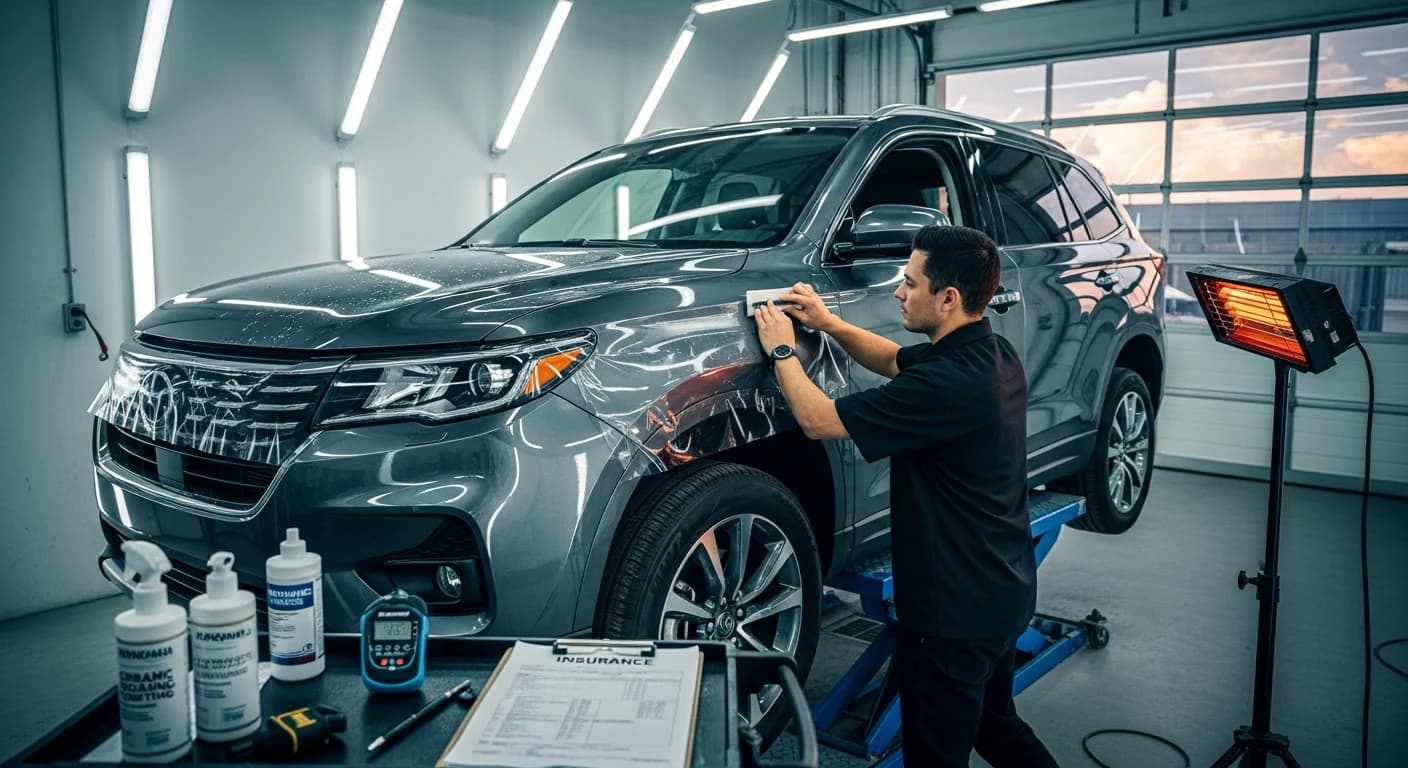
In Alberta, an insurance salvage buyback lets you keep a vehicle your insurer has totalled by paying the salvage retention (typically 20–35% of actual cash value) and accepting a rebuilt title. In 2026 Calgary, the full hail recovery stack falls into three cost tiers: Essential Repair $6,100–$12,500 (PDR + windshield + respray + light correction), Daily-Driver Stack $10,196–$18,996 (adds two-stage correction + full-front PPF + 5-year ceramic + windshield film), and Keeper Stack $14,243–$25,793 (adds full-body PPF + rocker/wheel ceramic + undercoating). The keep-vs-cash decision pencils when pre-loss ACV was $18,000–$45,000, the damage was cosmetic-only (hood/roof/trunk, no frame/airbag/mechanical), and you plan to hold the vehicle 4+ years to amortize the 25–40% rebuilt-title resale hit. A rebuilt title requires a mandatory Alberta Out-of-Province Inspection ($200–$400, 2–4 hours) before re-registration. Full storm-to-driveway timeline: 8–14 weeks during peak season, with the body-shop respray queue as the primary bottleneck. Book a post-hail PPF + ceramic reinstall assessment in Calgary once your paint has cured 30 days from respray.
The June 23, 2026 Calgary storm — three weeks earlier than the historical hail-cell peak — dropped enough golf-ball ice on the northeast quadrant to write off thousands of vehicles inside 48 hours. Two weeks later, the total-loss letters started landing and the hail salvage buyback conversation began at every carrier in the city. Some drivers took the ACV cheque, walked away, and went shopping. Others hit the buyback button — some because the pre-loss vehicle was worth more to them than any comparable at auction, some because the insurance payout would only cover 60% of a replacement, some because a specific vehicle (a first-edition Bronco, a paid-off Land Cruiser, a wedding-anniversary sedan) is not fungible for a Kelley Blue Book number. If you are in that second group, this is the numbers-first Calgary playbook for what the salvage buyback recovery actually costs and when it pencils.
We booked 40+ post-buyback reinstall consultations in the two weeks after the June 23 storm — the majority from T3J, T3N, T3P, T4A, and T1Y postal codes as the cell tracked NE Calgary and clipped Airdrie and Chestermere hardest. Every one of them a driver holding an ACV cheque and a total-loss letter and a decision to make about a car they already owned. The single biggest mistake we see is not the buyback itself; it is rebuilding without a stack plan. Owners authorize $8,000 in PDR and respray, drive the car home bare-panelled, and eight months later a second storm or a chinook gravel spray puts them back at square one on a vehicle that no longer has any insurance cushion because the buyback closed the file. The math below is the recovery-tier menu we walk every keeper through — with the honest break-even ACV thresholds for when the recovery spend pencils.
Reviewed by Calgary PPF Pros — 4× Consumer Choice Award winner, protecting Calgary vehicles since 2021, 5.0★ rated across 90 verified reviews. Hail claim frequency and severity data referenced here is drawn from the Insurance Bureau of Canada 2024 severe weather report, and Alberta rebuilt-title inspection requirements are set out in the Alberta.ca Out-of-Province Vehicle Inspection program.
What a Salvage Buyback Actually Is (Alberta)
A salvage buyback — also called owner-retained salvage or "keep the wreck" — is the option to buy back your own vehicle from your insurer after they have declared it a total loss. It is available in Alberta with any carrier, but it is a conversation you have to open yourself. Most adjusters do not volunteer it, because their default workflow is to take the vehicle to auction, recoup the salvage value, and issue you an ACV cheque for the difference. If you want to keep the vehicle instead, you request the buyback in writing — ideally within 3–5 business days of the total-loss letter and always before the ACV cheque clears your account.
The financial mechanics are straightforward. Your insurer pays out the vehicle's pre-loss actual cash value minus your comprehensive deductible minus the salvage value they would have recovered at auction (typically 20–35% of ACV, higher on newer vehicles with more valuable parts). You keep the vehicle and take on all repair responsibility. The insurance file is then closed — no further coverage on this claim event. See the pre-buyback claim vs cash break-even math for Alberta drivers for the earlier decision that led to this point.
Alberta Salvage Buyback Formula
Your Cheque = Pre-Loss ACV − Deductible − Salvage Retention
Example: 2022 Grand Cherokee with $42,000 ACV, $500 deductible, insurer values salvage at $11,000. Your cheque = $42,000 − $500 − $11,000 = $30,500 and you keep the vehicle. Compare that to $41,500 cash + no vehicle if you had declined the buyback.
The Full 2026 Recovery Stack — Line Items
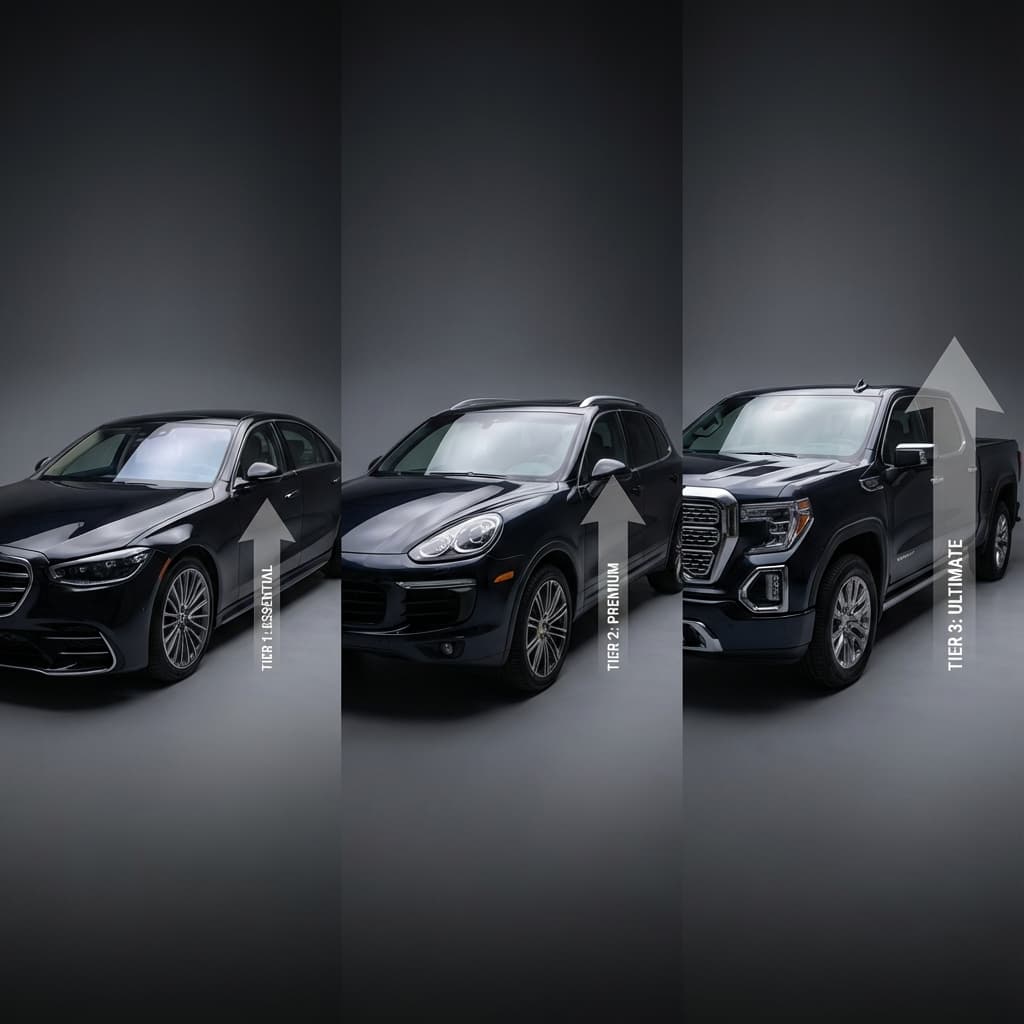
Recovery cost stacks from three inputs: paint restoration (PDR + any respray), safety systems (windshield with ADAS calibration is almost always in scope on a hail-totalled vehicle), and long-term protection (correction + PPF + ceramic + optional undercarriage and glass film). The tier you pick depends on rebuilt-title ACV and how long you intend to hold the vehicle. Below is the three-tier menu we quote across the bay counter in 2026.
Which Recovery Stack Fits Your Kept-the-Car Situation?
Intent: Restore paint, add multi-year protection
Vehicle sees Calgary weather again with the same or better protection stack it had pre-storm.
Two notes on the numbers. The Essential Repair tier is not a long-term answer — it puts the vehicle back on the road with no better protection than the day before the storm, which for many vehicles was zero. The Daily-Driver Stack is the sweet spot for most buyback vehicles worth $18,000–$45,000 rebuilt, because it uses the freshly repaired paint as the ideal substrate for film and coating (a rare adhesion window that only happens after a full repair). The Keeper Stack pencils for long-hold or sentimental vehicles — the delta between Daily-Driver and Keeper is roughly $4,000–$7,000, small relative to the total spend and lockable into the paint the same week.
When the Buyback Actually Pencils — Three-Condition Test
Not every buyback is a good idea. The recovery math pencils when three conditions line up simultaneously — miss any one and the ACV cheque + replacement vehicle is the better play.
Pre-loss ACV is $18,000–$45,000
Below $18K, the salvage retention (20–35%) eats too much of the buyback payout to leave headroom for the recovery stack; you end up paying $12K to recover a vehicle worth $14K rebuilt. Above $45K, the rebuilt-title haircut (25–40%) leaves too large a resale hole; the insurance write-off shielded you from that and you throw it away. The sweet spot is a $22K–$38K vehicle where the buyback economics preserve $8K–$18K of equity that the ACV cheque alone would not replace on the used-car market.
Damage is cosmetic-only — no frame, airbags, or mechanicals
Hail rebuilds are the best-case scenario for buyback economics because 95% of the damage is metal deformation above the panel, not structural. If the storm also broke a windshield (common — factor in the $1,400–$2,600 line item), deployed airbags (rare in hail but disqualifying — airbag replacement is $2,000+ per module and often not economical), or bent a frame (essentially impossible in hail alone), the buyback math flips. Verify with an independent pre-buyback inspection — a $150 body shop walk-around confirms the damage is PDR-eligible before you sign the buyback.
You plan to hold the vehicle 4+ more years
The rebuilt-title resale hit is felt at the point of sale — the longer you hold, the more you amortize it against the utility of driving the vehicle you already know. A 4-year hold on a $30K rebuild that would have cost $40K to replace is a $2,500/year saving; a 12-month hold and flip loses $7K–$12K to the title brand. If the plan is to keep the vehicle less than 3 years, the ACV cheque + used replacement is almost always better.
Extra factor: your insurer will still write coverage on the rebuilt title
Not all Alberta carriers write collision or comprehensive on rebuilt titles, and the ones that do sometimes exclude specific perils or reduce ACV valuations. Call a broker BEFORE signing the buyback to confirm at least two carriers will write coverage in your postal code. If the market shows a "liability-only" outcome as the best available, that changes the recovery math because a $30K vehicle without collision insurance is a $30K uncushioned bet against the next fender-bender.
Storm-to-Driveway Timeline (2026 Peak Season)
The full recovery calendar during Calgary's August–September peak storm queue is 8–14 weeks. Body-shop respray availability is the primary bottleneck — post-hail demand overwhelms local paint booths by mid-August, and quoted lead times of 4–6 weeks are typical. Booking early matters. Sequenced properly, the recovery stack looks like this:
Storm hits — document everything
Day 0–2Photos of every panel from four sides, plus close-ups of any cracked clearcoat. Open the comprehensive claim within 24 hours. Get the first-48-hour documentation and claim-opening sequence right before anything else.
Adjuster inspection and total-loss letter
Day 3–14Adjuster inspects and prepares preliminary estimate. If repair cost approaches 70–80% of ACV, expect a total-loss letter within 5–10 business days.
Request the buyback in writing
Day 7–14Respond to the total-loss letter with a written buyback request. Confirm salvage retention amount and net settlement figure. Do NOT endorse the ACV cheque until the buyback agreement is signed.
ACV settlement + get two independent PDR quotes
Day 14–21ACV cheque clears; you now own the salvage. Get two written PDR + respray quotes from independent shops (not the insurer's referral list — that's closed to you now).
PDR + body-shop respray
Week 3–9Full-vehicle hail PDR takes 2–4 weeks. Any panel with cracked clearcoat needs body-shop respray — plan 3–6 weeks. Book both simultaneously; PDR can start while respray parts arrive.
Paint cure window
Week 8–1430 days cure from any respray before PPF can be applied. 60 days before ceramic coating. Use this window to book PPF and ceramic slots and to complete the OOPI.
Alberta OOPI + rebuilt-title re-registration
Week 9–12Book at a licensed OOPI facility. Inspection verifies frame, safety systems, VIN, lights, brakes. $200–$400, 2–4 hours. Take the certificate to Alberta Registries for re-registration.
Paint correction + PPF + ceramic installation
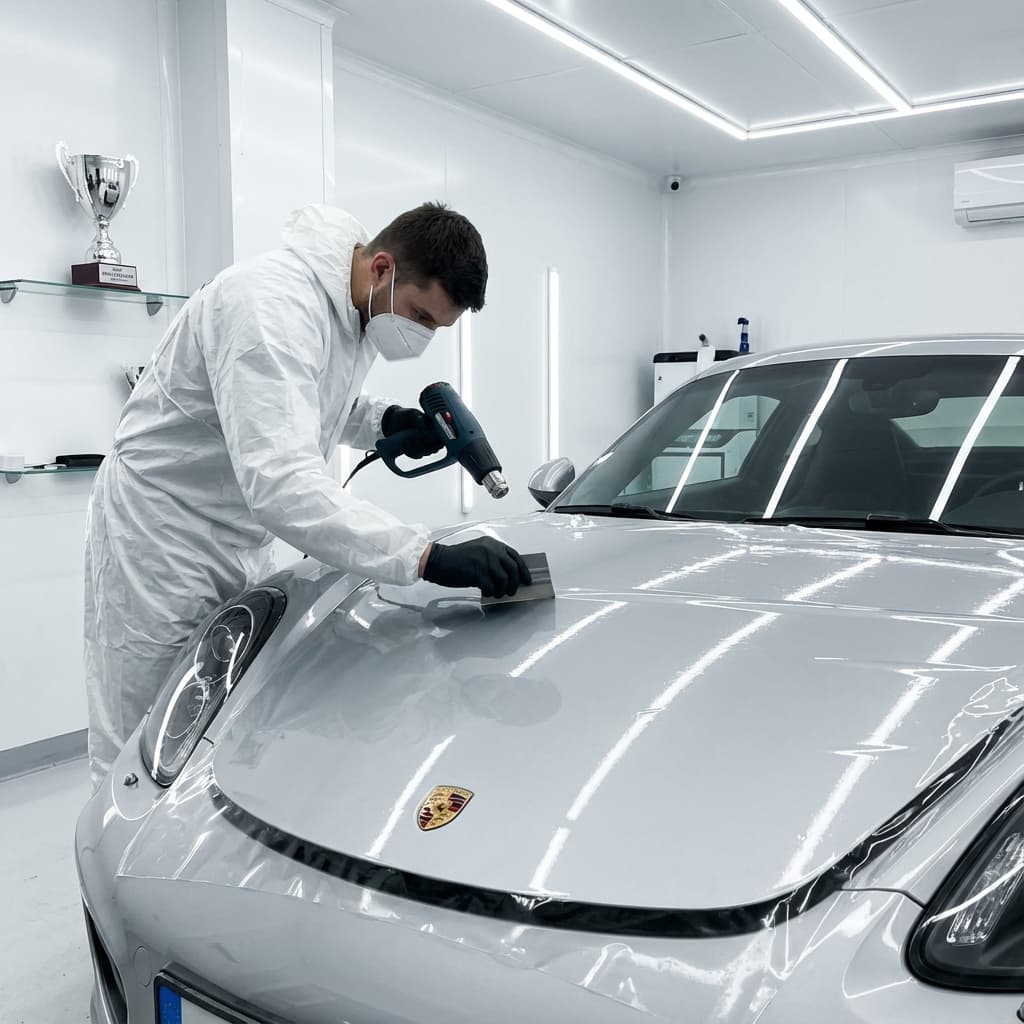
Week 12–14Full-vehicle paint correction, then PPF on hood/roof/fenders/mirrors, then ceramic coating on remaining panels. Total shop time 2–5 working days. Windshield film optional on the way out.
Re-insure and declare aftermarket value
Week 14+Shop 3–5 carriers via a broker for rebuilt-title coverage. Once bound, schedule the PPF and ceramic value as an equipment endorsement so the next storm is a covered replacement, not another cash surprise.
Recovery Sequence — What Must Happen Before What
Sequencing errors are the second-most-common recovery mistake we see after skipping the protection stack entirely. The order below is not preference — it is chemistry. Fresh paint outgasses solvents for 30–60 days; sealing it under film or coating too early causes blistering. Panels that were only PDR'd (no respray) do not have this constraint and can be filmed within a week.
| Step | What Happens | Wait Time Before Next Step | Why |
|---|---|---|---|
| 1. PDR | Metal reshaping on unbroken paint | 3–7 days | PDR uses no chemicals — the panel is immediately ready for follow-up work |
| 2. Body-shop respray (only if paint broken) | Sanding, prime, base coat, clear coat, bake | 30 days before PPF; 60 days before ceramic | Fresh clearcoat outgasses solvents — film or coating traps them and causes blistering |
| 3. Alberta OOPI | Frame, safety, VIN, lights, brakes inspection | Immediate — pass = OK to proceed | Required for road-legal status; failing pushes back the entire calendar |
| 4. Paint correction | Machine polish to remove PDR blend lines and storm-era etching | 24 hours before PPF or ceramic | Removes swirls, oxidation, and blending marks that would lock under protection |
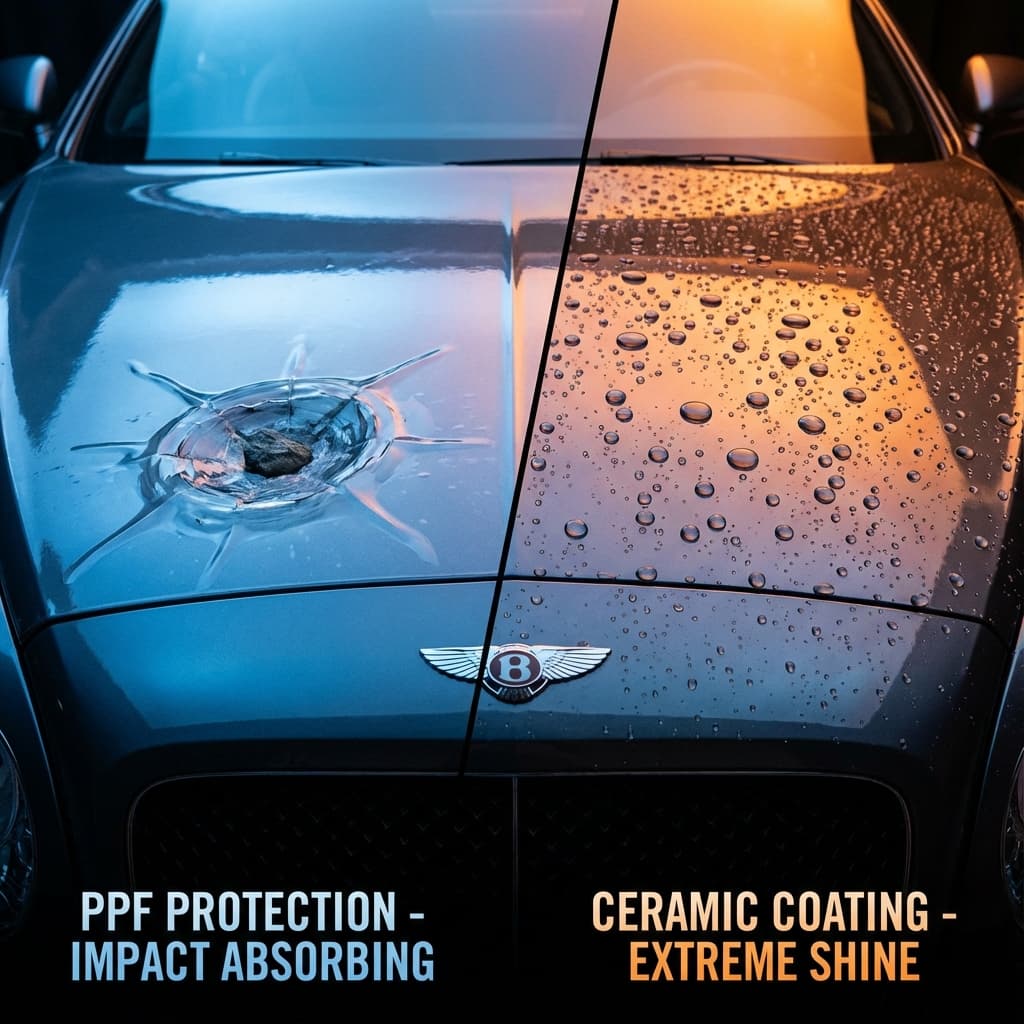
| 5. PPF installation | Film cut and applied to hood, roof, fenders, mirrors | 24–48 hours before ceramic | PPF adhesive needs to skin; ceramic on top of wet PPF adhesive is a failure mode |
| 6. Ceramic coating | Nano-glass coating on all non-PPF panels | 48 hours minimum before wash or rain | Coating needs cure time to cross-link into paint pores |
| 7. Windshield safety film | Optical-grade film applied to windshield interior | 24 hours before drive | Film needs to cure so optical clarity settles and the edges seal to the glass |
| 8. Re-registration + policy scheduling | Alberta Registries + broker call | Same-day | Cannot legally drive until re-registered; PPF/ceramic endorsement caps out-of-pocket exposure on next storm |
For deeper pricing detail on individual line items in the stack, see the current 2026 Calgary PPF reinstall pricing by coverage tier, the single-stage vs multi-stage paint correction pricing before PPF, and the windshield film vs $2,300 ADAS-replacement break-even math. The insurance side of the rebuilt-title conversation is covered in our guide on declaring the reinstalled PPF and ceramic on your rebuilt-title policy, and the first-hours storm response is in the first-48-hour documentation and claim-opening sequence.
Worked Buyback Examples — Three Real Calgary Cases
Numbers from three anonymized 2026 recovery consults we walked through this July. Names and specifics changed; costs and outcomes are real.
Case 1: 2019 Ford F-150 XLT SuperCrew, hood + roof + bedcap PDR, $500 deductible
Pre-loss ACV $32,000. Insurer retained $8,400 salvage. Cheque = $23,100. Owner elected Daily-Driver Stack: $14,800 total recovery. Rebuilt title expected resale ~$21,500 vs. clean comparable $30,000. Net: kept a $21,500 truck for $14,800 spent, netted $8,300 cheque headroom.
Verdict: PENCILS — $8,300 ahead of trading up, keeps a familiar work vehicle.
Case 2: 2014 Honda Civic, hood + roof PDR, $500 deductible
Pre-loss ACV $9,500. Insurer retained $2,100 salvage. Cheque = $6,900. Recovery quote (Essential Repair) came in at $7,400 — already above the cheque before any protection. Rebuilt-title resale ~$6,500. Net: would spend $7,400 to own a $6,500 vehicle.
Verdict: DECLINE BUYBACK — take the $9,000 total-loss cheque (ACV minus deductible when you decline the buyback and let the insurer keep the salvage) and shop the used market.
Case 3: 2015 Toyota FJ Cruiser (discontinued keeper), hood + roof + fender PDR, $500 deductible
Pre-loss ACV $28,000. Insurer retained $7,000 salvage. Cheque = $20,500. Vehicle is out of production and rising in enthusiast value. Owner elected Keeper Stack with full-body PPF: $22,100 total. Rebuilt-title FJ resale still exceeds $24,000 due to model scarcity.
Verdict: PENCILS BY UTILITY — cannot replace at any comparable price; keeper vehicles with model scarcity beat ACV math on any hold longer than 3 years.
Buyback Recovery — Pros and Cons
The Pros
- Keeps a specific vehicle you already know and modified (no replacement-market surprise)
- ACV + buyback combo often preserves $5K–$15K of equity that a straight ACV cheque cannot replace on the used market
- Freshly repaired panels are the ideal substrate for PPF and ceramic — a one-time adhesion window
- Locked-in modifications, upgrades, and known service history stay with the vehicle
- Rare/discontinued/keeper models often exceed rebuilt-title resale expectations due to scarcity
The Cons
- Permanent 25–40% rebuilt-title resale haircut at eventual sale — plan on it, do not hope
- Insurance coverage terms change post-rebuild: some carriers exclude collision, ACV valuations shrink
- Recovery paid entirely out of pocket from the ACV proceeds; no further claim coverage on the storm event
- Body-shop respray queue in Calgary Aug–Sep is 3–6 weeks — full calendar 8–14 weeks storm to driveway
- Mandatory Alberta OOPI adds $200–$400 and 2–4 hours to the recovery calendar
- Below $18K pre-loss ACV, salvage retention eats too much of the buyback for the math to pencil
Five Mistakes We See Most Often
Endorsing the ACV cheque before requesting the buyback
Once the cheque clears, some carriers treat the file as closed and buyback becomes a much harder ask. Always sign the buyback agreement first, cheque second.
Skipping the independent pre-buyback body-shop walk-around
Adjusters occasionally miss hidden damage. A $150 walk-around before signing catches frame, airbag, or mechanical issues that would flip the pencil-vs-decline math.
Booking PPF before the 30-day paint cure
Any respray needs 30 days before PPF and 60 before ceramic. Rushing the timeline blisters the film and voids the coating warranty — a $2,500 mistake most drivers only make once.
Not shopping insurance before rebuilding
Some Alberta carriers will not write collision on rebuilt titles. Confirm at least two markets before spending $15K on the recovery stack — a liability-only outcome changes the math.
Rebuilding without declaring the aftermarket protection value
PPF and ceramic on a rebuilt-title vehicle are still schedulable equipment. $20–$60/year endorsement caps out-of-pocket exposure on the next storm and converts the recovery investment into a covered asset.
Bottom Line
The Alberta hail salvage buyback is a math problem wrapped in a paperwork problem. The math pencils when pre-loss ACV was $18,000–$45,000, the damage is cosmetic-only, the plan is a 4+ year hold, and at least two Alberta carriers will still write full coverage on the rebuilt title. In that window, the 2026 recovery stack lands between $10,196 and $18,996 for the Daily-Driver Stack — the tier most kept-the-car owners should target — and preserves $5K–$15K of equity a straight ACV cheque would not have. The freshly repaired panels are the one-time adhesion window that makes fresh PPF and ceramic worth every dollar; skipping it puts the vehicle back on Calgary roads bare and cash-uninsured for the next storm. Get two independent quotes, sign the buyback before the cheque clears, respect the 30/60-day paint cure, book the OOPI as soon as respray is done, and schedule the aftermarket value on your new policy. Done in that order, the buyback returns a familiar vehicle to the road at a rebuilt-title cost most owners can pencil out on a single page.
When your paint has cured 30 days from respray and you are ready to build the recovery stack, our Calgary paint protection film service handles post-buyback reinstalls on a dedicated peak-season queue — most Daily-Driver Stack jobs turn in 3–5 working days once the paint is cleared. Contact us for a free 60-second quote and we will match a recovery package to the panels the shop actually restored on your rebuild.
Related Reading
Claim vs Cash Deductible Math
The pre-buyback decision math for Alberta hail claims — when to file, when to eat the cost, break-even by deductible tier.
48-Hour Post-Hail Playbook
The first-48-hour documentation and adjuster sequence — read this on day 0 so your buyback conversation is grounded in real evidence.
PPF Insurance Endorsement
How to schedule your reinstalled PPF and ceramic on the new rebuilt-title policy so the next storm is covered, not another cash surprise.
Frequently Asked Questions
Experience The Best.
Don't let another commute compromise your vehicle. Get a quote from Calgary's Consumer Choice Award winner today.
Explore Our Services