PPF vs Vinyl Wrap Cost in Calgary: Which Is Worth It?
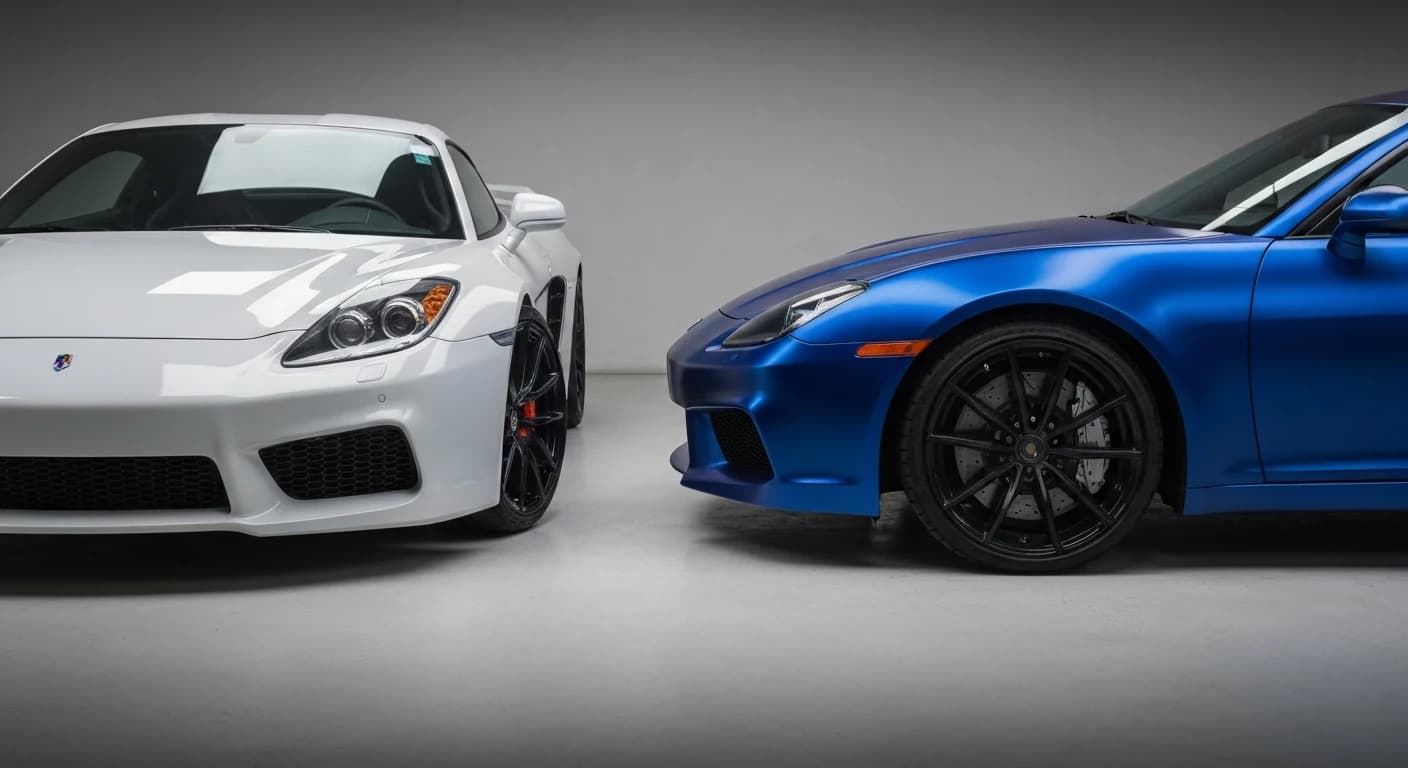
PPF and vinyl wrap are not the same product, so the cheaper one isn't the better one — it depends on what you're trying to do. Clear paint protection film (PPF) is an ~8-mil TPU film that physically stops rock chips and protects your factory paint; in Calgary in 2026 it runs roughly $899–$1,399 partial front, $1,499–$2,499 full front, and $5,000–$8,000+ full vehicle. A vinyl wrap is a 3–4 mil PVC film that changes the car's colour or finish with essentially no protection; a full colour-change wrap runs roughly $3,500–$6,000. Vinyl is usually cheaper than full PPF, but it does a different job: PPF protects, vinyl restyles. PPF also lasts far longer in Calgary's -30°C winters (8–10 year warranty vs vinyl's 3–5 years, because TPU stays elastic in cold while PVC goes brittle). Bottom line: get clear PPF to protect paint and resale on a Calgary daily driver, get vinyl for a custom look on a sheltered car — or get colored PPF if you want both colour and protection in one film.
"PPF or a wrap — which one should I get?" is one of the most common questions we field in our Calgary bay, and almost every time it's built on a false premise. People treat PPF and vinyl wrap as two versions of the same thing competing on price, when in reality they solve different problems: one protects your paint, the other changes how it looks. Once you know which problem you're actually trying to solve, the cost question answers itself. This is the honest 2026 Calgary breakdown — real price ranges, what each film actually does on Deerfoot gravel and through a -30°C winter, and which is worth it for your situation.
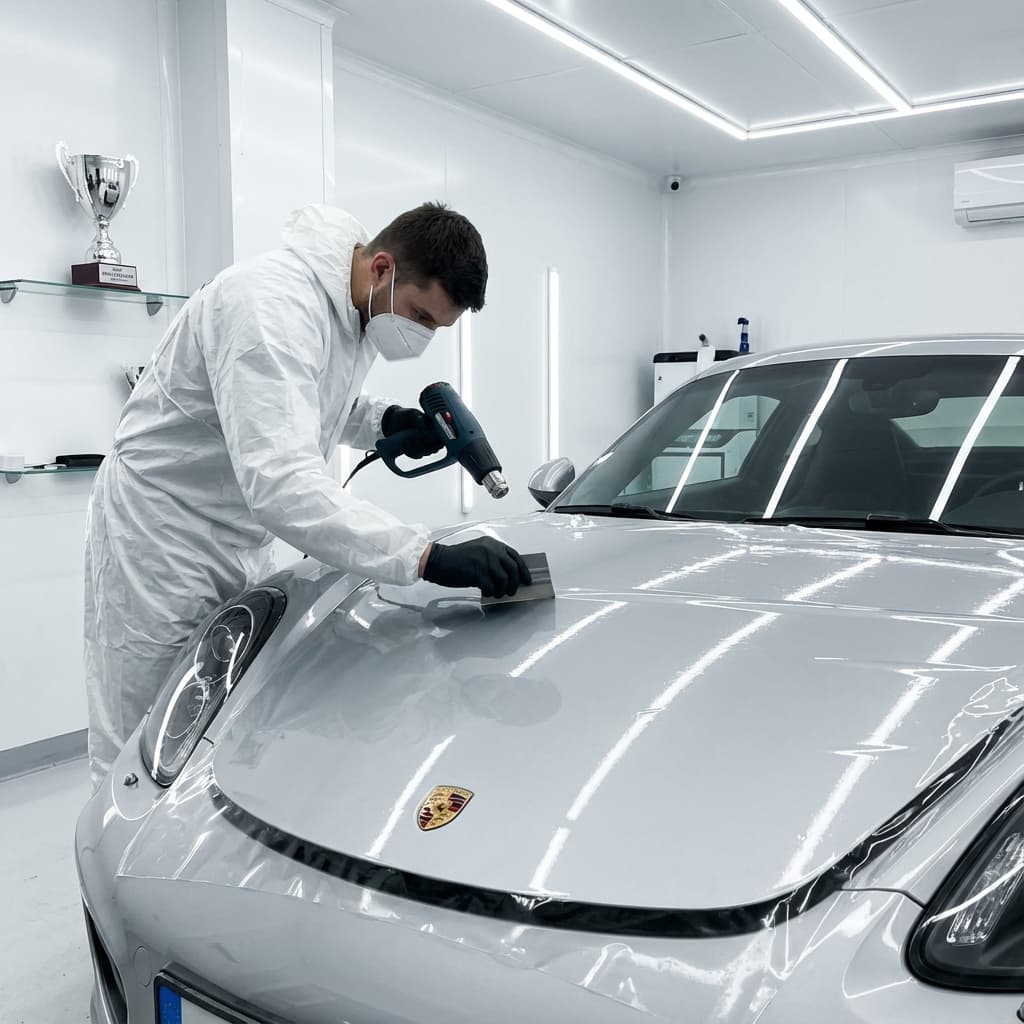
When someone walks in asking us to "wrap" their car, the first thing we do is ask what outcome they actually want — because half the time they mean "protect my paint from chips," which is clear PPF, and the other half they mean "I want it matte black," which is vinyl. They're two entirely different jobs that the word "wrap" gets stretched to cover. The owners who end up happiest are the ones who get clear about the goal first: a daily driver on Stoney Trail who hates seeing fresh chips on a clean bumper almost always wants PPF, while someone restyling a garaged weekend car for a show wants vinyl. We install both, and we'll tell you which one fits your goal before we quote a dollar.
Reviewed by Calgary PPF Pros — Consumer Choice Award winner, protecting Calgary vehicles since 2021.
The 30-Second Answer: They Solve Different Problems
Clear PPF and vinyl wrap aren't cheaper-or-pricier versions of one product — they do opposite jobs. PPF is protection: an invisible urethane shield that absorbs rock chips and keeps your factory paint intact. Vinyl is appearance: a coloured film that restyles the car but offers essentially no impact defence. So "which is worth it" isn't about price at all — it's about whether you're trying to protect your paint or change it.
The simplest way to decide: if the thought of a chipped bumper on Deerfoot bothers you more than the colour of the car, you want clear PPF. If the colour of the car bothers you more than a chip ever would, you want vinyl. And if both bother you, colored PPF does both at once — more on that below. For the deeper material-science version of this comparison, our older colored PPF vs vinyl wrap cost guide covers the TPU-versus-PVC chemistry in detail.
Cost Comparison in Calgary, 2026
Here are the real Calgary ranges for both films in 2026. Clear PPF is usually priced by coverage zone (partial front, full front, full vehicle) because most people protect the high-impact panels first; vinyl is usually priced as a full or partial colour change. A vinyl colour change tends to come in cheaper than full-vehicle PPF — but remember you're buying a different outcome.
| Package | What You Get | Calgary 2026 Cost | Lifespan |
|---|---|---|---|
| Partial-front clear PPF | Bumper, leading hood + fenders, mirrors — protection only | $899–$1,399 | 8–10 yrs (warrantied) |
| Full-front clear PPF | Full hood, fenders, bumper, mirrors, A-pillars — protection only | $1,499–$2,499 | 8–10 yrs (warrantied) |
| Full-vehicle clear PPF | Whole car protected — invisible, no colour change | $5,000–$8,000+ | 8–10 yrs (warrantied) |
| Partial vinyl wrap | Colour change on hood / roof / mirrors — looks only | $800–$1,500 | 3–5 yrs in Calgary |
| Full-vehicle vinyl wrap | Full colour or finish change — looks only | $3,500–$6,000 | 3–5 yrs in Calgary |
| Colored PPF (the both-at-once option) | Colour change + rock-chip protection in one TPU film | $7,500–$12,000 full vehicle | 8–10 yrs (warrantied) |
Ranges reflect 2026 Calgary market pricing and vary by vehicle size, film line (STEK, 3M, SunTek), finish, and panel complexity. Larger SUVs and trucks sit at the top of each range. For full colour-change pricing specifically, see our car wraps Calgary cost guide.
What Each Film Actually Protects Against
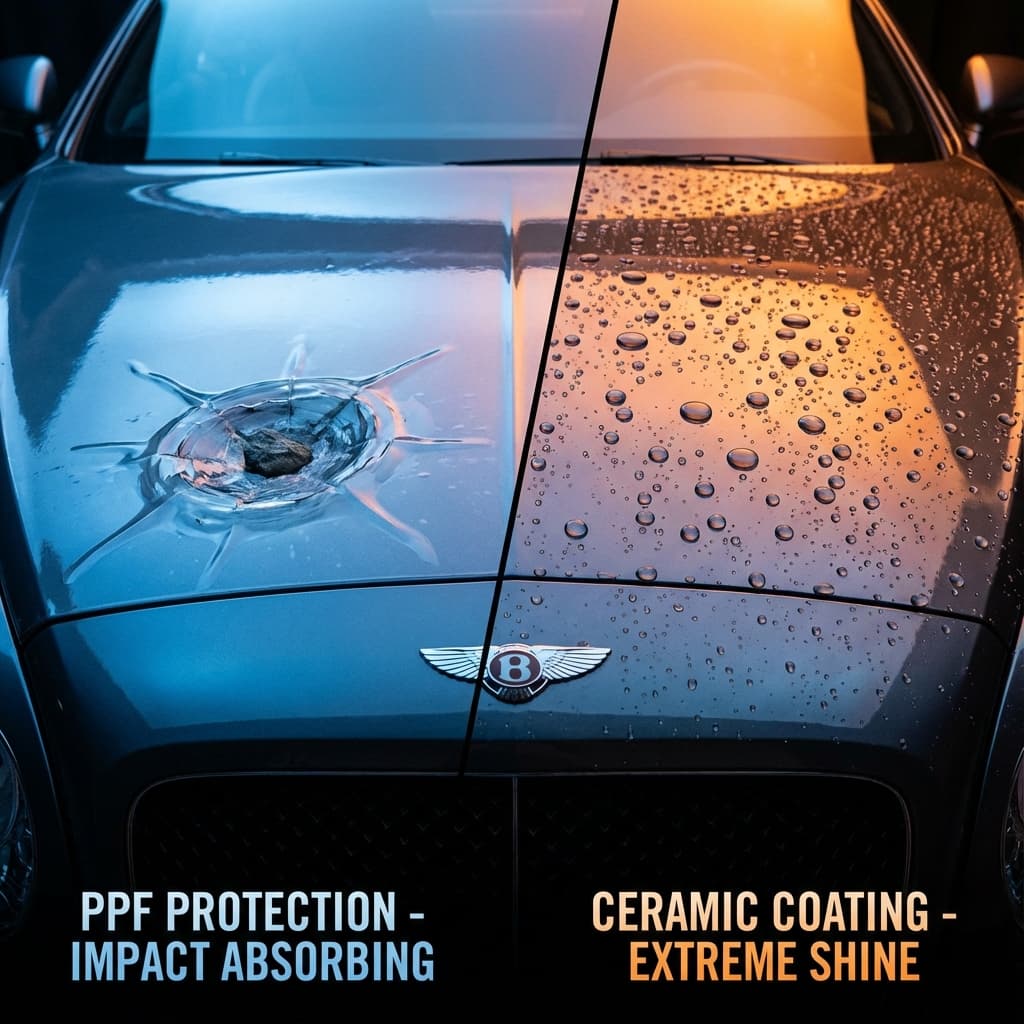
This is the row that decides most Calgary decisions, so it gets its own section. Clear PPF is purpose-built to absorb impact: rock chips, gravel strikes, light scratches, and bug-acid etching all hit the film instead of your paint. Vinyl wrap, by contrast, protects against essentially nothing — it's a thin cosmetic layer, and a stone that chips bare paint will chip or tear the vinyl just the same, leaving the paint underneath exposed.
In a city where Deerfoot and Stoney Trail fling gravel at highway speed, the City spreads tens of thousands of tonnes of winter sand-and-gravel traction material, and spring chip-seal season runs roughly March through May, that difference is the whole ballgame. A vinyl wrap looks great the day it goes on, but it does nothing to stop your bumper from collecting the same chips a bare car would. Clear PPF is the only film here that physically stands between Calgary gravel and your clear coat. Our Calgary paint protection film page breaks down which panels take the most strikes and how coverage maps to them.
Durability in Alberta Winters: TPU vs Vinyl
The two films also age completely differently in our climate, and it comes down to chemistry. Clear PPF is thermoplastic polyurethane (TPU), which stays flexible and elastic in deep cold and self-heals light swirls with heat. Vinyl is polyvinyl chloride (PVC), which gets progressively brittle as temperatures drop. Calgary is unusually hard on brittle films: lows around -30°C, Chinooks that swing the temperature 25–30°C in a single afternoon, and relentless freeze-thaw cycling that works at film edges all winter.
In our experience that's why vinyl wraps here tend to show edge lifting, shrinking, and hairline cracking — usually on bumpers, mirror caps, and tight body curves — after two or three hard winters, even on an excellent install. Quality vinyl is rated for about 3–5 years in Calgary and often retired sooner; quality clear PPF carries 8–10 year manufacturer warranties and the TPU shrugs the same cycling off. If the vehicle lives outside through Calgary winters, durability decisively favours PPF; a garaged seasonal car narrows the gap and keeps vinyl viable.
The Pros
- Clear PPF: physically stops rock chips and gravel strikes — Calgary’s main paint threat
- Clear PPF: TPU stays elastic at -30°C, no cold cracking through Chinook freeze-thaw
- Clear PPF: self-healing topcoat erases light wash swirls with heat
- Clear PPF: invisible — keeps your original colour, 8–10 year warranty, lifts resale
- Vinyl: lowest-cost way to change colour or finish, with the widest catalogue (chrome, colour-shift, prints)
- Vinyl: easy and cheap to re-wrap a single panel or swap the whole look later
The Cons
- Clear PPF: doesn’t change the colour or finish of the car
- Clear PPF: higher upfront cost than a vinyl colour change for full-vehicle coverage
- Vinyl: zero rock-chip protection — paint underneath stays fully exposed to gravel
- Vinyl: PVC goes brittle in Calgary cold; edge lifting and cracking in 3–5 years
- Vinyl: no self-healing — scratches are permanent until the panel is re-wrapped
- Vinyl: removal gets risky and costly if left on past its lifespan in Calgary sun and cold
Resale & Paint Safety
Resale is where clear PPF quietly pulls ahead. Because PPF keeps the factory paint chip-free and UV-protected for its whole 8–10 year life, the original finish underneath stays in better condition than an unprotected car of the same age — and in Calgary's gravel-and-salt environment that gap can be significant by trade-in time. The film removes cleanly without harming the paint, so you hand over (or keep driving) a car with a genuinely factory-fresh finish.
Vinyl is resale-neutral when it's handled correctly — removed by a professional within its 3–5 year window, quality vinyl peels cleanly and the paint is fine. The risk is timing: leave it on too long in Calgary's UV and temperature extremes and the adhesive can cure hard, and on older or previously repainted panels, aggressive removal can lift weak clear coat. Our standing advice is to remove any vinyl on a Calgary daily driver before year five. Both films are far safer for your paint than a respray, which permanently alters the vehicle.
Can You Combine Them? Colored PPF as the Middle Ground
You don't always have to choose. If you want a new colour and chip protection, there are two routes. The two-layer route is clear PPF on the high-impact front-end panels with a vinyl colour-change wrap over the rest of the car — protection where it matters most, looks everywhere. The cleaner all-in-one route is colored PPF: a colour-change film built on the same ~8-mil TPU impact base as clear PPF, so it restyles the car and stops rock chips in a single film.
Colored PPF runs about 2x–2.5x a vinyl-only job up front (roughly $7,500–$12,000 full vehicle in 2026), but it roughly equals the combined cost of a quality vinyl wrap plus a clear front-end PPF package — while lasting far longer in Calgary's climate. So if you were already planning to buy both colour and protection, colored PPF is usually the better value. Vinyl still wins for wild finishes (chrome, colour-shift, printed graphics) and the lowest possible price. Our colored PPF in Calgary page covers the available finishes, and the full break-even math lives in our colored PPF vs vinyl wrap cost guide.
The frame that saves you money
Don't compare PPF and vinyl on sticker price — compare them on the job you need done. If the job is "protect my paint," vinyl at any price is the wrong tool because it doesn't protect anything. If the job is "change my colour," clear PPF is the wrong tool because it's invisible. Pick the film that does your actual job, and the cost question sorts itself out.
The Bottom Line for a Calgary Vehicle
PPF and vinyl wrap aren't rivals — they're different tools for different jobs. Clear PPF is the worth-it choice when you want to protect your factory paint from Calgary gravel, winter sanding, and salt, and keep resale value high; it costs more than a vinyl colour change for full coverage, but it's the only film that actually stops a chip and it lasts 8–10 years in our climate. Vinyl is the worth-it choice when you want to change how the car looks for the lowest cost on a sheltered vehicle, accepting a 3–5 year lifespan and no protection. And if you want both at once, colored PPF combines the colour change and the chip protection in one film for roughly what vinyl-plus-clear-PPF would cost separately. Decide on the goal first, and the right answer becomes obvious.
Related Reading
Not Sure Whether You Need PPF or a Wrap?
Free 15-minute consultation. Tell us your vehicle, how you park, how you drive, and what you actually want — and we'll give you honest side-by-side pricing on clear paint protection film, vinyl wraps, and colored PPF, plus the break-even math on combining colour and protection. Calgary AB. Consumer Choice Award winner. Manufacturer-backed warranties.
Frequently Asked Questions
Experience The Best.
Don't let another commute compromise your vehicle. Get a quote from Calgary's Consumer Choice Award winner today.
Explore Our Services