What Happens to PPF After Maturity? Signs, Removal & What Comes Next
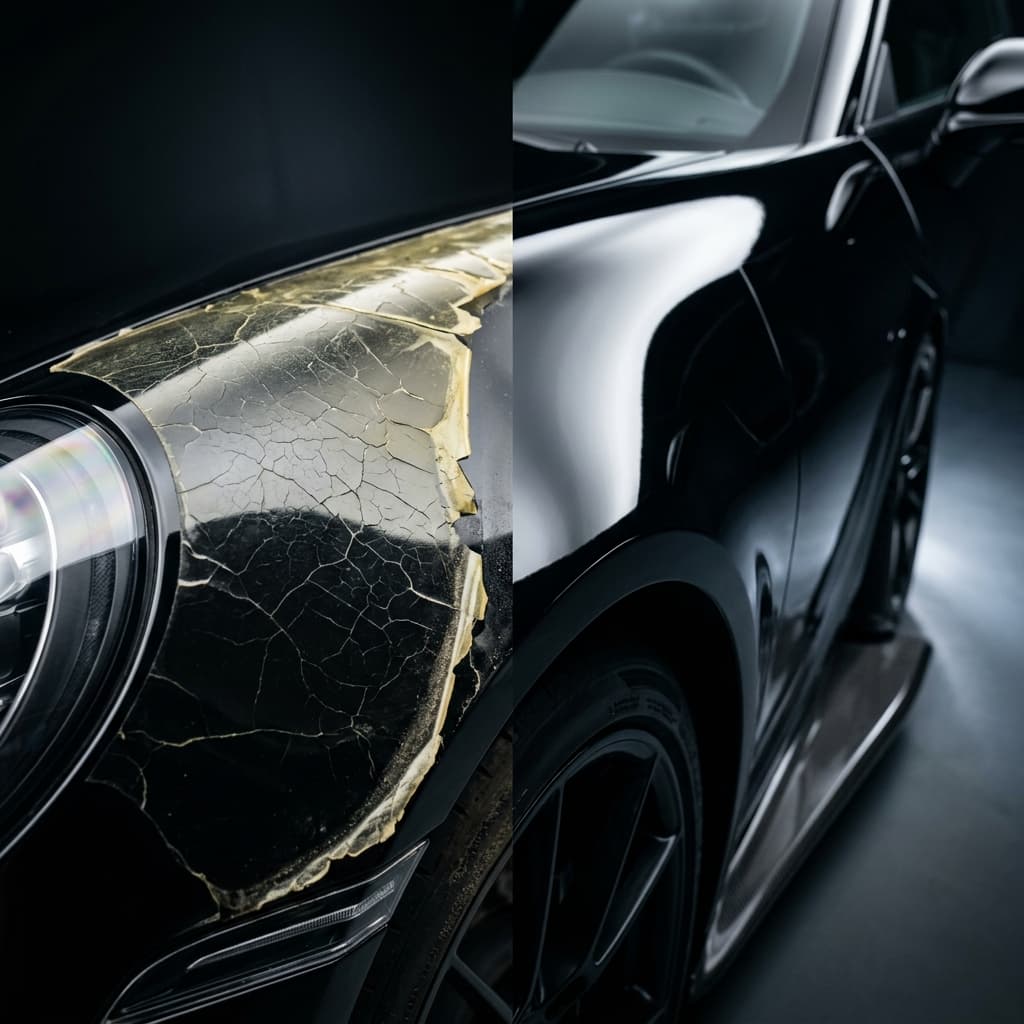
Mature PPF gradually loses self-healing speed and optical clarity, and edges may begin lifting. The paint underneath remains completely protected and pristine. When professionally removed, factory paint looks as good as installation day — often better than unprotected paint on a same-age vehicle. Most owners immediately reinstall fresh film.
PPF doesn't last forever — but when it finally reaches the end of its life, what actually happens? And more importantly, what does that mean for your paint?
The Stages of PPF Maturity
Active Protection Phase (Years 1–7)
Years 1–7Film performs at or near peak specification. Self-healing is fast (under 2 minutes in sunlight), optical clarity is excellent, edges are fully sealed. The film is actively absorbing rock chips, UV radiation, and chemical contaminants so your paint doesn't have to. Regular washing maintains it easily.
Late-Life Performance (Years 7–10)
Years 7–10Self-healing slows slightly (2–5 minutes in direct sun). Very subtle hazing may appear in highest-impact zones (front bumper centre, hood leading edge). Edges remain sealed. Protection continues effectively. Annual professional inspection recommended to catch any edge lifting early.
Film Maturity (Years 10–12)
Years 10–12The 10-year warranty period ends. Self-healing may take 5+ minutes or become less complete for deeper scratches. Optical hazing may be visible in bright light in high-UV zones. Edge lifting may begin at more complex curves. The film is past its designed service life — but paint underneath remains protected.
Replacement Decision Point
Year 12+The film's protective properties begin degrading. Continued use with deteriorating film is better than no film, but the gap narrows. This is the optimal removal point — before adhesive becomes difficult to manage and while paint remains in pristine condition from years of protection.
Exactly What Changes as PPF Ages
| Property | New Film (Yr 1) | Late-Life Film (Yr 7–10) | Mature Film (Yr 10+) |
|---|---|---|---|
| Self-Healing Speed | 30–60 sec | 2–5 min | 5+ min (incomplete) |
| Optical Clarity | Crystal clear | Very clear | Faint haze in UV zones |
| Yellowing | None | None (premium film) | Possible at high UV areas |
| Edge Integrity | Fully sealed | Sealed (inspect annually) | May begin lifting |
| Impact Absorption | 100% | 95%+ | 80–90% |
| Hydrophobic Properties | Excellent | Good | Reduced (if no ceramic) |
| Chemical Resistance | Excellent | Very Good | Good |
The Most Important Fact: Your Paint is Still Pristine
Under Mature PPF: Factory Paint in Original Condition
This is the most compelling reason to get PPF in the first place. When we professionally remove 10-year-old premium PPF from a vehicle, the factory paint underneath is in the exact condition it was the day PPF was installed — or better. Zero rock chips. Zero UV oxidation. Zero salt etching. Original factory clearcoat, untouched.
Compare that to an unprotected vehicle driven the same 10 years in Calgary: hundreds of rock chips, UV oxidation requiring paint correction, possible rust bubbles at chip penetrations, and a resale value penalty of $2,000–$8,000 depending on severity. The PPF did exactly its job.
Signs Your PPF Has Reached Maturity — Act Now
🚨 Immediate Action Needed
- • Visible cracks forming in the film surface
- • Large lifting sections (more than 2cm)
- • Obvious yellowing visible from 3 metres
- • Bubbling beneath the film
- • Film delaminating from itself (layers separating)
⚠️ Schedule Inspection Soon
- • Self-healing takes 10+ minutes in direct sun
- • Subtle hazing visible in direct sunlight
- • Small edge lifts at corners (under 2cm)
- • Water no longer beads — sheets instead
- • Film is 10+ years old regardless of appearance
The Professional Removal Process
Pre-Inspection & Documentation
Step 1Before removing any film, your installer documents the current condition of both the film and visible paint around edges. This establishes baseline condition and identifies any areas where adhesive may have bonded more strongly (common in Calgary's heat-cycle conditions).
Controlled Heat Application
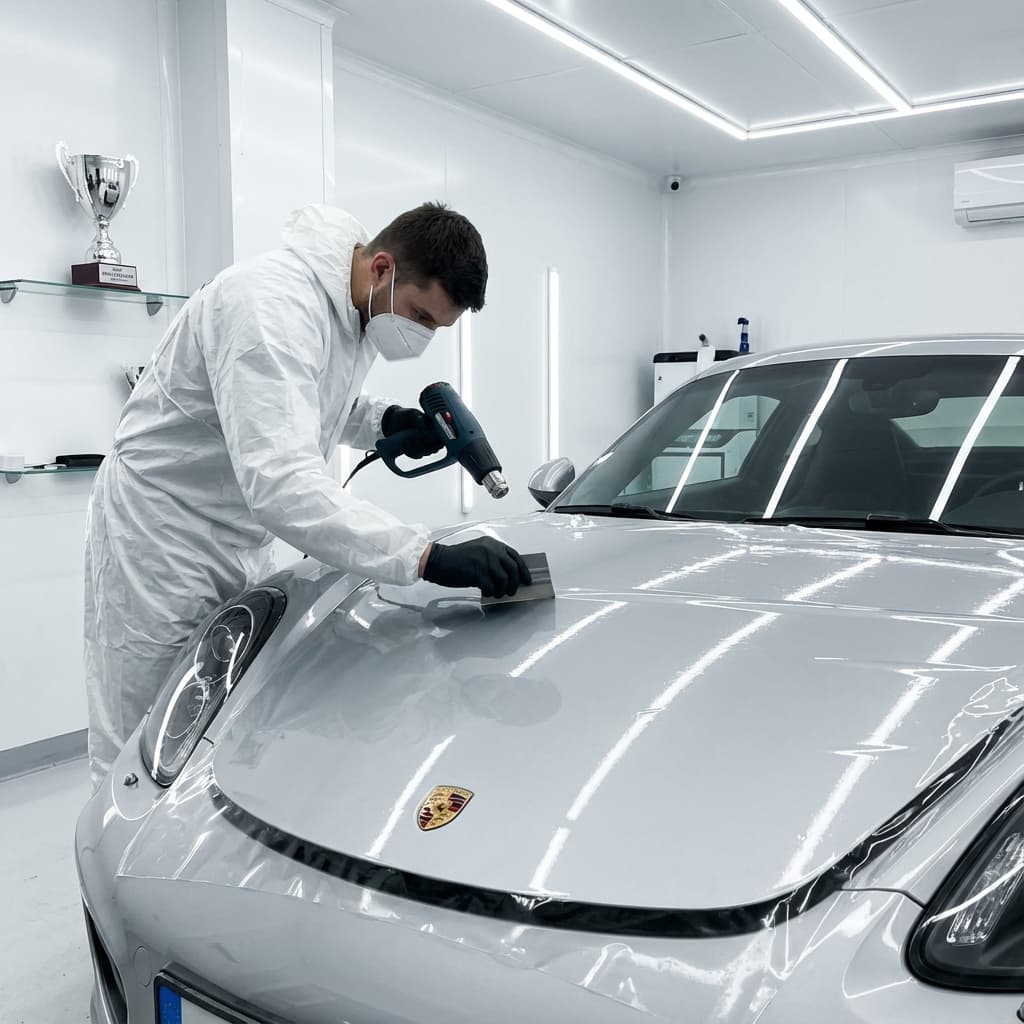
Step 2A heat gun or infrared lamp is used to gently warm the film to 35–45°C. This reactivates the pressure-sensitive adhesive and makes the film pliable. Heat is critical for clean removal — cold film becomes brittle and can tear, leaving adhesive residue on the paint.
Careful Film Lifting
Step 3Starting at an edge, the film is lifted slowly at a low angle (under 45°) to maintain even adhesive release. The same angle matters: too steep and the adhesive stretches and leaves residue. A professional moves methodically, reapplying heat as needed.
Adhesive Residue Removal
Step 4Any residual adhesive is addressed with a PPF-safe adhesive remover or IPA solution. Premium film leaves minimal residue. Older or budget film may require additional work. A proper clay bar treatment follows to ensure all bonded particles are removed.
Paint Inspection & Preparation for Reinstall
Step 5With the film removed, paint is thoroughly inspected. Factory clearcoat is assessed for condition. A light polish may be performed to address any microscopic surface contamination before new film installation. Paint is then IPA-wiped clean for perfect adhesion.
Removal Costs in Calgary
| Coverage | Removal Cost | Time Required | Notes |
|---|---|---|---|
| Partial front only | $200 – $400 | 1–2 hours | Bumper + partial hood |
| Full front package | $400 – $800 | 2–4 hours | Hood, bumper, fenders, mirrors |
| Full front + rockers | $600 – $1,000 | 3–5 hours | Includes door edges |
| Full body removal | $1,200 – $2,500 | 1–2 days | Complete vehicle |
Many installers offer discounted bundled pricing when removal and reinstallation are done together. Ask about combined pricing at your consultation.
After Removal: Should You Reinstall or Sell?
The Pros
- Reinstall immediately — factory paint is pristine and ready for 10 more years of protection
- Selling the vehicle? Remove PPF before sale and show buyers the perfect factory paint
- Partial reinstall — if budget has changed, drop to full front only from a previous full body
- Upgrade to PPF + ceramic coating — get the hydrophobic benefit the previous owner skipped
- Use the removal appointment for a full paint inspection and light correction if needed
The Cons
- Don't leave paint exposed after removal — every week unprotected in Calgary means risk
- Don't try DIY removal on old film — cold, brittle film tears and leaves residue
- Don't assume warranty-expired film provides the same protection as new film
- Don't let a cheap shop handle removal — improper technique damages clear coat
Is Your PPF Reaching Maturity?
If your PPF is 8+ years old, schedule a professional inspection. We'll assess the film condition, show you exactly what we see, and recommend the right time to replace it — not before. Backed by 30+ years of combined team experience.
Book InspectionFrequently Asked Questions
Experience The Best.
Don't let another commute compromise your vehicle. Get a quote from Calgary's Consumer Choice Award winner today.
Explore Our Services