Can You Apply PPF Yourself? A Panel-by-Panel Difficulty Guide
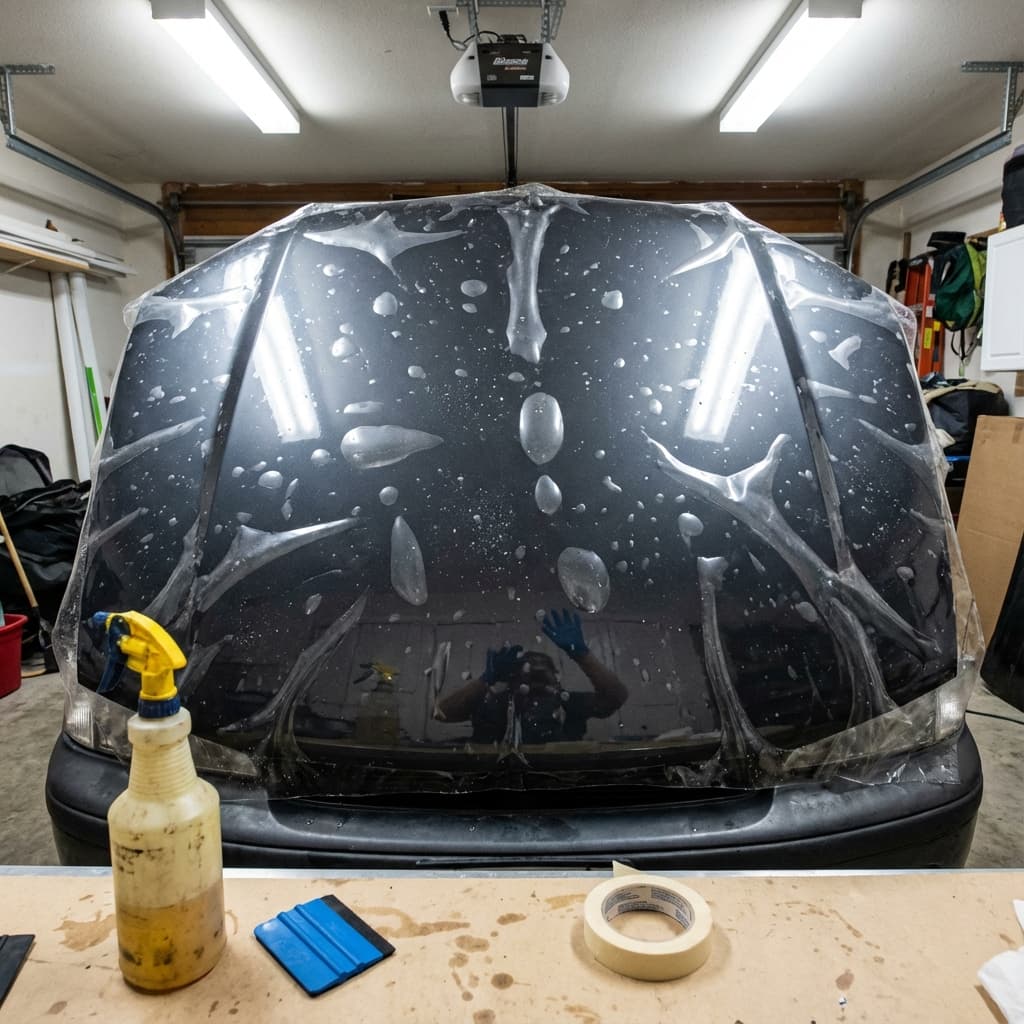
DIY PPF is possible — but only on flat, simple panels. Door cups, hood strips, and rocker panel overlays are manageable. Bumpers, fenders, A-pillars, and mirrors are not — the failure rate for first-time installers is high, and wasted film costs more than the labour savings. Our recommendation: DIY small flat panels, hire a pro for everything involving compound curves.
PPF difficulty varies dramatically by panel. A door cup is genuinely approachable. A side mirror is something even experienced installers spend years mastering. Here's an honest panel-by-panel breakdown so you can make the right call.
Note: Blog116 covers the DIY vs. pro decision in general terms. This post is the panel-specific difficulty addendum — use it to plan exactly which panels to tackle yourself and which to leave to a certified installer. If you're leaning toward professional installation, see what to expect during a professional PPF installation so you know exactly how the process works from drop-off to pickup.
Panel Difficulty Ratings (1–5 Scale)
| Panel | Difficulty | Why It's That Hard | DIY Recommended? |
|---|---|---|---|
| Door cups / handles | ⭐ (1/5) | Small, flat — pre-cut kits drop right in | Yes |
| Partial hood strip | ⭐⭐ (2/5) | Flat centre, manageable size, forgiving edges | Yes |
| Bumper corners | ⭐⭐ (2/5) | Compound curves require careful stretching | Maybe |
| Rocker panels | ⭐⭐⭐ (3/5) | Long, flat but requires precise edge tuck under sill | Maybe |
| Full bumper | ⭐⭐⭐ (3/5) | Large, multiple curves, inlet openings to navigate | No |
| Full hood | ⭐⭐⭐ (3/5) | Large panel, edges need tucking under hood lip | No |
| Fenders | ⭐⭐⭐⭐ (4/5) | Wheel arch curves, complex lower edge, tight tolerances | No |
| A-pillars | ⭐⭐⭐⭐ (4/5) | Tight compound curves, thin film width, must align precisely | No |
| Side mirrors | ⭐⭐⭐⭐⭐ (5/5) | Complex 3D shape, multiple edges, no flat reference points | No |
What You Need for DIY PPF
Pre-Cut Film Kit
Computer-cut pattern software offers vehicle-specific templates — the film is already cut to your exact car's panel shapes. Generic roll film requires custom cutting, which is expert-level. Always use pre-cut kits for DIY.
Heat Gun
Essential for stretching film around curves and heat-sealing edges. A variable-temperature heat gun ($40–80) is better than a hairdryer — consistent temperature control matters.
Squeegee Set
A hard and soft squeegee set ($20–40). Hard squeegee to push out water and air; soft squeegee for final passes near edges where hard edges would dig in.
Slip Solution
Diluted baby shampoo in water (2–3 drops per litre) is the standard. The slip solution lets you reposition the film before it bonds. Without it, the film grabs immediately and you can't adjust.
Trim Tools
Plastic trim tools ($15–25) for tucking film under panel edges without scratching paint. Metal tools will scratch.
Tape Measure & Marking Tape
For aligning film to panel centre lines before application. Eyeballing alignment on a large panel almost always results in a crooked install.
Time Estimate
Door cups: 30–45 minutes. Partial hood strip: 1–2 hours. Full front (bumper + full hood) for an experienced DIYer: 4–8 hours. For a first-timer on a full front: budget 8–16 hours across two days. Rushing is the number one cause of DIY failures.
Before any film goes on, your paint surface needs to be spotless — freshly washed, clay-barred, and fully decontaminated. Our guide on how to prepare your car for PPF installation walks through every step, and the checklist applies equally whether you're doing the install yourself or dropping the car at a shop. Also worth noting: if your paint has swirl marks or etching, those will be visible under the film — check our post on whether paint correction is needed before PPF before you start.
The Most Common DIY Mistakes
Bubbles from Insufficient Squeegee Pressure
Water or air trapped under the film appears as bubbles. Small water bubbles (under 5mm) sometimes evaporate out on their own within a week. Large air bubbles don't — the film needs to be lifted and reapplied. Proper squeegee technique is firm, overlapping passes from centre to edge.
Edge Lifting from Not Tucking or Heat-Sealing
Film edges that end at a panel surface (rather than tucking under) will lift within weeks. Every edge needs to either tuck under the panel lip or be heat-sealed with a careful pass of the heat gun. Heat-sealing activates the adhesive at the edge for a permanent bond.
Contamination Under the Film
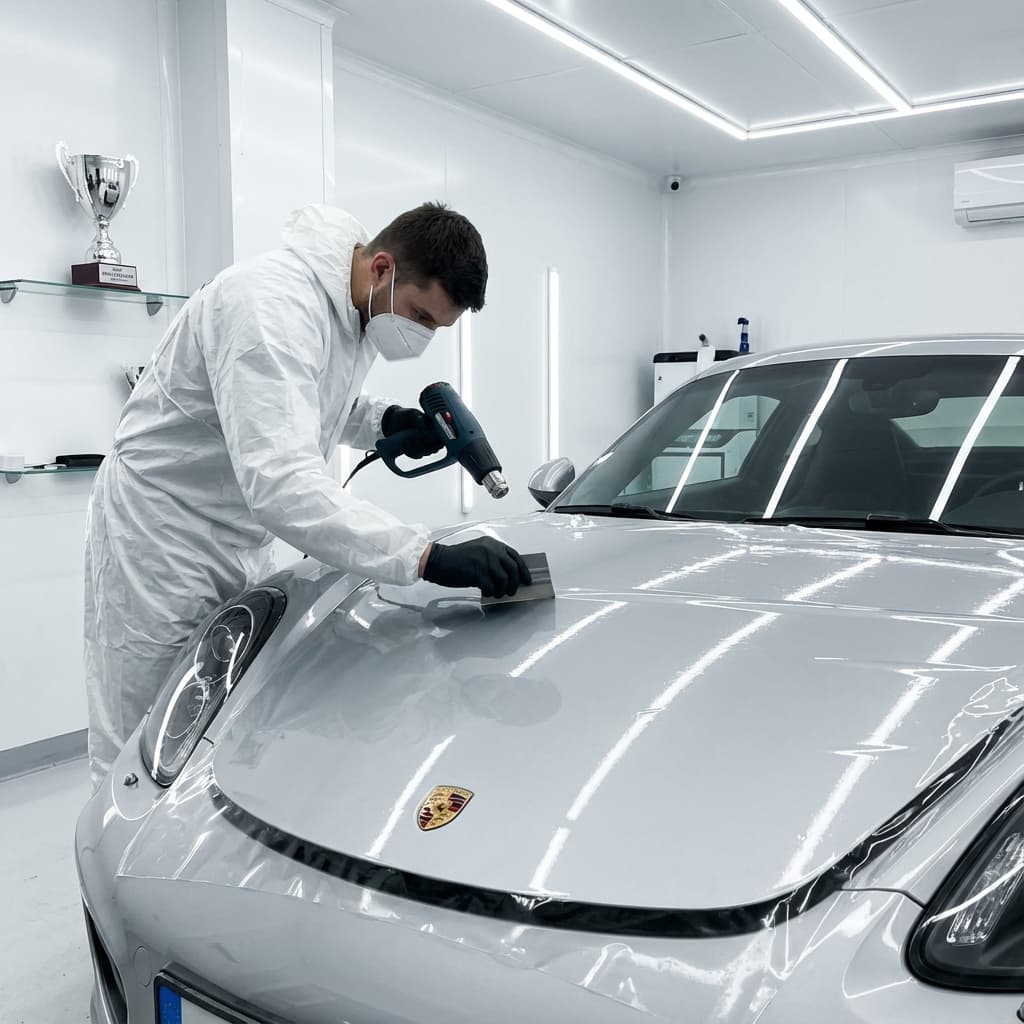
A single dust particle or hair trapped under the film creates a visible bump that can't be fixed without removing and reapplying. Installation environment matters enormously — a clean garage with the car freshly washed and no air movement is the minimum. Professional installers work in clean-room-like shop conditions for a reason.
Film Bunching on Compound Curves
When film doesn't have enough stretch relief, it folds or bunches at curves. This is the defining challenge of fenders, bumpers, and mirrors — the film needs to be stretched in multiple directions simultaneously while being squeegeed. Pre-cut kits have relief cuts built in to help, but technique still matters.
When DIY Makes Sense vs. When to Hire a Pro
The Pros
- Door cups and handle recesses — flat, small, low-risk, high-reward
- Hood strip (18"–24" partial) — flat centre section, forgiving for careful DIYers
- Rocker panel overlays — long but flat, manageable with patience
- Headlight protector film — pre-cut kits available, flat lens surface
- Mirror backs (flat section only) — avoid the full mirror wrap
The Cons
- Full bumper — too many curves and openings for a first-time installer
- Full hood — large panel size means alignment mistakes are visible and expensive
- Fenders — wheel arch curves are among the most difficult in automotive PPF
- A-pillars — thin, compound-curved, alignment is unforgiving
- Side mirrors — the hardest panel in automotive PPF; even pros spend extra time here
- Anything on a luxury or high-value car — the risk-to-reward ratio is too high for DIY
Related Reading
What to Expect During a Professional PPF Installation
The full professional process from drop-off to pickup — step by step.
How to Prepare Your Car for PPF Installation
The complete pre-install checklist, whether DIY or professional.
Paint Correction Before PPF: Do You Need It?
How to assess your paint before film goes on — and when to skip it.
Let the Pros Handle the Hard Panels
Certified PPF installers, 10-year warranty, clean-shop conditions, and wrapped edges on every installation. Full Front from $1,299. Free quote in 60 seconds.
Get a Professional PPF QuoteFrequently Asked Questions
Experience The Best.
Don't let another commute compromise your vehicle. Get a quote from Calgary's Consumer Choice Award winner today.
Explore Our Services