What PPF and Ceramic Coating CANNOT Do: An Honest Guide
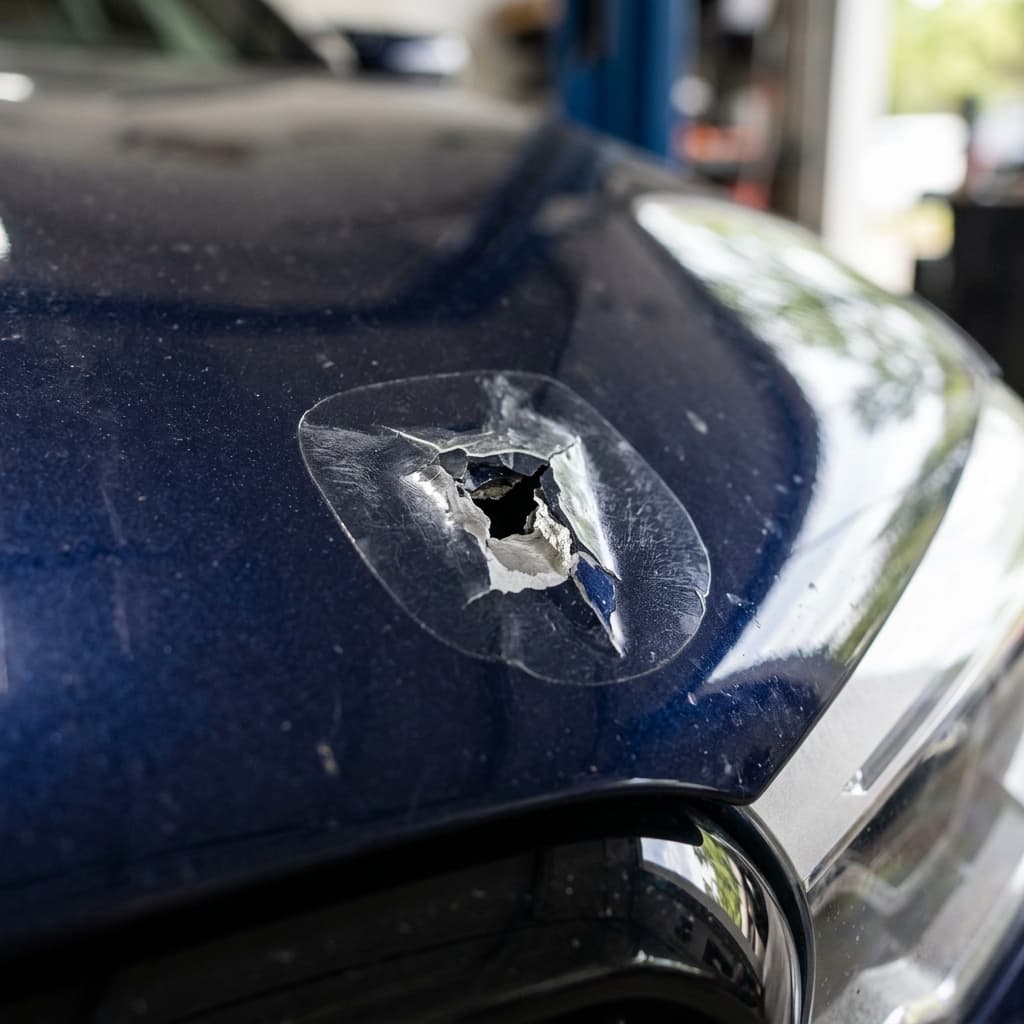
PPF and ceramic coating are powerful protection products — but neither is a force field. PPF stops rock chips, self-heals light scratches, and blocks UV. Ceramic coating repels water and resists chemical contamination. Neither prevents parking lot door dings, deep keying, hail dents, or damage to uncovered panels. For those cases, paintless dent repair handles the panel dings PPF can't. Here's exactly what each product does and doesn't do.
We're in the business of selling PPF and ceramic coatings — which makes it even more important that we give you an honest picture of what these products actually protect against. Overselling creates disappointed customers. Accurate expectations create long-term trust. If you're also weighing up how dealer vs. independent shop installations compare, understanding what the film actually does (and doesn't do) is the right place to start.
Paint Protection Film (PPF): What It Can and Cannot Do
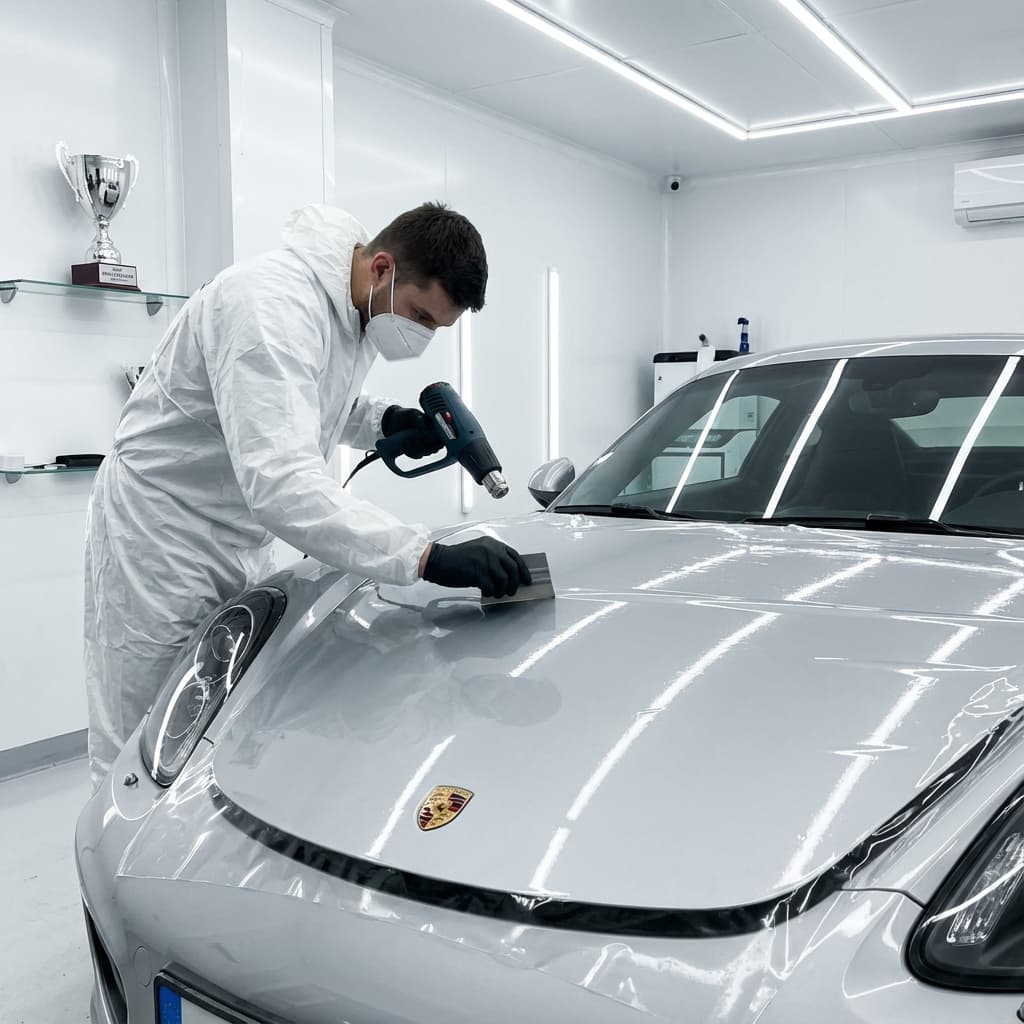
PPF is a thermoplastic polyurethane film applied directly to painted surfaces. It's 150–200 microns thick — about the thickness of a human hair — with an elastomeric self-healing topcoat. That thickness is what makes it effective against physical impacts. But thickness alone doesn't make it invincible.
The Pros
- Stops rock chips and road debris impact — the film absorbs and distributes the impact
- Self-heals light scratches and swirl marks using heat (sun or hot water)
- Blocks UV radiation, preventing paint fading and oxidation on covered panels
- Resists bird dropping and tree sap etching for longer than bare paint
- Protects against bug splatter and tar contamination
- Maintains paint finish under daily car wash and detailing
- Preserves resale value by protecting original factory paint
The Cons
- Cannot prevent deep door dings — PPF absorbs surface impacts, not blunt force panel dents
- Deep keying can tear through the film — PPF helps but won't survive intentional deep scratching
- Only protects panels where it's installed — uncovered panels remain unprotected
- Cannot prevent paint oxidation or fading on panels without PPF coverage
- Does not prevent hail dents — protects paint surface but not the metal beneath
- Cannot repair existing damage — chips and scratches under the film remain visible
- Swirl marks from improper washing accumulate over time (though self-healing helps with light ones)
Ceramic Coating: What It Can and Cannot Do
Ceramic coating is a liquid polymer that chemically bonds to paint, creating a hard, hydrophobic layer approximately 2–5 microns thick. It's exceptional at repelling water, resisting UV, and making your car easier to keep clean. It is not a physical impact barrier. For a deeper look at the full range of what ceramic coating expectations actually look like, we break down every common misconception in a dedicated guide.
The Pros
- Repels water with strong hydrophobic beading — water slides off rather than sitting on the surface
- Reduces dirt and contamination bonding — makes washing 2–3x faster
- Protects against UV oxidation and paint fading on all covered surfaces
- Resists light chemical contaminants — mild acids, road salts, and atmospheric fallout
- Adds depth and gloss to paint appearance
- Provides a barrier that slows bird dropping and tree sap penetration
- 5-year warranty on our multi-stage coatings
The Cons
- Cannot stop rock chips or physical impacts — it's 2–5 microns thick, not 150–200
- Does not prevent deep scratches that cut through the clear coat
- Bird droppings can etch through coating if left more than 24–48 hours in warm weather
- Swirl marks from automatic brush car washes will still accumulate over time
- Cannot correct existing paint defects — paint correction must be done before application
- Does not self-heal — unlike PPF, ceramic coating does not repair minor scratches
- Effectiveness degrades over time and requires maintenance washes with pH-neutral products
Head-to-Head: What Each Product Covers
| Damage Type | PPF | Ceramic Coating | Neither |
|---|---|---|---|
| Rock chips & road debris | ✅ Full protection | ❌ No protection | |
| Light scratches & swirl marks | ✅ Self-heals with heat | ⚠️ Minor resistance only | |
| Deep keying / intentional scratches | ⚠️ Partial — may tear on deep cuts | ❌ No protection | |
| Door dings from parking lots | ❌ No protection (blunt force) | ❌ No protection | ✅ |
| Hail — paint chips & cracks | ✅ Protects paint surface | ❌ No protection | |
| Hail — panel dents | ❌ Film doesn't reinforce metal | ❌ No protection | ✅ |
| UV fading & oxidation | ✅ Covered panels only | ✅ Full coverage if fully coated | |
| Bird dropping etching | ✅ Strong resistance | ⚠️ Up to 24–48 hrs resistance | |
| Tree sap & bug splatter | ✅ Strong resistance | ⚠️ Moderate resistance | |
| Swirl marks from brush washes | ✅ Self-heals light swirls | ❌ No protection | |
| Water spots & mineral deposits | ⚠️ Partial resistance | ✅ Strong hydrophobic repellency | |
| Road salt & chemical contamination | ✅ Strong barrier | ✅ Strong resistance | |
| Damage to unprotected panels | ❌ Film only covers installed areas | ⚠️ If fully coated |
✅ = Full or strong protection | ⚠️ = Partial protection | ❌ = No meaningful protection
The Honest Recommendation: Use Both, Strategically
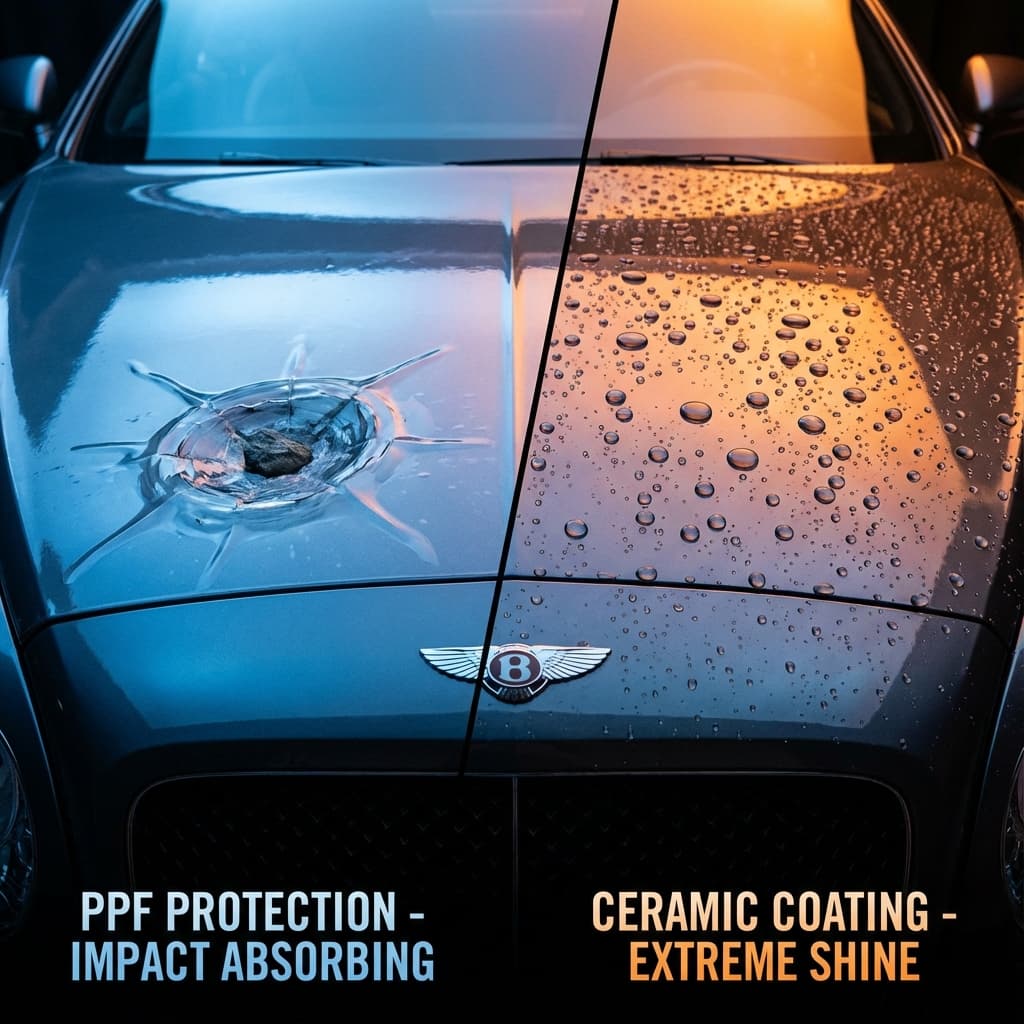
PPF and ceramic coating are complementary, not competing, products. PPF's physical thickness handles rock chips, debris, and abrasion. Ceramic's chemical bond handles hydrophobics, UV protection, and contamination resistance across the full vehicle — including panels that don't have PPF.
Our most popular combination is the Halo Package: PPF on the full front end (where 80% of road debris damage occurs), plus ceramic coating over the entire vehicle. This gives you impact protection where it matters most and hydrophobic, UV-resistant coverage everywhere else. Starting from $2,799, it's significantly less than full-body PPF while providing comprehensive real-world protection. Read the full breakdown of how the Halo Package combines both products to see exactly what's included.
What Calgary Roads Actually Demand
Deerfoot Trail and Stoney Trail generate heavy rock chip exposure year-round — worse in spring when road crews haven't yet cleaned winter gravel from highway shoulders. PPF on the front bumper, hood, fenders, and mirrors addresses this specific risk. Ceramic coating handles the UV and contamination challenges that affect all exterior surfaces through Calgary's full four seasons.
The goal of this guide isn't to temper your expectations about PPF or ceramic coating — it's to make sure you invest in the right product for the protection you actually need. If you already have PPF and something looks off post-install, our guide to common PPF issues like bubbling and edge lifting will help you diagnose what you're seeing. Learn more about the Halo Package → or contact us for a custom protection recommendation based on your vehicle, driving habits, and parking situation.
Related Reading
Dealer PPF vs. Independent Shop
Why where you buy your PPF matters as much as the film itself.
PPF Troubleshooting: Bubbles, Yellowing & Peeling
How to tell normal curing from a real installation problem.
PPF + Ceramic Coating Together: The Halo Package
Why combining both products gives you the most complete protection.
Not Sure What You Need? Let's Talk.
Tell us your vehicle, where you park, and how you drive. We'll give you a straight answer on which products make sense — and which ones you don't need. No pressure, no oversell.
Get a Free ConsultationFrequently Asked Questions
Experience The Best.
Don't let another commute compromise your vehicle. Get a quote from Calgary's Consumer Choice Award winner today.
Explore Our Services