Fleet Vehicle Wraps Calgary: Cost, Branding & ROI
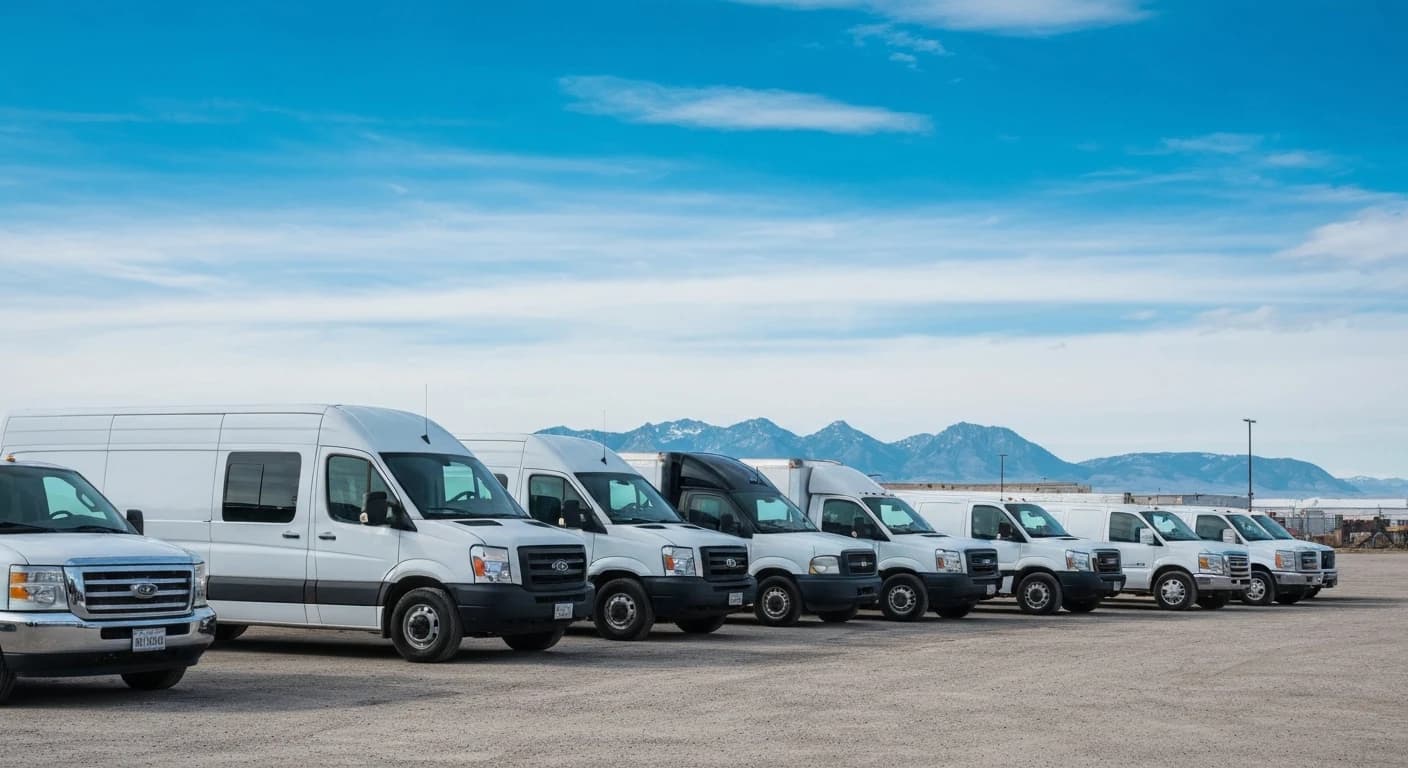
In Calgary, a full commercial wrap on a van or half-ton truck runs about $3,200–$5,500 per vehicle, a partial wrap $1,400–$2,800, and cut-vinyl graphics $450–$1,200. Wrap four or more vehicles to one repeatable design and the per-unit price typically drops 10–20%. A quality cast-vinyl wrap lasts 5–7 years on vertical panels in Calgary (3–5 on UV-blasted hoods and roofs), removes cleanly with heat at lease-end, and turns a route you already pay to drive into the cheapest cost-per-impression advertising a local business can buy — roughly $2–$3 a day for a moving billboard. For trades, oilfield, and highway fleets, the highest-value setup is usually a partial wrap for branding plus front-end PPF on the bumper, hood, and rockers to survive Calgary gravel. The single biggest variable in both cost and lifespan is install quality and edge sealing.
Most Calgary business owners who call us about fleet wraps are weighing the same two questions: what does it actually cost per truck, and is it worth it versus the radio spot or the Google Ads budget. We wrap everything from a single plumber's van to multi-unit oilfield service fleets and food trucks out of our Calgary bay, so this guide is the straight version of the answer we give over the phone — real per-vehicle pricing, full vs partial vs graphics, durability in Alberta weather, lease-end removal, and where wraps and PPF overlap on a work truck. Written for a business buyer, not a hobbyist.
Roughly a third of our commercial wrap volume is trades and service fleets — plumbers, HVAC, electrical, landscaping — and another big chunk is oilfield and construction work trucks that live on gravel and back roads. The pattern we see repeatedly: the owner under-budgets the design phase and over-budgets the vinyl. A clean, legible design built once to a master template is what makes a four-van fleet look like a national brand instead of four random trucks. We keep every fleet's print files on record, so when a Calgary contractor adds two more vans next spring, unit five and six match unit one exactly — same Pantone, same logo placement, same contact block. That repeatability is worth more to most businesses than shaving a few hundred dollars off the first install.
Reviewed by Calgary PPF Pros — Consumer Choice Award winner, protecting and branding Calgary vehicles since 2021.
Why Calgary Businesses Wrap Their Fleets
A wrapped fleet is the cheapest local advertising most Calgary businesses will ever buy, because you are already paying for the vehicle, the fuel, and the driver — the wrap just makes those existing kilometres work for your brand. Outdoor advertising research consistently rates vehicle wraps among the highest-reach, lowest cost-per-impression channels available, and unlike a billboard, your fleet advertises in the exact neighbourhoods your crews already serve. A landscaping truck parked on a Mahogany or Auburn Bay street for three hours is a static ad in front of every potential customer on that block (drive times from every Calgary neighbourhood are on our Calgary service areas page).
The economics are simple. A $4,000 wrap that lasts five years is about $800 a year — under $2.20 a day — for a mobile billboard that drives Deerfoot, Stoney Trail, and every residential street your business already visits. Compare that to a single month of radio or a modest paid-search budget. The difference with a wrap is that local recognition compounds: a homeowner who has seen your truck on their own street three times is far more likely to call than one who scrolled past a generic ad. For a deeper cost breakdown across single-vehicle wrap types, see our Calgary car wrap cost guide, and for the wrap product itself our Calgary vinyl car wraps service page. Most wrapped Calgary fleets also add PPF on the high-impact panels for chip protection — see PPF for fleet vehicles.
Fleet Wrap Cost Per Vehicle in Calgary (2026)
Per-vehicle pricing is driven by three things: coverage (full vs partial vs graphics), the size and complexity of the body (corrugated box trucks and riveted trailers add labour), and the wrap type (solid colour, printed graphics, or print-plus-laminate brand wrap). The table below is the real 2026 range we quote out of our Calgary bay. Volume pricing applies once you commit four or more vehicles to one repeatable design — the design cost amortizes and the install becomes a production run.
| Vehicle Type | Full Wrap | Partial Wrap | Graphics / Lettering | Install Time |
|---|---|---|---|---|
| Cargo van (Transit / ProMaster / Sprinter) | $3,500–$5,500 | $1,600–$2,800 | $500–$1,200 | 2–4 days |
| Half-ton pickup (F-150 / Silverado / RAM) | $3,200–$4,800 | $1,400–$2,400 | $450–$1,000 | 2–3 days |
| Cube / box truck | $5,500–$9,000 | $2,800–$4,500 | $700–$1,500 | 3–5 days |
| Enclosed trailer (16–24 ft) | $4,000–$7,500 | $2,200–$4,000 | $600–$1,400 | 2–4 days |
| Food truck (custom layout) | $5,000–$9,500 | $3,000–$5,500 | $900–$1,800 | 3–6 days |
| Compact car / SUV (sales / rep fleet) | $2,800–$4,500 | $1,200–$2,200 | $400–$900 | 2–3 days |
Where Fleet Quotes Go Wrong
The cheapest quote is almost always cut-rate calendared vinyl (not cast film) with no laminate, installed without proper edge post-heating. It looks fine for one Calgary summer, then the hood fades, the edges lift in the first Chinook freeze-thaw cycle, and you are re-wrapping in 18 months. Always ask which film and laminate the shop is using and what the workmanship warranty covers. A real cast-vinyl fleet wrap is a five-to-seven-year asset; a budget wrap is a recurring expense.
Full vs Partial vs Spot Graphics — What Your Fleet Actually Needs
For most Calgary trades and service fleets, a partial wrap is the value sweet spot — it captures the overwhelming majority of roadside impressions for roughly half the cost of a full wrap. A full wrap makes sense when you want total colour freedom, a non-factory base colour, or maximum billboard impact on a high-visibility delivery fleet. Cut-vinyl graphics make sense when your factory paint colour already suits the brand and you mostly need the logo, number, and website visible. Here is how the three tiers compare for a fleet buyer.
The Pros
- Partial wrap: ~40–60% cheaper than full, keeps most roadside impact, faster fleet-wide install and removal
- Full wrap: total colour and design freedom, maximum billboard effect, protects underlying paint from abrasion
- Graphics/lettering: lowest cost, fastest turnaround, easy to update phone number or branding without re-wrapping
- All three remove cleanly with heat at lease-end when installed over sound factory paint
The Cons
- Full wrap: highest cost and longest install — overkill for a budget service fleet that just needs to be seen
- Partial wrap: requires good factory colour-matching planning so exposed paint complements the design
- Graphics only: limited brand impact at distance — a small logo on a white van reads as "blank van" from 50 metres
- Cheap calendared vinyl on any tier fails fast in Calgary UV and freeze-thaw — film grade matters more than tier
If your fleet is also a candidate for a non-branded colour change — for example a uniform corporate black or a brand colour across every unit — our Calgary colour change wrap service covers solid-colour and finish options. And if you want the brand-colour look with rock-chip protection baked in, ask about coloured PPF in Calgary, which gives you a tinted, self-healing protective film instead of standard vinyl.
Design, Install & Turnaround for a Fleet
The mistake that kills fleet branding is treating it like one-off wraps. The value of using a single shop is a master template: one approved design, keyed to your exact vehicle make, model, and year, that lands your logo, brand colours, and contact block in the same relative position on every unit. We stagger installs so your business is never fully off the road — usually one or two vehicles at a time — and we keep the print files so next year's additions match exactly. Here is the typical timeline.
Discovery & Brand Audit
2–4 daysWe confirm your exact fleet vehicles (make/model/year), your brand colours (Pantone or hex), logo vector files, and the contact priorities — phone, website, service area. This is where we catch problems like "the logo only exists as a low-res JPEG."
Design & Master Template
1–2 weeksWe build one repeatable design template per body style, legible at 50+ metres, with a clear hierarchy: name, what you do, how to call. You get a digital proof and, for larger fleets, a printed colour proof to approve before any vinyl is cut.
Print, Laminate & Test Panel
2–4 daysApproved files are printed on cast film and laminated for UV and abrasion resistance. We often run a single test panel or first vehicle to confirm colour and fit before committing the whole fleet.
Staggered Fleet Install
1–2 units at a timeVehicles come in one or two at a time so you keep crews on the road. Full wrap 2–4 days per unit, partial 1–2 days, graphics under a day. Edges are post-heated and seams sealed — the steps that determine Calgary lifespan.
Cure, QA & File Archive
OngoingEach wrap cures, gets a final QA walk-around, and we archive the print files keyed to your fleet so future additions match exactly. You get a care sheet: touchless/hand wash only, no high-pressure jets at seams.
Durability & Warranty in Alberta Weather
A professionally installed cast-vinyl wrap with quality laminate lasts 5–7 years on vertical Calgary panels and 3–5 years on hoods and roofs that take the worst UV. Calgary punishes vinyl harder than a milder climate for three specific reasons, and the warranty conversation needs to account for all three.
| Calgary Stressor | Effect on Vinyl | How We Mitigate It |
|---|---|---|
| High-altitude UV (1,045 m, ~10–12% stronger) | Fades pigment and chalks unlaminated film on horizontal panels | UV-rated laminate over cast film; lighter-loss colours on hoods/roofs |
| Chinook freeze-thaw (25°C swings in a day) | Stresses adhesive, lifts poorly-sealed edges | Full edge post-heating and seam sealing at install |
| Winter mag-chloride brine & road grime | Creeps under lifted edges, stains film | Sealed edges + touchless wash protocol; no solvent degreasers |
| Gravel & rock chips (Deerfoot, oilfield roads) | Punctures and tears vinyl on front-impact zones | PPF on bumper/hood/rockers under or beside the wrap |
Manufacturer film warranties typically run 5–8 years; our workmanship warranty covers edge lifting and seam failure from install. The two behaviours that most shorten a fleet wrap's life in Calgary are high-pressure washing aimed directly at seams (common at automated truck washes) and solvent degreasers on dirty trades and oilfield trucks. Both creep under the edges. A touchless or hand wash with a pH-neutral soap is all a wrap needs.
On oilfield and gravel-road trucks we see wrap front-ends sandblasted to nothing in two seasons if there is no film underneath. The fix is not a thicker wrap — it is clear PPF for fleet vehicles on the bumper, hood leading edge, and rockers, with the printed wrap behind and around it. The wrap brands the truck; the film keeps Calgary gravel from destroying both the wrap and the paint. For highway and rural Alberta fleets we quote the two together by default.
Removal & Re-Wrap at Lease-End or Sale
A quality cast wrap installed over sound factory paint is designed to come off cleanly with heat — which is exactly why leasing companies and resale buyers prefer wraps to a respray. Removal takes our team a few hours per vehicle and we batch a fleet to minimize downtime. Budget roughly $400–$900 per vehicle for professional removal depending on size and how aged the film is. Removing on schedule matters in Calgary: vinyl that has baked under many summers of high-altitude UV cures harder and gets more stubborn to lift, so a wrap removed at year five comes off far cleaner than one left to year nine.
Two practical reasons to remove before you hand the vehicle back or sell it: first, you protect your brand — you do not want a stranger driving a truck with your phone number on it. Second, wrapped vehicles typically show better paint underneath at resale than un-wrapped ones, because the vinyl shielded the clear coat from years of abrasion and UV. The caution is the same on both ends: wraps over thin aftermarket repaint, rust-bubbled panels, or film left a decade past its rated life can lift paint on removal, so we inspect before quoting either an install or a removal.
The ROI Math, in One Table
Here is the back-of-envelope ROI we walk Calgary owners through. The point is not the exact impression count — it is the cost-per-day framing. Your fleet drives these routes regardless; the wrap is the only variable, and it is a small one spread over five years.
| Channel | Typical Cost | Reach / Note | Effective Cost Per Day |
|---|---|---|---|
| Branded van wrap (5-yr life) | $4,000 once | Drives routes you already pay for | ~$2.20 |
| 4-van fleet wrap (volume) | ~$13,500 once | 4× the impressions, one design | ~$1.85 per van |
| Local radio spot | $1,500–$4,000 / month | Fades the moment you stop paying | $50–$130 |
| Modest paid search | $1,000–$3,000 / month | Stops the day the budget stops | $33–$100 |
| Billboard (single) | $1,200–$3,000 / month | One fixed location | $40–$100 |
Costs reflect 2026 Calgary market ranges. The wrap is a one-time capital cost amortized over its life; the other channels are recurring spend that produces nothing the month you pause it. This is why a wrapped fleet has the lowest long-run cost-per-impression of any local advertising most Calgary businesses can buy.
Wrap, PPF, or Both? The Work-Truck Decision
Wraps and paint protection film solve different problems, and the right answer for a Calgary work truck is often both. A vinyl wrap is a branding and appearance product — it shields paint from minor abrasion but is not built to absorb gravel impact. PPF is thick, self-healing urethane engineered to take rock chips on the panels that get hammered: front bumper, hood leading edge, rockers, and mirrors. On a high-mileage truck running Deerfoot, Stoney Trail, or rural Alberta gravel, the combination is a printed wrap for branding plus front-end PPF so the gravel does not chew through both the wrap and the paint beneath it.
For the protection-specific economics and coverage maps, see our dedicated page on PPF for fleet vehicles in Calgary. For the wrap product, finishes, and single-vehicle pricing, start at our Calgary vinyl wraps service page. For most service and trades fleets, we scope the wrap and a front-end PPF package in the same quote so you see the all-in number per vehicle.
Get a Per-Vehicle Fleet Wrap Quote
Tell us your fleet — how many units, what vehicles, and your brand colours — and we'll build one master design template, quote a per-vehicle and volume price, and stagger the install so your crews stay on the road. We scope fleet vinyl wraps and front-end PPF for work trucks together so you see the all-in number. Trades, oilfield, delivery, and food-truck fleets welcome. Calgary AB. Consumer Choice Award winner. Manufacturer-backed film warranties.
Bottom line for a Calgary business: a fleet wrap is the rare marketing spend that is also a one-time capital asset. Built once to a consistent template, installed on cast film with sealed edges, and paired with PPF where Calgary gravel demands it, a wrapped fleet earns impressions every day it drives — for a few dollars a vehicle per day — and comes off cleanly when the lease ends. Spend the effort on the design and the film grade; that is what separates a fleet that looks like a national brand from four trucks with stickers.
Frequently Asked Questions
How much does a fleet vehicle wrap cost per vehicle in Calgary?
What is the difference between a full wrap, a partial wrap, and vehicle graphics for a fleet?
How long does a commercial vehicle wrap last in Calgary's weather?
Is wrapping a fleet actually a good marketing investment, or is it just for looks?
Can a fleet wrap be removed cleanly at lease-end or when I sell the vehicle?
How long does it take to wrap a whole fleet, and how do you keep the branding consistent?
Should I get PPF or a vinyl wrap on my work trucks — or both?
Will a wrap damage the paint or void my vehicle warranty?
Experience The Best.
Don't let another commute compromise your vehicle. Get a quote from Calgary's Consumer Choice Award winner today.
Explore Our Services