Moving to Calgary? The 2026 Car Protection Guide
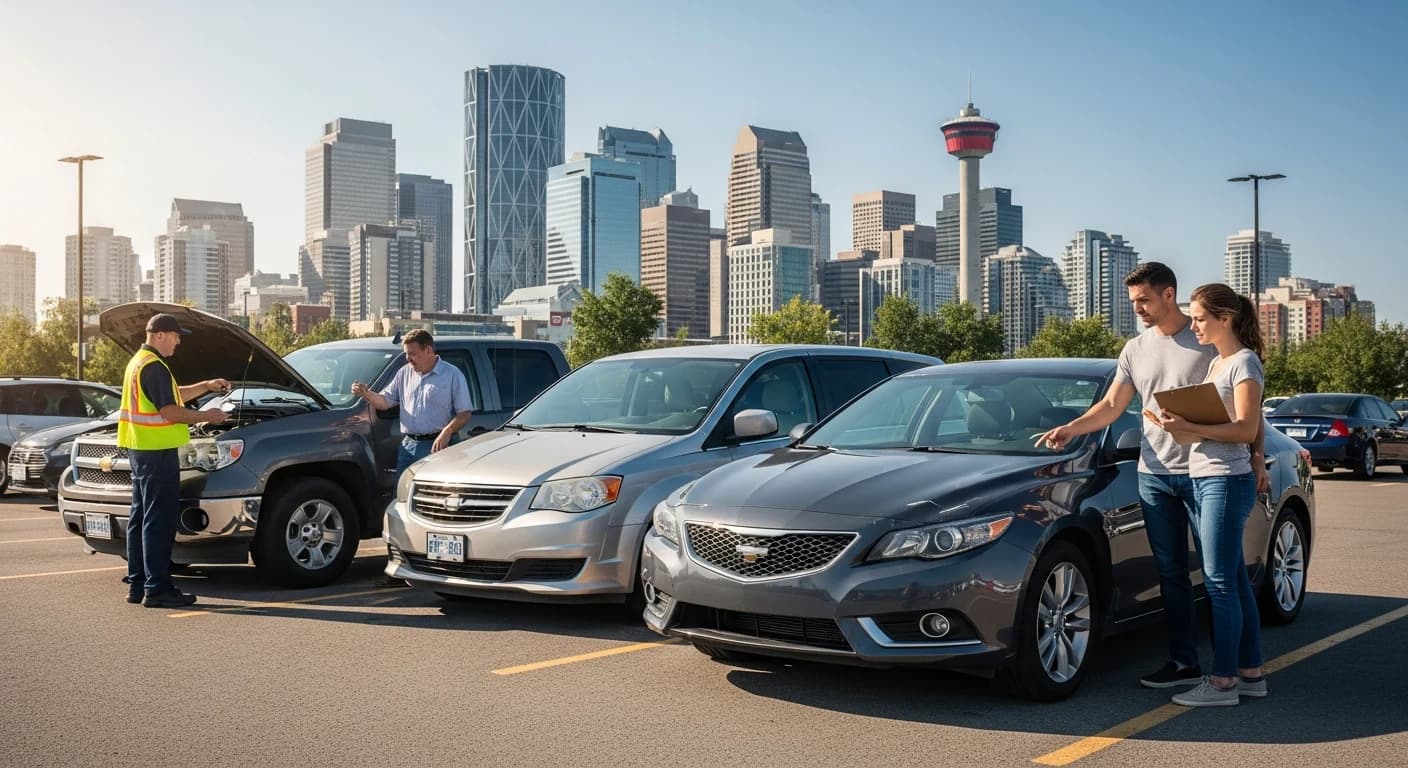
Moving to Calgary from BC, Ontario, or anywhere else in Canada? You have 90 days from establishing Alberta residency to complete the Out-of-Province (OOP) Vehicle Inspection and register your vehicle in Alberta. The single most-common failure at OOP inspection for newcomers is non-compliant window tint — Alberta prohibits any aftermarket tint on the front driver and passenger windows and on the windshield, so drivers coming from Manitoba (50% VLT), Ontario (70% VLT) and Quebec (70% VLT) usually need to have the front film removed. Beyond the inspection, the two paint-damage vectors newcomers underestimate are Calgary's pickle-mix road treatment (sand + salt + calcium chloride brine) that runs November–March, and the March–May “gravel season” when chip damage rates peak. A full-front PPF plus a full ceramic coating (the “Halo Package”, from $2,799), installed in the summer before your first Alberta winter, is the standard newcomer protection stack — financeable over 24–36 months. The ideal sequence: fix any non-compliant tint → complete OOP inspection → paint correction → PPF on high-impact zones → ceramic across the rest → optional undercoating before September freeze. Book the tint and PPF in July or August; October waitlists run 4–6 weeks.
“I just moved here from Vancouver — what do I actually need to do with my car?” is the intake question that dominates our June–September calendar, and the honest answer is a three-part playbook: pass the Alberta Out-of-Province inspection (usually a tint fix), stack the right paint protection before your first Alberta winter, and prep the underbody for pickle-mix and calcium chloride. This is the 2026 Calgary newcomer guide — every step, every cost, every deadline, and the mistakes we see BC, Ontario, and Quebec drivers make in their first Alberta year.
Calgary has been one of the fastest-growing metros in Canada for four consecutive years, and our Marlborough bay sees the pattern up close: a software engineer relocating from Vancouver books a tint-fix appointment two weeks after landing because the dealership warned her the fronts will fail OOP. A young family arrives from Mississauga with a three-year-old Toyota Highlander already showing chip damage from 401 highway spray and wants to know if PPF is still worth doing. A pipeline consultant moves from Fort McMurray to Airdrie with a truck that has never seen summer paint correction and is ready to be reset before he drives Highway 2 daily. A recent grad from Halifax lands a Calgary job in July and asks whether her Volkswagen Golf, which has never been ceramic-coated, needs to be before November hits. Every one of these conversations follows the same playbook: settle the OOP inspection first, then stack the protection before winter. This article is the version of that conversation we would have with you at intake — the timeline, the costs, and the specific traps for out-of-province drivers.
Reviewed by Mostafa — Calgary PPF Pros, Consumer Choice Award winner 2026, serving Calgary newcomers since 2021. This article is general guidance for Alberta drivers — always confirm current OOP inspection requirements with your registry agent, and read the Alberta Vehicle Inspection Regulation for current legal detail before install.
Step One: The 90-Day Out-of-Province Registration Clock
The first thing every Calgary newcomer needs to know is that Alberta gives you 90 days from the date you establish residency to complete both the Out-of-Province Vehicle Inspection and full Alberta registration. Establishing residency is generally the day you move into an Alberta address — not the day you accept the job, not the day you sign the lease from another province. The 90-day clock runs continuously, even if you are still driving on your BC, Ontario, or Quebec plates. Miss the deadline and you can be ticketed, and — more painfully — your insurance may lapse because most Canadian auto policies stop covering vehicles that have been in Alberta longer than the residency threshold without local registration.
The Alberta process runs in a specific order, and getting it wrong costs weeks:
| Step | What Happens | Typical Time | Where |
|---|---|---|---|
| 1. Get Alberta insurance | Switch auto policy to an Alberta-licensed insurer or add Alberta coverage — many BC/ON policies stop covering after 30 days | 1–2 days | Alberta broker or direct insurer |
| 2. Book OOP inspection | Book at a licensed inspection station — many auto studios, dealerships, and independent shops perform OOP inspections | 3–7 day lead time | Licensed inspection station |
| 3. Fix any deficiencies | Tint, brakes, tires, headlights, wipers — anything flagged has to be corrected and re-inspected before the pass sticker is issued | 1 day–3 weeks | Auto shop / tint studio |
| 4. Register at registry agent | Bring pass certificate, current registration, Alberta insurance pink card, Alberta driver's licence — swap plates and pay tax | Same-day | Registry agent |
| 5. Return old plates | Return BC/ON/QC plates to home province — most accept mail-in with a signed refund form | 1–4 weeks | Home-province registry |
The most common newcomer mistake is booking the registry agent appointment before the OOP inspection is complete — the registry cannot process the Alberta plate swap without a valid OOP pass certificate, so you leave with the same problem you walked in with. Get the inspection booked first, get any deficiencies fixed, and then the registry step becomes a 30-minute in-and-out. For the full Alberta process detail, the province publishes the current requirements on the official Out-of-Province Vehicle Inspections page.
Step Two: Fix Your Tint Before It Fails the Inspection
Non-compliant window tint is the single most common OOP inspection failure for newcomers, and it catches Manitoba, Ontario and Quebec drivers hardest because those provinces allow some aftermarket tint on the front-side windows. Alberta does not (nor do BC and Saskatchewan). On private passenger vehicles, Alberta prohibits any aftermarket tint film on the front driver and passenger windows regardless of VLT (visible light transmission) percentage, and the windshield gets nothing either: section 70(1) of the Vehicle Equipment Regulation has no strip exception above the AS-1 line. Film on the fronts fails.
| Origin Province | Front-Side Window Tint Rule | Alberta Compliance | Typical Fix |
|---|---|---|---|
| British Columbia | No aftermarket front tint (same as Alberta) | PASSES if the fronts are film-free | Remove any front film before the inspection |
| Ontario | 70% VLT allowed on fronts | FAILS — must remove | Remove front film before the inspection |
| Quebec | 70% VLT allowed on fronts | FAILS — must remove | Remove front film before the inspection |
| Saskatchewan / Manitoba | No aftermarket front tint (SK); 50% VLT (MB) | MB film FAILS — must remove | Remove front film before the inspection |
| Nova Scotia / NB / PEI / NL | 70% VLT allowed on fronts | FAILS — must remove | Remove front film before the inspection |
| Yukon / NWT / Nunavut | 70% VLT allowed | FAILS — must remove | Remove front film before the inspection |
| Factory-tinted (rear only) | Legal in every province | PASSES | No action required |
The fix is almost always a same-day appointment: a professional Calgary tint studio strips the film from the front driver and passenger windows and cleans the glass with a razor and glass-safe solvent. For the front glass we offer an optically clear IR film (no visible darkening). Alberta's Vehicle Equipment Regulation restricts coverings on front glass; we explain what that means for your vehicle before you book. Rear windows, hatch, and factory-tinted rear side windows can keep whatever aftermarket film they arrived with (the back glass needs outside mirrors on both sides) — Alberta's restrictions apply to the front row and windshield.
One nuance to flag for newcomers: Alberta's tint rules are stricter than the ones being enforced in most provinces, so film that has been on your car for years and never drawn a ticket at home will still fail here. If you are unsure whether your current tint is compliant, our 2026 Alberta window tint laws guide walks through the exact VLT and windshield rules, and our cross-province tint inspection guide covers what does and does not carry over from BC and Saskatchewan.
Step Three: Understand Why Calgary Eats Paint Differently
Every newcomer arrives with paint-protection habits from their home climate. Vancouver drivers are used to acid rain and mildew. Toronto drivers are used to expressway salt in January and pothole spray. Halifax drivers are used to coastal salt fog. Calgary is different — and different in ways that catch first-year residents off guard because the damage builds through a full year cycle before it becomes visible.
Three specific Calgary factors change the paint-damage math:
Winter pickle mix
Sand + rock salt + calcium chloride brine on Deerfoot, Stoney, Crowchild, and 22X from November to March. Calcium chloride is hygroscopic — it pulls moisture from air even after roads dry, keeping corrosion active on rockers and wheel wells.
Spring gravel season
March–May: winter sanding gets swept and blown up by highway wind. Hood leading edges and front bumpers accumulate 15–40 visible chips in a single spring on unprotected paint. This is the single largest chip-damage event of a Calgary year.
Altitude UV
Calgary sits at 1,045 m elevation with ~333 sunny days a year. UV exposure runs 20–30% higher than sea-level BC, fading reds, blacks, and metallics faster and oxidizing clearcoat on horizontal panels (hood, roof, trunk lid).
For BC-origin vehicles specifically, the calcium chloride exposure is the shock — coastal cars have never seen a road-salt program of any kind, and the first Alberta winter is when hidden pre-existing chips get salt-etched into visible damage. For Ontario-origin vehicles, the surprise is usually spring gravel-season — 401 salt exposure is comparable, but 401 doesn't get post-winter sanded the way Deerfoot does, so Toronto drivers underestimate the March–May chip event. For Quebec-origin vehicles, calcium chloride is familiar (Quebec runs a similar winter treatment) but Calgary's UV load is higher and paint fade shows up faster.
Step Four: The Newcomer Protection Stack — What to Actually Book
For a newcomer arriving in Calgary in the summer with a healthy vehicle from another province, the standard protection stack has four layers, and the correct order matters — paint correction (single vs multi-stage, cost bands) has to happen before film or coating, PPF has to go on before ceramic, and undercoating is the last step before winter. Skipping the sequence or reversing it wastes money and shortens the life of every layer.
| Layer | What It Protects Against | Typical Calgary 2026 Cost | When To Book |
|---|---|---|---|
| 1. Paint correction & decontamination | Existing swirl marks, water spots, contamination — resets paint to a clean bond surface | $400–$900 | Before any PPF or ceramic |
| 2. Partial front PPF (bumper + hood + fenders + mirrors) | Rock chips from Deerfoot / Stoney / 22X gravel and highway spray | $1,299–$2,499 | July–September ideal |
| 3. Ceramic coating (full vehicle over PPF) | Pickle-mix corrosion, UV oxidation, salt bond, iron fallout | $899–$1,899 | Same visit as PPF or next appointment |
| 4. Undercoating (frame + underbody) | Rocker, frame, and underbody corrosion from calcium chloride | $599–$1,299 | August–September before first freeze |
| (Optional) Windshield PPF | Rock strikes on the leading edge of the windshield from highway gravel | $495–$695 | Anytime — usually with PPF install |
| Total newcomer stack (typical mid-size SUV) | $3,200–$6,600 | Complete before November |
For newcomers on a tighter budget, the two-layer minimum viable stack is PPF on the front end plus ceramic across the rest of the vehicle — this is the Halo Package (full-front PPF plus ceramic, $2,799 installed). If a full stack is out of budget for year one, the priority order to stage over 12 months is: (1) PPF partial front and tint-fix before your first fall, (2) ceramic coating the following spring after winter, (3) undercoating in fall of year two. This spreads the spend but does leave the underbody exposed for the first Alberta winter — acceptable for a 1–2 year-old vehicle from BC, less acceptable for an already-Ontario-salted 5+ year-old vehicle.
A Worked Newcomer Example — Vancouver Family, Highlander Hybrid, Summer Move
Concrete scenario. A young family moves from Kitsilano to Currie Barracks in July 2026 with a 2024 Toyota Highlander Hybrid in Wind Chill Pearl, purchased new in Vancouver 18 months ago. The car has BC 3M Crystalline 70% VLT tint on the fronts, no PPF, no ceramic. Daily commute will be from Currie down Crowchild to the Beltline for both parents, plus a Rockies weekend trip pattern. They land on July 5, book their first appointments the second week they are here.
| Item | Cost | When | Notes |
|---|---|---|---|
| Alberta insurance switch (BC → AB) | Neutral — new policy replaces old | Week 1 | Broker walks the transition |
| OOP inspection booking | $150–$250 | Week 2 | Licensed inspection station |
| Front tint strip (film removal) | Quoted on inspection | Week 2 (same-day) | Removes the front film before the OOP inspection |
| OOP re-inspection & pass sticker | Included in inspection fee | Week 2 | Same day as tint fix |
| Registry agent — Alberta plate swap | ~$95 | Week 3 | Bring pass cert, insurance, ID |
| Paint correction & decontamination | $650 | Week 4 | Removes 18 months of BC water spots + contamination |
| Partial front PPF (bumper + hood + fenders + mirrors) | $1,799 | Week 4 (same visit) | No |
| Ceramic coating over PPF and rest of vehicle | $1,299 | Week 5 | Gtechniq Crystal Serum Ultra 2-year package |
| Undercoating (September, before first freeze) | $999 | Week 12 (September) | Krown-style spray, oil-based |
| Total spend, first Alberta year | $4,992 + tint removal | Financing available on packages over $500 | |
| Prevented — 3 spring-gravel-season hood chip repairs | $300 saved | Typical BC-origin vehicle first Calgary spring | |
| Prevented — bumper respray from front spray damage | $700 saved | High probability without PPF | |
| Prevented — accelerated clearcoat oxidation on Wind Chill Pearl | $1,200 saved | 3-year prevention on horizontal panels | |
| Prevented — rocker rust bloom from calcium chloride (5-year avoidance) | $1,500+ saved | Undercoating layer |
The stack pays back inside three Alberta winters on a Calgary daily-driver, and the paint stays in as-new condition for the ownership arc. For a BC family relocating without prior salt exposure, this sequence is the difference between a 2024 Highlander looking factory-fresh in 2029 and having visible rocker rust plus fading roof paint by year three.
Step Five: Why Summer Timing Matters — Book July, August, Early September
The single-biggest scheduling mistake newcomers make is trying to book their PPF and ceramic install in October or early November, when everyone in Calgary who did not plan ahead is suddenly winter-prepping at the same time. Waitlists at every reputable studio in the city stretch 4–6 weeks by mid-October, and you end up either driving unprotected through the first November salt event or paying rush-fee pricing to jump the queue.
The Pros
- July–September temperatures (18–24 °C) are inside the manufacturer-specified install range for premium self-healing PPF like STEK DYNOshield and GSWF Defender Platinum
- Same-week appointment availability at most Calgary studios through the summer
- PPF cures fully in 7–14 days at summer temperatures — coating and film reach full crosslink before first salt
- Undercoating booked in August–September applies before first freeze, gives full winter protection
- Fall paint-correction slots (needed before PPF) are open — no waitlist pressure on the first step
- Ceramic coating cures in the summer temperature range without heat-lamp assistance — cleaner install, better warranty terms
The Cons
- October–November: 4–6 week waitlists at most Calgary studios, potential rush-fee premiums
- Below 15 °C ambient temperature (typical Calgary November): PPF adhesion slows, edge lift risk increases without heated bays
- Ceramic coating cure time doubles below 18 °C — install still works but final hardness lags 2–3 weeks
- Undercoating booked after first snow means the underbody is already contaminated at spray time — reduces adhesion
- December–February installs: only heated indoor bays can process PPF and ceramic, and slot availability drops sharply
Our guide to PPF timing in Calgary covers the seasonal tradeoffs in detail — but for newcomers with a firm July–September window, the plan is straightforward: book the tint fix and OOP inspection in week 1–2, book the PPF and ceramic in week 3–5, book the undercoating for late August or early September.
Six Mistakes Calgary Newcomers Make in Their First Year
1. Booking the registry agent before the OOP inspection is done
Alberta registry cannot process the plate swap without a valid OOP pass certificate. Book the inspection first, fix any deficiencies, then walk in to the registry with the pass certificate in hand. Reverse the order and you waste a trip.
2. Trying to keep BC/Ontario front tint
Alberta's front-tint rules are not negotiable at inspection. A CPIC or dealership shop will not sign the pass certificate with non-compliant film on the fronts. Fix it before you book the OOP.
3. Waiting until October to book PPF and ceramic
By mid-October, every reputable Calgary studio is at 4–6 week waitlist. Miss the window and you either drive unprotected through November salt events or pay rush-fee pricing to get in.
4. Skipping paint correction before PPF
Existing water spots, contamination, and swirl marks under PPF get sealed in permanently — the film cannot fix what it covers. Budget $400–$900 for a decontamination and light correction pass before the film goes on, especially on any vehicle 12+ months old.
5. Not undercoating a BC-origin vehicle before first winter
BC coastal cars have never seen calcium chloride. The first Alberta winter is the highest-risk exposure event they will ever face. Undercoating in August or September ($599–$1,299) is the single-highest-ROI protection you can buy for a coastal-origin car.
6. Assuming factory ceramic or dealer “coating” is real ceramic
Dealer-applied “paint sealant packages” sold at BC and Ontario dealerships are almost always sprayed polymer sealants, not true SiO₂ ceramic coatings. Real ceramic coating is a curing 9H-hardness nano-glass layer applied by a certified installer. Ask what brand — if the answer is not Gtechniq, CarPro, Ceramic Pro, System X, or an equivalent named ceramic, you did not get ceramic.
The Bottom Line for New Calgary Drivers
Moving to Calgary changes the paint-protection math for almost every out-of-province driver. The 90-day OOP inspection is a hard deadline and the tint fix is where most newcomers lose the most time. Beyond the regulatory step, Calgary's pickle-mix winter treatment, gravel-season chip damage, and altitude UV combine into a paint-damage exposure profile that is meaningfully worse than what BC, Ontario, or Atlantic Canada drivers arrive with — and the damage builds through the first year cycle before it becomes visible, which is why so many two-year Calgary residents suddenly notice their car looks tired at year three.
The playbook is a four-layer stack, in this order: fix any non-compliant tint and complete the OOP inspection first, then paint correction, then partial front PPF, then ceramic coating, then optional undercoating before September. Total newcomer spend on a typical mid-size SUV or crossover is $3,300–$6,700 for the full stack, financeable at $100–$200/month over 36 months, and the prevention math pays back inside three Alberta winters on any Calgary daily-driver. Book the tint fix and OOP inspection in the first 2–3 weeks after landing, book the PPF and ceramic in July–September before the October waitlist crush, and book the undercoating for late August or early September before the first freeze.
If you want a deeper read on any layer of the stack, our 2026 Calgary PPF pricing guide details every package and vehicle-class price, our winter protection guide for Calgary drivers covers the specific salt and calcium chloride exposure story in more detail, and our windshield protection film explainer covers the chip risk for anyone commuting on Deerfoot, Stoney Trail or Highway 22X daily.
Related Reading for Newcomers
Alberta Window Tint Laws (2026)
The exact VLT and windshield rules — what will fail your OOP inspection and how to fix it same-day.
The Halo Package Explained
PPF plus ceramic — why this is the standard first-year Calgary stack for out-of-province vehicles.
When to Get PPF in Calgary
Before or after winter — how the seasons change install and cure timing.
New to Calgary? Book Your Newcomer Protection Stack — Tint Fix + PPF + Ceramic In One Studio
Moving from BC, Ontario, Quebec, or the Maritimes? We handle the entire newcomer sequence in-house: front-tint removal before your OOP inspection, paint correction, PPF on high-impact zones, and ceramic coating across the rest of the vehicle. Financing available at $100–$200/month over 36 months. Calgary AB. Consumer Choice Award winner 2026. 5.0★ from 96 Google reviews. See our PPF service menu or book the Halo Package for the standard newcomer stack.
Updated September 30, 2026: removed the claim that a windshield strip above the AS-1 line is legal in Alberta; section 70(1) of the Vehicle Equipment Regulation (AR 122/2009) has no such exception. Last checked September 30, 2026.
Frequently Asked Questions
Just moved to Calgary — do I have to change my window tint to pass the out-of-province inspection?
Do I actually need PPF in Calgary — I didn't have any in Vancouver or Toronto?
How long do I have to register my out-of-province car in Alberta after moving?
How bad is Calgary road salt and pickle mix for my car's paint?
Should I do PPF and ceramic before winter if I just moved here in summer?
Is my BC or Ontario car already too damaged for PPF to be worth it?
Experience The Best.
Don't let another commute compromise your vehicle. Get a quote from Calgary's Consumer Choice Award winner today.
Explore Our Services