PPF Cure Time in Calgary (2026): When Can You Wash, Ceramic Coat, Tow & Hit the Highway After Install
- Written by
- By Calgary PPF Pros
- Published
- Aug 17, 2026
- Updated
- Reading time
- 13 Minute Read

PPF cure in Calgary at a normal 20–22°C bay: surface water OK at 48 hours, touchless wash at 7 days, hand wash at 14 days, ceramic layer at 14–30 days, pressure wash at 30 days, full cure at 30 days. Below 5°C ambient (unheated Calgary garage in shoulder season), add 50% to every window. Below 0°C the adhesive effectively pauses — cure resumes when temperature returns above 5°C. Highway driving is fine immediately; trailer towing needs 72 hours, roof racks 7 days, trunk-lid straps 21 days. Chinook freeze-thaw cycles in the first 30 days are the single biggest threat to long-term adhesion — book strategically around the Environment Canada 7-day forecast, keep the car in a heated garage overnight for week one, and skip pressure washes within 12 inches of any film edge for the full 30-day window. Winter installs work only if the car sees an indoor heated space overnight through cure.
"When can I wash it?" is the first thing every Calgary customer asks at pickup — and the answer they get in most shops is the same generic "48 hours, then take it easy" you can find in any film-manufacturer PDF. That generic answer is not wrong; it is just missing the specifics that actually matter in Alberta. Cold-weather cure penalty. Chinook thermal cycling. Ceramic layer timing over fresh film. Trailer tie-down risk on a hood that has not fully bonded yet. The touchless-vs-coin-op distinction on a January morning. This is the full Calgary-specific cure calendar we walk every customer through — the same one that keeps our 30-day callback rate on edge lift below 1%. If you just booked an install through our Calgary paint protection film studio, this is the pickup-day briefing.
Our shop installs 40+ PPF jobs a month across the Calgary seasons — everything from a July heat-wave Model Y full body at 30°C bay ambient to a February crew-cab Silverado full front install at −18°C outside with the heated bay holding 22°C. The cure-window data below is not a manufacturer datasheet quote; it is what our installers have logged across 2,000+ Calgary installs on when film-edge failures actually start showing up. The trap for Calgary drivers is not the standard 48-hour rule — every shop covers that. The trap is the second week: the customer parks outside during a chinook drop, hits a Petro-Canada touchless on day 8 "because it's been over a week", and comes back at day 40 with hood-edge lift they think is a warranty issue. The lift is a cure-cycle issue we could have prevented with a five-minute pickup-day conversation. This post is that conversation, written down.
Reviewed by Calgary PPF Pros — 4-Time Consumer Choice Award Winner, protecting Calgary vehicles since 2021, 5.0★ rated across 100+ Google reviews.
48 Hours
Surface Water OK
Day 7
Touchless Wash OK
Day 14–30
Ceramic Layer
+50% Time
Cold-Weather Penalty
The Calgary PPF Cure Cascade — Every "When Can I" Answer in One Table
This is the single most-requested table we have ever published. Every row is a real question we get at pickup, cross-referenced against the actual failure modes we see in the shop when the window is skipped. The "Normal Cure" column assumes a heated indoor garage or bay at 20–22°C. The "Cold Cure" column assumes the car sees below 5°C ambient overnight (unheated garage in a Calgary October, or parked outside in April) for the first week. Below 0°C sustained, the adhesive effectively pauses cure — pause the clock and add days once temperature returns above 5°C.
| Activity | Normal Cure (20–22°C) | Cold Cure (below 5°C) | What Goes Wrong If You Skip |
|---|---|---|---|
| Highway driving (no tow) | Immediate | Immediate | Nothing — airflow does not affect cure |
| Light rain / snow contact | Immediate | Immediate | Nothing — soft water sheds off film |
| Surface water (garden hose rinse) | 48 hours | 72 hours | Water forces under a still-tacky edge |
| Trailer / boat towing | 72 hours | 5 days | Tie-down tension shears bond |
| Touchless automatic car wash | 7 days | 10–14 days | Spray column lifts edges + high-pH soap etches |
| Roof rack installation | 7 days | 10–14 days | Mount foot compresses under-cured film |
| Hand wash + pH-neutral soap | 14 days | 21 days | Micro-abrasion before self-heal fully forms |
| Ceramic coating layer over PPF | 14–30 days | 21–35 days | Plasticizer off-gas hazes the coating |
| Clay bar / iron decon | Never on PPF | Never on PPF | Physical decon damages the topcoat |
| Trunk-lid strap bike rack | 21 days | 28 days | Strap contact scars trunk-lid film |
| Pressure wash within 12" of edge | 30 days | 45 days | Water column lifts edge permanently |
| Automatic wash with soft cloths/brushes | Never | Never | Cloth strips contaminate; brushes abrade |
| Full functional cure | 14 days | 21–28 days | Bond continues strengthening through day 30 |
| Full chemical cure (safe for anything except brushes) | 30 days | 45 days | Off-gas complete; film reaches spec adhesion |
Two lines worth reading twice. First, trailer towing at 72 hours: this is the number we see missed most often. A Calgary customer picks up their truck on a Friday, tows a boat to Ghost Lake on Saturday morning — the airflow-lift plus hitch-strap tension is enough to shear rocker-panel PPF that has not reached functional cure. It looks fine at day 3, then lifts visibly at day 14. Second, ceramic layer at 14–30 days: this is where most callbacks come from. The customer wants the "full stack" and asks a general detailer to ceramic over their fresh film at day 5. The coating bonds to plasticizers that are still off-gassing, and 90 days later it stops beading. The correct answer is either bundle both at the initial visit with a PPF-approved topcoat, or return at day 14+ for a proper ceramic layer.
The Cold-Weather Cure Penalty — Why Calgary Adds 50% to Every Window
PPF adhesive is a pressure-sensitive acrylic (PSA) that cures through a temperature-driven crosslinking reaction. The reaction rate roughly doubles for every 10°C increase in temperature (an Arrhenius-style relationship familiar to anyone who works with epoxies or polyurethanes). Manufacturer datasheets quote cure times at a lab-standard 22°C — the reality for a Calgary customer who parks in an unheated garage from October through April is that ambient overnight temperature can sit at −5°C to +2°C for weeks. Real cure at that temperature is half the rate the datasheet promises.
| Overnight Ambient | Cure Rate vs. 22°C Standard | Functional Cure Time | Full Chemical Cure Time |
|---|---|---|---|
| 22°C (heated bay / garage) | 100% (standard) | 7 days | 14 days |
| 15°C (mild spring/fall garage) | ~70% | 10 days | 18–20 days |
| 5°C (typical Oct/Apr unheated garage) | ~50% | 14 days | 21–28 days |
| 0°C to −5°C (Nov/Mar unheated garage) | ~25% | 21 days | 35–45 days |
| Below −5°C sustained | Effectively paused | Pauses until above 5°C | Pauses until above 5°C |
| Chinook cycle (−20°C night / +10°C day) | Variable — bond stress | Add 5–7 days per cycle in first week | Add 3–5 days per cycle in first month |
The chinook row is the one that catches most customers off-guard. A single chinook cycle in the first week after install does not damage the film — but it does add cure time, because the aluminum-and-steel panel thermal expansion works the adhesive during a phase when it is still crosslinking. Three chinook cycles in the first two weeks can push a nominal 14-day functional cure out to 21–25 days. This is why we recommend either a heated garage overnight for the first 7 days, or delaying installs by a week if the Environment Canada 7-day forecast shows more than one chinook. For how chinooks affect adhesion after the cure window, see our PPF troubleshooting guide.
The Calgary PPF Install Calendar — Best and Worst Weeks by Month
Six years of shop data on cure-cycle risk by month. "Best weeks" align cure through low freeze-thaw variance and stable ambient. "Worst weeks" either front-load hail cell risk (May–August), stack chinook probability (November–February), or drop ambient below cure threshold (mid-December to mid-February for outside-parked cars). This is the same calendar our booking team uses when a customer asks "when should I schedule my install?" without a hard deadline.
| Month | Best Install Weeks | Worst Install Weeks | Why |
|---|---|---|---|
| January | Weeks 3–4 (post-holiday chinook lull) | Week 1 (holiday cold snap) | Sub-zero ambient outside; heated garage mandatory |
| February | Weeks 2–3 (before Feb chinook peak) | Week 4 (late-Feb chinook cluster) | Chinook cycles peak in late Feb |
| March | Weeks 1–2 | Weeks 3–4 (spring freeze-thaw) | Ambient still below cure threshold overnight |
| April | Weeks 2–4 (stable spring warming) | Week 1 (last cold snap) | Prime shoulder-season window; overnight above 5°C |
| May | Weeks 1–2 (pre-hail season) | Weeks 3–4 (early hail cells) | Peak install month before hail risk |
| June | Not recommended | All weeks (peak hail season) | Hail cell risk during cure window |
| July | Not recommended | All weeks (peak hail season) | Highest hail cell frequency of year |
| August | Weeks 3–4 (declining hail cell) | Weeks 1–2 (residual hail risk) | Hail cell risk drops mid-August |
| September | All weeks (best month of year) | None | Ambient stable, hail risk over, chinook risk not yet started |
| October | Weeks 1–3 | Week 4 (first hard frost) | Second-best install month; book fall calendar early |
| November | Week 1 only | Weeks 2–4 (chinook onset) | Chinook cycles begin; heated garage required after week 1 |
| December | None ideal | Weeks 3–4 (holiday cold snap) | Book only if car sees heated garage every night |
September is the best month of the year to install PPF in Calgary. Hail season is over, chinook cycles have not started, ambient overnight is consistently above 5°C, the film cures at datasheet rate, and there is no weather-related cure penalty. April is a close second. If you have a September or October delivery on a new vehicle, book the install for the same week you take delivery — the calendar is fighting for you. For the deeper decision framework on install timing, see our guide to getting PPF before or after winter.
Ceramic Coating Over Fresh PPF — The 14-to-30 Day Window Explained
This is the most misunderstood cure-cycle question we get. A ceramic coating layer over PPF is not a separate finish over paint — it is a chemical bond to the topcoat layer of the film itself. That topcoat needs to be free of plasticizer off-gas at the moment the coating cures, or the ceramic layer traps the off-gas below it and creates hazing, streaking, or micro-lifting. The plasticizer off-gas continues for the first 14 days of cure at 22°C ambient, and up to 21 days at 5°C. That is the 14-to-30 day window.
Wrong: Ceramic over PPF at day 3–7
The film is still off-gassing plasticizers. The ceramic bonds to a moving surface. Result at 60–90 days: hazing you cannot buff out, water beading that stops working, micro-lifting visible at low sun angle. The only fix is chemical strip of both the ceramic and re-cure of the film — a $600–$1,200 remediation.
Careful: Ceramic bundled at day 0–1 with a PPF-approved topcoat
Some installers will apply a specific PPF-compatible topcoat like Gtechniq Halo, CarPro CQuartz Skin, or the Ceramic Pro Kavaca-branded topcoat at the 24-hour mark (our shop applies a Gtechniq or Gyeon PPF-compatible topcoat when the client requests it; we do not offer CarPro or Ceramic Pro). This works because these coatings are formulated to remain permeable to the plasticizer off-gas — they cure over the film without trapping the outgassing. Only works with the right product; do not let a general detailer apply their standard ceramic here.
Best: Return at day 14–21 for a proper ceramic layer
The film has completed the majority of plasticizer off-gas. A full IPA panel wipe removes any surface residue, and a full ceramic layer (9H or Gtechniq Crystal Serum Ultra grade) bonds to a stable substrate. Two-visit stack costs slightly more than a single-visit bundle, but the ceramic layer lasts 3–5 years instead of 8–14 months.
Best-of-both-worlds: The Halo Package protocol
Our bundled Halo Package — PPF + ceramic in a two-visit protocol — installs film on day 0, applies a light PPF-safe sealant at pickup to keep the film hydrophobic through cure, then returns at day 14 for the full ceramic layer with fresh IPA wipe. Total cost lands 15–25% below à la carte, and the ceramic layer performs to full spec.
The Calgary Halo Package (PPF + ceramic together) is engineered around exactly this cure window — the two-visit protocol is why the ceramic layer we install over film outperforms a rushed single-visit bundle.
Car Wash Timing — Touchless, Coin-Op, Hand Rinse
The 7-day-to-touchless rule is the industry standard, but the Calgary-specific consideration is which touchless bay you use. Not all touchless washes are equal — some independent and chain touchless bays across Calgary use a mild acid-based rinse (typically ammonium bifluoride) for wheel cleaning that can etch PPF at panel edges if it drifts off the wheel. Ask before you go, or stick to bays you have personally confirmed use neutral soap — the ones we vet for our clients change from year to year as chemistry contracts shift. Coin-op wands are always higher risk because the operator (you) controls water pressure and angle — a coin-op wand held 6 inches from a hood edge at 1,200 PSI will lift film that is fine at 30 inches and 800 PSI.
| Wash Type | Day 0–7 | Day 7–14 | Day 14–30 | After Day 30 |
|---|---|---|---|---|
| Rain / snow contact | ✓ OK | ✓ OK | ✓ OK | ✓ OK |
| Hand rinse (garden hose, low pressure) | Day 2+ | ✓ OK | ✓ OK | ✓ OK |
| Touchless automatic wash (neutral soap) | ✗ Wait | Day 7+ | ✓ OK | ✓ OK |
| Touchless with acid rinse | ✗ Never | ✗ Never | Avoid | Avoid |
| Coin-op wand — 24"+ distance, low pressure | ✗ Wait | Day 10+ | ✓ OK (with care) | ✓ OK |
| Coin-op wand — close range, high pressure | ✗ Never at edges | ✗ Never at edges | Day 30+ | ✓ OK |
| Hand wash with pH-neutral soap + mitt | ✗ Wait | Day 14+ | ✓ OK | ✓ OK |
| Automatic wash with cloth strips | ✗ Never | ✗ Never | ✗ Never | ✗ Never |
| Automatic wash with spinning brushes | ✗ Never | ✗ Never | ✗ Never | ✗ Never |
The two "Never" rows are permanent. Spinning brushes will scratch PPF at any age because the abrasion cuts through the self-healing topcoat into the base film — the film cannot heal what is not there anymore. Soft-cloth automatic washes trap contamination in the cloth strips that transfers to the film surface as micro-scratches. Neither is safe on new PPF; neither becomes safe on 10-year-old PPF. Hand rinse + pH-neutral soap + microfibre mitt at home is the only weekly-maintenance answer for PPF that will look new at year 5. Full breakdown in our touchless car wash PPF safety guide and the comprehensive PPF maintenance Calgary complete guide.
Accessory & Modification Timing After PPF
Anything that clamps, straps, or presses against filmed panels needs its own cure window before install. The rule of thumb: any accessory whose mounting point contacts the film surface waits at least 14 days; any accessory whose contact point is on unfilmed panels (bare rear bumper, unfilmed tailgate cap) can install immediately. The one item that consistently causes callbacks is a rear trunk-lid strap bike rack — the strap contact point on trunk-lid film scars film that has not fully cured, and the scars do not self-heal because they are compression damage, not abrasion.
The Pros
- Highway driving on day 1 — no restriction from cure, film handles airflow and gravel from install day one
- Winter tire swap at any point — wheel-off work does not contact filmed panels if done carefully
- Interior detail / seat swap immediate — no exterior film contact means no cure window
- Rear hitch bike rack at 48 hours — assuming no contact with painted or filmed surfaces
- Standard cargo hauling in truck bed at day 1 — bed liner and cargo tie-downs do not affect exterior film
- Windshield wipers, wiper fluid, wiper replacement — no film contact, no cure impact
- Vehicle registration, insurance photo, dealer trade-in appraisal photo at any point — no cure concern
The Cons
- Trailer towing needs 72 hours minimum — tie-down tension and airflow shear film that has not reached functional cure
- Roof rack install needs 7 days — clamp foot compression deforms under-cured film
- Ski box or cargo box adds 7–14 more days — mount pressure transfers through the rack foot
- Trunk-lid strap bike rack needs 21 days — strap contact point is single most common callback source
- Aftermarket exhaust install (rear bumper cutout) needs 14 days if the shop lifts the rear bumper
- Ceramic coating over fresh PPF needs 14–30 days — do not let a general detailer coat over your fresh film at day 5
- Fabric car cover during first 7 days embosses a permanent weave pattern in the still-tacky film — hail cover is a garage or a hard shell only
The Calgary-Specific Cure Trap List — Where Owners Actually Fail
Every one of these is a real callback we have logged. Every one is preventable with a 60-second pickup-day conversation. If your installer did not walk you through these, this is the checklist.
The Ghost Lake Friday-to-Saturday tow trap
Customer picks up Friday afternoon, tows a boat to Ghost Lake, Sylvan, or Chestermere on Saturday morning. Tie-down tension + highway airflow shears the rocker and hood-edge film. Visible lift at day 14. Fix: wait 72 hours before any tow.
The unverified touchless bay day 8 trap
Customer thinks "a week has passed, I can wash it now." True — but they roll into a random touchless bay that uses an acid-based wheel rinse. Acid drift off the wheel etches film at panel edges. Fix: use only bays you have personally confirmed use neutral soap, or hand-rinse-only for the full 30 days.
The chinook drive to Banff on day 3 trap
Customer drives from Calgary (+5°C) to Banff (−15°C) on day 3, then returns the same weekend. The panel thermal cycle stresses adhesive still crosslinking. Fix: heated garage overnight for the first 7 days; skip mountain drives during cure week.
The general-detailer ceramic on day 5 trap
Customer books "the works" with a mobile detailer who ceramics over fresh film at day 5 using a generic product. Coating hazes at day 90. Fix: only ceramic over film with a PPF-compatible topcoat, or wait until day 14–21.
The fabric car cover for hail on day 4 trap
A hail cell rolls through on day 4. Customer throws a fabric car cover over the vehicle. The cover weave embosses permanently into still-tacky film. Fix: hard-shell canopy, garage, or covered parkade only for the first 7 days.
The winter tire swap that lifts a rocker corner
Tire shop uses a low-profile jack pad against the rocker panel PPF at day 10 during a winter tire changeover. Jack pad compression lifts a small corner of rocker film. Fix: hand the shop a felt or leather barrier for jack contact.
The bird-dropping panic wash at day 4
A magpie hits the hood on day 4. Customer immediately drives to a coin-op wand to blast it off. High-pressure spray at close range lifts the film edge. Fix: wipe bird droppings gently with a wet microfibre and pH-neutral quick detailer only — no pressure spray until day 30.
The dealer prep-wax touchup at day 6
Customer takes the car back to the dealer for a minor warranty item at day 6, and the dealer prep team applies a "free protection touchup" over the fresh film. The silicone in the prep wax bonds to the plasticizer off-gas and creates permanent hazing. Fix: refuse all dealer prep wax during the first 30 days.
The winter-tire-swap trap above is the callback we log most often between October 1 and November 15 — we leave a 14-day buffer between a PPF install and a tire-shop appointment, and our winter wheel protection guide covers the wheels themselves.
How to Care for Freshly Installed PPF in Calgary — The 30-Day Playbook
Book the install strategically
Weeks 1–2 before installCheck the calendar — September and October are best. Avoid June/July hail season during cure. If booking Nov–Mar, confirm you have heated garage access overnight for the first 7 days.
Install day + 24-hour cure
Day 0–1Drive home directly, no wash stops. Park heated overnight if ambient will drop below 5°C. No wipe-downs, no water rinse. Rain is fine.
First week — the tow, cover, and wash restriction window
Day 2–7Surface water OK from day 2. Trailer towing after day 3. Fabric car cover off-limits — hard shell, garage, or covered parkade only for hail. Skip touchless washes.
Second week — functional cure milestone
Day 7–14Touchless wash OK if neutral-soap bay. Roof rack install acceptable. First hand wash still one week away. Ceramic layer window opens at day 14.
Weeks 3–4 — full cure milestone
Day 14–30Full chemical cure reached at day 30. Ceramic layer window closes for optimal off-gas. Book free 30-day post-install check to inspect edges before winter.
Cure Time Q&A — Every Weird Situation We Have Been Asked About
Can I ceramic coat only the ROOF (unfilmed) at day 3 if the rest of the car is filmed?
Yes — the roof is not filmed, so cure timing does not apply. But be careful: any overspray or migration of the ceramic product onto adjacent filmed panels (hood leading edge, A-pillar) will create the same trapped-off-gas problem. Ask the installer to mask film edges during the roof coating pass.
I need to drive to Kelowna for a ski weekend at day 5 — is that OK?
Highway drive is fine; the mountain temperature drop is the concern. If Kelowna will sit at −10°C and the car parks outside overnight, add 3–5 days to the cure schedule. Park indoors at the resort if possible, or bump the cure calendar out by a week.
Can I get a windshield chip repair done at day 4?
Yes — windshield chip repair does not contact PPF and the resin cure happens in seconds. Book without hesitation. If the chip repair company wants to do a full detail as an upsell, decline that part.
I need to sell my car at day 20 — can I get it detailed and photographed for Kijiji?
Yes — a proper detail at day 20 is fine (past hand-wash-safe day 14). Ask the detailer specifically to skip any ceramic layer or spray sealant, and to use pH-neutral soap and a microfibre mitt only. Skip clay bar (never on PPF anyway). Photography under natural light shows off the film beautifully.
My PPF was installed in a mobile van in my driveway — do the cure times change?
Yes — mobile installs in Calgary carry a real cure penalty. A driveway install at 15°C ambient cures at ~70% of datasheet rate; the film also sees direct rain and wind exposure during install that a heated bay does not have. Add 4–7 days to every window in this table for mobile installs, and understand that the shop-install version of this cure calendar is the best-case scenario.
It has been 60 days and I still have not washed the car. Is that a problem?
No — waiting longer than the minimum is always safe. The 30-day windows are minimums, not deadlines. Waiting 60 days before the first hand wash means fully cured film with zero cure-related edge risk. The only reason to hit the minimum is convenience.
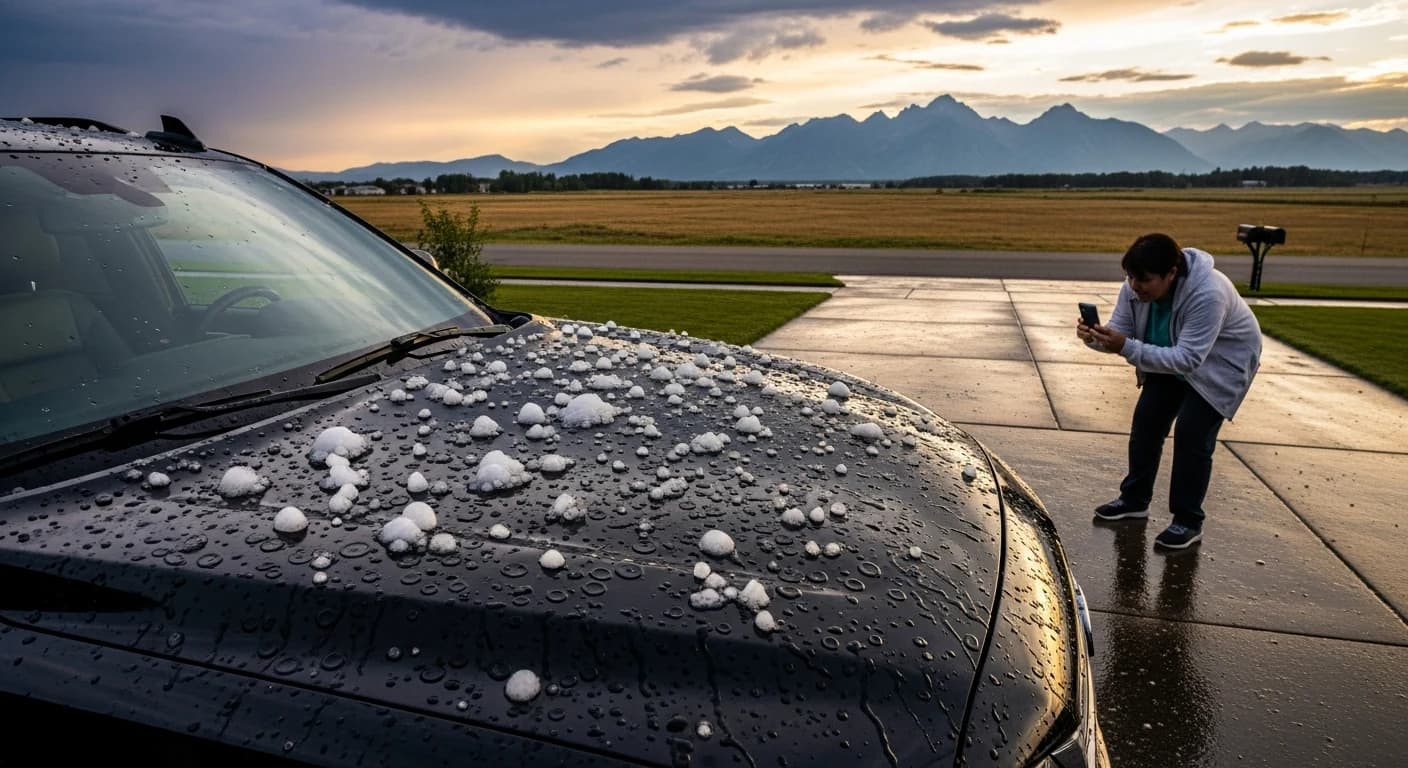
A hail cell hit at day 10 with the car parked outside. What do I do?
Do not panic and do not touch it. Hail damage on filmed panels is usually less severe than on unfilmed paint. Bring the car in for the 30-day check early — we will inspect for edge lift, film puncture, or under-film paint damage, and file a claim with the film manufacturer if there is a warranty issue. Read our companion post on the post-hail 48-hour playbook for the full response.
Bottom Line
Every "when can I" PPF question in Calgary reduces to two variables: what is the cure temperature, and what is the specific activity you want to do. At a normal heated-bay 20–22°C: 48 hours for surface water, 7 days for touchless, 14 days for hand wash and ceramic layer, 30 days for full chemical cure. In an unheated Calgary garage below 5°C: add 50% to every window. Below 0°C sustained: the clock pauses. Chinook cycles in the first 30 days are the single biggest risk to long-term adhesion — the fix is a heated garage overnight for week one and strategic booking around the Environment Canada 7-day forecast. Every callback we get on edge lift traces to a chinook cure cycle we could have prevented with a five-minute pickup-day conversation. This is that conversation.
Booking a PPF install for this fall? Talk to our Calgary paint protection film studio about the September–October cure-optimal window — every install includes the free 30-day post-install edge check, and every Halo Package client gets the two-visit ceramic protocol timed to the 14-day off-gas window. If you are cross-shopping the Calgary ceramic coating stack or our PPF studio against a shop that will not explain the cure calendar to you before you sign — that gap is the whole difference in whether the film looks new at year 5.
Related Reading
PPF Troubleshooting: Bubbles, Yellowing & Peeling
Which film problems are normal curing, which are install defects, and what to do about a lifting edge.
Calgary Halo Package — PPF + Ceramic Together
The two-visit protocol that times the ceramic layer to the 14-day PPF off-gas window instead of rushing both in a single visit.
When to Get PPF in Calgary
Before or after winter — how the seasons change install and cure timing.
Frequently Asked Questions
How long after PPF is installed in Calgary before I can wash my car?
The 48-hour rule for surface water is the same everywhere, but the full wash schedule in Calgary depends on ambient temperature during cure. At a normal 20–22°C in a heated bay: 48 hours before any surface water (light rain is fine, no pressure), 7 days before a touchless automatic wash, 14 days before hand wash with pH-neutral soap and a microfibre mitt, 30 days before pressure washing anywhere within 12 inches of a film edge. In cold-weather cure (5°C ambient or below in an unheated garage): add 50% to every window — so touchless at day 10, hand wash at day 21, pressure wash at day 45. Never use a stiff brush automatic (spinning bristles) on PPF at any age. In Calgary, the trap is the drive home from the shop: if you pick up on a Friday and it starts raining, that is fine — rain water is soft and the film sheds it. Do not stop at a touchless bay to "get the road spray off" for the first seven days.
When can I apply ceramic coating over freshly installed PPF?
The correct window is 14 to 30 days after PPF install for a proper ceramic coating layer over the film. The reason is chemical, not schedule-driven: PPF adhesive continues off-gassing plasticizers for the first 14 days as it fully cures against the clearcoat. Coat over the film before that off-gas completes and the ceramic bonds to a moving surface — you will see hazing, streaking, or micro-lifting inside 90 days. The best practice we run in our shop is to install PPF on day 0, allow a 14-day cure at heated-bay ambient (20–22°C), then return for a full IPA panel wipe and ceramic layer on day 14–21. Some shops (including ours) will bundle PPF and ceramic in one visit at a small discount by using a specific PPF-approved topcoat (like Gtechniq Halo or CarPro CQuartz Skin, both formulated for TPU film) applied at the 24-hour mark — this works but requires the topcoat to be chosen and applied by an installer who has done it before. Do not let a general detailer coat over your fresh PPF at 3 days with a generic ceramic — that is where the "my coating isn't beading anymore after 4 months" complaint on Reddit r/autodetailing comes from.
Can I drive my car home on the highway immediately after PPF install in Calgary?
Yes — highway driving is fine as soon as you leave the shop. PPF adhesive cures from the clearcoat outward, not from the outside in; airflow, tire spray, and gravel impact do not affect the cure. What you should avoid for the first 48 hours: any high-pressure water hitting a film edge (touchless car wash sprayers, coin-op wands, pressure washers), because the water column can force under a still-tacky edge and lift the film. Deerfoot, Stoney Trail, Highway 22, the Trans-Canada to Banff — all fine on day 1. Even a moderate August rainstorm on the drive home from Cochrane is fine. The one specific highway situation to avoid: hauling a boat, trailer, or camper on day 1 through 3, because the tie-down tension and airflow-lift on the front end can pull at rocker-panel or hood-edge film that has not fully bonded yet. If you tow, wait 72 hours. For a normal daily-driver return commute, no restriction from cure — book the shop for a Friday if you want to skip weekend tow risk.
Does cold weather in Calgary make PPF cure slower?
Yes — significantly. PPF adhesive cure rate is temperature-dependent: at 21°C ambient it reaches functional cure in 7 days and full cure in 14; at 5°C ambient (a typical unheated Calgary garage in October or April), functional cure stretches to 10–14 days and full cure to 21–28 days; below 0°C the adhesive effectively pauses cure and the bond does not strengthen until temperature returns above 5°C. This is why Calgary shops with heated indoor bays run 20–22°C year-round — the film cures at the same rate in January as in July if it stays in a warm garage. Your car does not need to sit in the shop the whole time, but it should sit in a heated garage overnight during the first 7 days. If you park outside during a −20°C snap in the first week after install, add 5–7 days to the cure schedule and skip car washes until day 14–21. This is also why we do not recommend booking a February install if the car will sit outside for weeks — book September or April instead when overnight ambient is above 5°C consistently.
How do chinook freeze-thaw cycles affect PPF cure and long-term adhesion?
Chinooks — the fast temperature swings (typically 15–25°C in under 24 hours, occasionally more) that hit Calgary on 30-plus days each winter — are the single biggest threat to newly installed PPF. During the first 30 days of cure, a chinook cycle works the aluminum-and-steel panel underneath the film through a full thermal expansion (a 30°C swing moves an aluminum hood roughly 0.7 mm per metre and a steel fender roughly 0.35 mm per metre), and that movement stresses adhesive that is still crosslinking. Every additional chinook cycle in the first month reduces the final bond strength by a measurable percentage. This is why our shop books PPF installs strategically around the Environment Canada 7-day forecast: if a chinook is predicted for the week after install, we recommend either a heated overnight garage for those 7 days or postponing install by a week. Long-term (after full cure at day 30), chinook cycles are not a cure threat — they become an edge-lift risk, which is why our 30-day post-install check specifically inspects panel edges before winter; our <Link href="/post/ppf-troubleshooting-bubbles-yellowing-peeling-calgary" className="text-primary-600 dark:text-primary-400 underline hover:no-underline">PPF troubleshooting guide</Link> covers what to do if an edge lifts in your first Alberta winter.
Can I go through a touchless car wash 7 days after PPF install?
At 7 days, yes — with two caveats. First, a touchless automatic wash uses low-pressure spray plus high-pH soap; the soap is more of a risk than the water. Ask the location whether they use "spot-free" or "acid-based" rinse — some Calgary touchless bays use a wheel cleaner with ammonium bifluoride (chemically HF-adjacent) that can etch PPF at panel edges if it drifts off the wheel. Stick to touchless-only bays you have confirmed use neutral soap — Bubbles Calgary, and specific Co-op Gas Bar and ESSO Macleod Trail locations we have vetted for our clients. Second, never a soft-touch cloth wash and never a spinning brush at any age of PPF — the cloth strips deposit contamination on the film surface that shortens self-heal cycles, and the brushes leave micro-abrasions the film cannot heal because the abrasion goes through the topcoat. For the first 30 days, hand rinse only with a spray nozzle at moderate pressure — no touchless, no automatic, no coin-op wand. Full detail on <Link href="/post/touchless-car-wash-ppf-safe" className="text-primary-600 dark:text-primary-400 underline hover:no-underline">whether touchless car washes are actually safe for PPF</Link> in our companion guide.
What about hail-season storage during PPF cure? Can I park under a cover?
A soft car cover during the first 7 days is fine only if the cover is designed for freshly filmed vehicles — most consumer covers have a knit polyester inner surface that will emboss into still-tacky PPF and leave a permanent texture. Options that work: a heated indoor garage (best), a covered parkade like a Calgary Tower or Bankers Hall stall (very good), a hard-shell single-car pop-up canopy with 6-inch clearance from every panel (acceptable). Options that do not work in the first 7 days: fabric car covers that touch the film, tarps of any kind, or hail netting resting on the vehicle. If you are storing during hail season (May–August), book the PPF install at least 30 days before you plan to leave the vehicle exposed — or better, install in September or October outside of hail cell risk. Every year we see 2–3 cars where an owner installed PPF in June, threw a fabric cover over it for a July storm, and returned to find a permanent weave pattern embossed in the hood film. For anyone in the Calgary hail belt, our <Link href="/post/post-hail-recovery-calgary-2026" className="text-primary-600 dark:text-primary-400 underline hover:no-underline">Calgary hail damage guide</Link> covers hail-season prep and what to do after a storm.
When is it safe to tow, load a roof rack, or install a ski box after fresh PPF?
Trailer towing: 72 hours minimum — the tie-down tension and highway airflow lift on the hood, mirrors, and rocker panels can shear a bond that has not yet reached functional cure at day 2. Roof rack installation: 7 days — the mounting foot clamps compress against roof film that needs full cure before the clamp pressure will not deform the film. Ski box or cargo box mount: 14 days if the box mounts to a roof rack already installed pre-PPF, or 21 days if the roof film underneath the mounting foot was freshly installed. Bike rack on the rear hitch: 48 hours if it does not contact any painted or filmed surface. Bike rack on the trunk lid: 21 days — the strap contact point on trunk-lid film is the single most common "why is my film scratched" callback we get from customers. Cargo hauling in a truck bed (no film contact): immediate. Kids and dogs jumping on the tailgate (film contact): 14 days minimum, ideally 30. For any accessory install during the cure window, ask the accessory installer to use a felt or leather barrier between the mount and the film.