PPF vs. Vinyl Wrap: Which Actually Protects Your Paint Better?
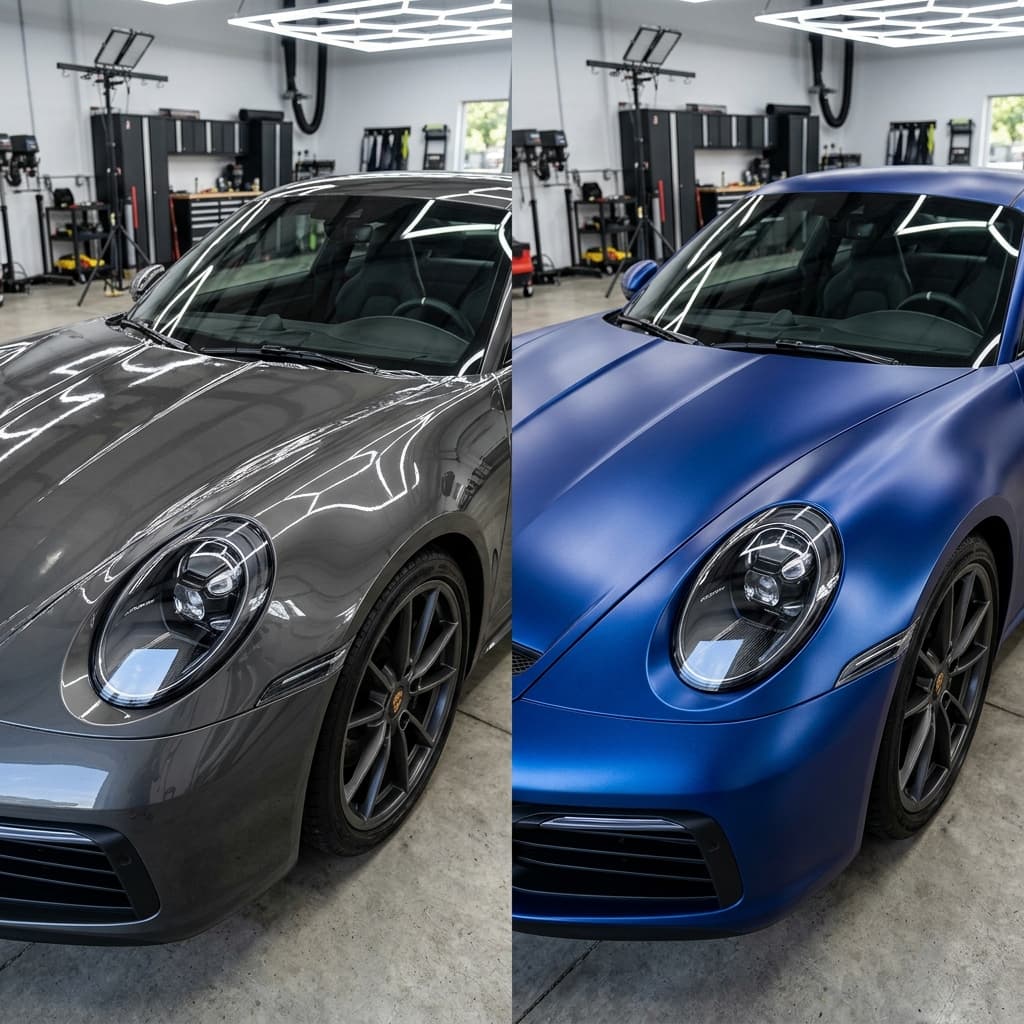
Vinyl wrap changes colour. PPF protects paint. They are not the same product and not interchangeable. If you want rock chip protection on Calgary highways — you need PPF. If you want a colour change and don't care about chip protection — vinyl wrap may be appropriate. If you want both: coloured PPF (satin-finish PPF) does both.
The most common misconception in paint protection: "I got a vinyl wrap so my paint is protected." Here is the honest comparison — thickness, purpose, performance, and which product is right for your specific situation.
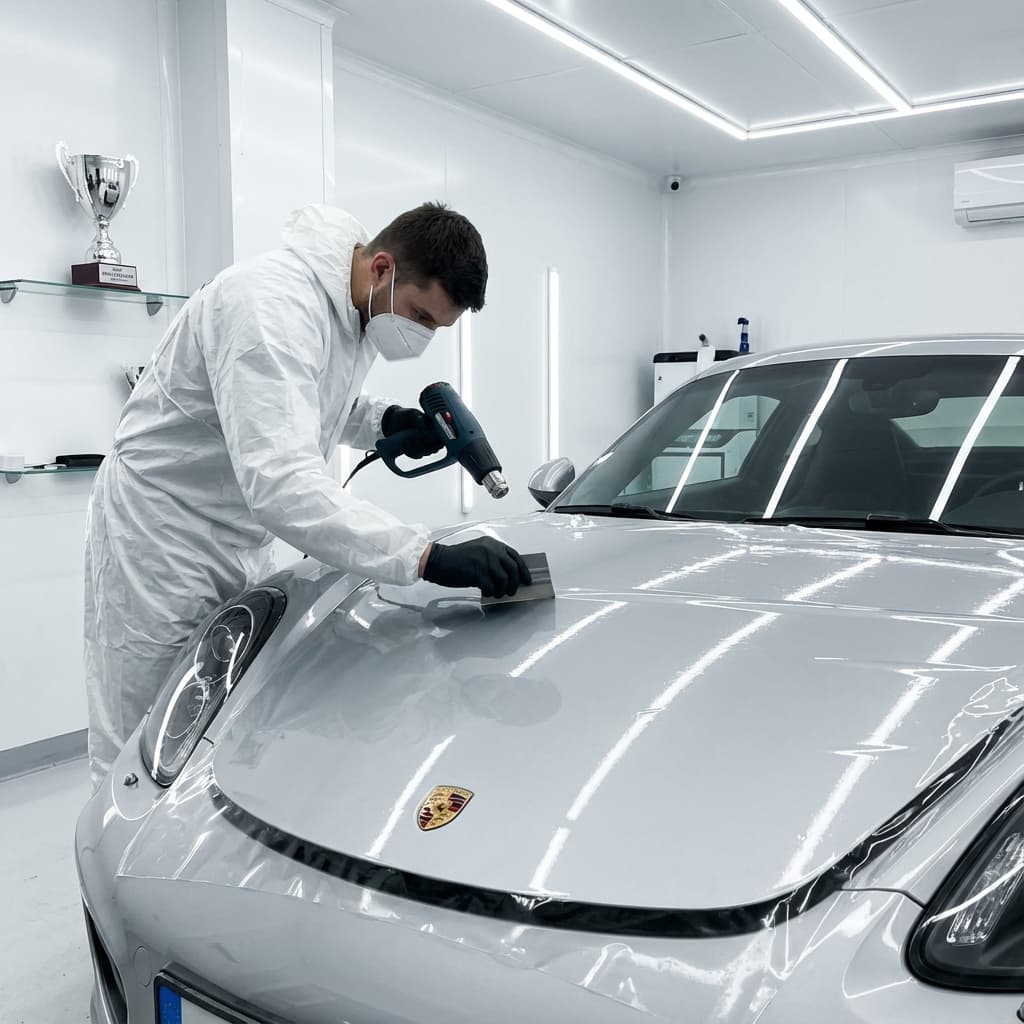
In our Calgary bay we install both PPF and vinyl, so we can be honest about where each one belongs: PPF when protection from gravel and salt is the goal, vinyl when it is purely about a colour change on a budget. We have peeled enough sun-and-salt-tired vinyl off Calgary cars to caution that it is not built to take the same abuse as a true protection film. Here is the unbiased breakdown.
Reviewed by Calgary PPF Pros — Calgary PPF Pros, protecting Calgary vehicles since 2021.
Feature-by-Feature Comparison
| Feature | PPF | Vinyl Wrap |
|---|---|---|
| Thickness | 150–200 microns | 70–120 microns |
| Primary Purpose | Impact & chip protection | Colour change / aesthetics |
| Rock Chip Protection | Yes | No |
| Self-Healing Properties | Yes | No |
| Changes Vehicle Colour | No | Yes |
| UV Protection | Yes | Partial — varies by film |
| Hydrophobic Surface | Yes | Partial — varies by film |
| Lifespan (Calgary) | 7–10 years | 3–7 years |
| Warranty (typical) | Lifetime (Premium PPF/3M) | 3–5 years |
| Essentials / Partial Cost | From $599 | From $1,499 |
| Full Coverage Cost | From $3,999 | From $3,000–6,000+ |
The Thickness Difference Matters
The most important technical difference is thickness. PPF is 150–200 microns thick. Vinyl wrap is 70–120 microns thick. This is not a minor variation — PPF is 60–100% thicker than vinyl.
Film Thickness Comparison (microns)
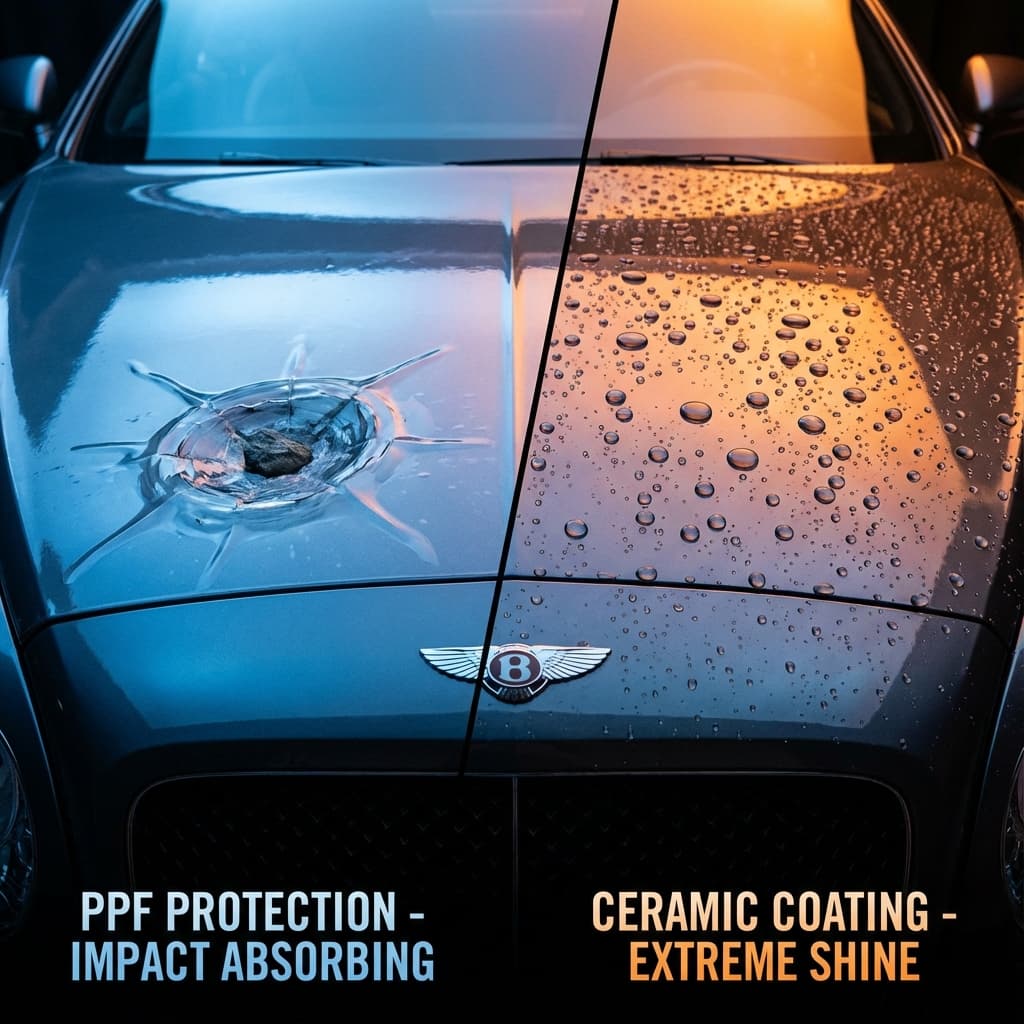
Thickness directly determines impact absorption. PPF is engineered as a polyurethane elastomer — it flexes on impact and returns to shape. Vinyl wrap is a PVC product engineered for conformability around curves, not impact absorption. When a rock hits PPF, the film absorbs and distributes the energy. When a rock hits vinyl wrap, it punches through. It's also worth understanding what PPF cannot do — even the best film won't protect against every type of damage, and knowing those limits helps you plan coverage correctly.
Why This Matters on Calgary Roads Specifically
Deerfoot Trail and Stoney Trail are Calgary's primary highways — both are notorious for road chip exposure due to Alberta's aggregate surface treatments, heavy truck traffic, and winter road maintenance practices. An average daily commuter on these routes encounters more rock chip exposure than drivers in most other Canadian cities.
The Vinyl Wrap Protection Misconception in Calgary
We see vinyl-wrapped vehicles regularly that come in after a Calgary winter with chipping under the wrap. The vinyl layer chipped, the paint beneath it chipped, and now both the vinyl and the paint need to be addressed. Vinyl wrap does not absorb highway chip impacts — it just means the chip goes through two layers instead of one.
Coloured PPF — The Hybrid Solution
If you want both a colour or finish change AND genuine rock chip protection, coloured PPF products exist specifically for this. Before you commit, it helps to see exactly how the two price out — our breakdown of coloured PPF vs vinyl wrap cost in Calgary puts the numbers side by side:
Satin-Finish PPF
Most PopularConverts any gloss finish to satin/matte while providing full PPF protection. Self-healing, lifetime warranty. One of the most popular choices for luxury vehicles wanting a stealth look.
3M Satin Series
Premium OptionSimilar to our satin-finish PPF — satin finish, PPF-grade thickness and protection. Excellent conformability for complex curves and compound shapes.
Colour PPF
New OptionsColoured PPF in a range of pigmented options — protection AND colour change simultaneously. Ask about currently available colours.
Satin Black PPF
Best SellerExtremely popular finish combining full rock chip protection with the aggressive matte-black aesthetic. Significantly more durable than vinyl matte black wrap.
Coloured PPF costs more than standard vinyl wrap — but it lasts 7–10 years vs. vinyl's 3–7 years, and provides genuine chip protection throughout. Over a full ownership period, the total cost of ownership is often comparable or better. If you are still pricing out a straight vinyl colour change, our Calgary car wrap cost guide covers every wrap tier in detail. And if you are outfitting work trucks or a branded fleet rather than a personal vehicle, our guide to fleet and commercial vehicle wraps in Calgary breaks down printed-livery and per-unit costs separately. For drivers who want to layer ceramic on top of their coloured PPF for even easier maintenance, the Halo Package does exactly that — ceramic over PPF, applied in sequence by the same team.
When to Choose Each Product
The Pros
- Choose PPF when rock chip protection is your priority
- Choose PPF for daily Calgary highway driving (Deerfoot, Stoney Trail)
- Choose PPF for new or nearly-new vehicles you plan to keep 5+ years
- Choose PPF for any vehicle where resale value preservation matters
- Choose coloured PPF when you want both colour change AND protection
The Cons
- Choose vinyl wrap when colour change is the only goal (no chip protection needed)
- Choose vinyl wrap for show cars that see minimal road exposure
- Choose vinyl wrap for a temporary colour change (easier to remove)
- Choose vinyl wrap on a strictly limited budget — but understand the protection trade-off
Once you've decided PPF is the right choice, the next step is picking the right coverage level. The full front vs. partial PPF guide walks through every package — Essentials, Standard, Signature, and Full Body — matched to specific driving patterns and vehicle types.
Related Reading
What PPF and Ceramic Coating Cannot Do
The honest limits of both technologies — critical reading before any protection investment.
The Halo Package: PPF + Ceramic Together
How layering ceramic over PPF creates the most complete protection available.
Full Front vs. Partial PPF: Which Package?
Use-case guide to every PPF coverage level for Calgary drivers.
Want Both Protection and Colour? Ask About Stealth PPF
We install our flagship self-healing PPF, satin-finish PPF, and 3M Pro Series. PPF from $599. Coloured PPF options available — ask about current finishes. Lifetime warranty on all film products.
Explore PPF OptionsFrequently Asked Questions
Experience The Best.
Don't let another commute compromise your vehicle. Get a quote from Calgary's Consumer Choice Award winner today.
Explore Our Services