Pollen Season and Car Paint in Calgary: What Works and What Doesn't
Dry pollen is harmless. Wet pollen left for 24–48 hours in sun can etch unprotected paint. Rinse your car every 48 hours during April–June. Never wipe dry pollen with a dry cloth. Ceramic coating makes pollen bead off rather than bond to the surface. PPF is largely pollen-resistant but not pollen-proof — same rinsing schedule applies.
Calgary's spring pollen season runs roughly April through June, with birch, poplar, and spruce producing the heaviest loads. If your car turns yellow overnight during this period, here's what you actually need to worry about — and what you don't. By mid-June, pollen quietly hands off to a more aggressive culprit: cottonwood resin and tree sap, which we cover in detail in our Calgary tree sap and cottonwood damage guide. The best time to set your paint up against both pollen and the preceding winter damage is the autumn before: the fall car protection checklist outlines every service worth booking before the salt season begins.
The Chemistry of Pollen Damage
Pollen grains are biological packages — they contain fatty acids, proteins, and polysaccharides. In their dry state, these compounds are contained within the grain's hard outer shell (the exine). When the grain gets wet, the shell softens and releases these compounds onto whatever surface the grain is resting on.
On car paint, the released fatty acids are mildly acidic — pH around 4.5–5.5 for birch and poplar pollen, which are the most aggressive in Calgary. On bare clear coat, this acidity is enough to cause shallow etching when combined with heat from direct sunlight. (The relay continues into mid-summer with the opposite chemistry — summer wildfire smoke and alkaline ash at pH 9–11 attacks the same clear coat from the basic end of the scale.) The etching process is essentially the same etch chemistry as bird droppings on Calgary paint, but slower — and faster again with highway-speed mosquito splatter on Calgary clear coat, where the impact-plus-acid combination starts etching within hours. This risk is meaningfully higher in Calgary because UV radiation at altitude accelerates the etch chemistry — paint that has already been UV-degraded is more porous and vulnerable to acid attack. Our post on how Calgary's altitude intensifies UV damage explains exactly why spring pollen etches Calgary paint faster than in lower-altitude cities.
The Risk Window
Etching risk is highest when pollen gets wet during overnight dew, then the car sits in direct Calgary sun the next morning before you drive. The combination of wet acidic contact overnight + solar heat accelerates the etch chemistry. A car that gets rained on, then sits for two days in sun during pollen peak, is at the highest risk. A car that gets washed within 24 hours of a heavy pollen event is fine.
What Actually Works
Rinse Every 48 Hours During Peak Season
A garden hose rinse — you don't need soap, you don't need a full wash — breaks the wet pollen contact cycle. The rinse physically removes the pollen before it can etch. During April through June, a quick hose rinse every other day is the single most effective thing you can do. Takes 3 minutes. Saves your clear coat.
pH-Neutral Car Wash Soap
During full wash sessions, pH-neutral soap is important during pollen season. Alkaline soaps can interact with the fatty acids from pollen and actually spread them across the paint surface rather than removing them cleanly. Look for car washes specifically labelled pH-neutral (7.0) — or use a dedicated car wash shampoo rather than household dish soap.
Ceramic Coating: The Best Passive Defence
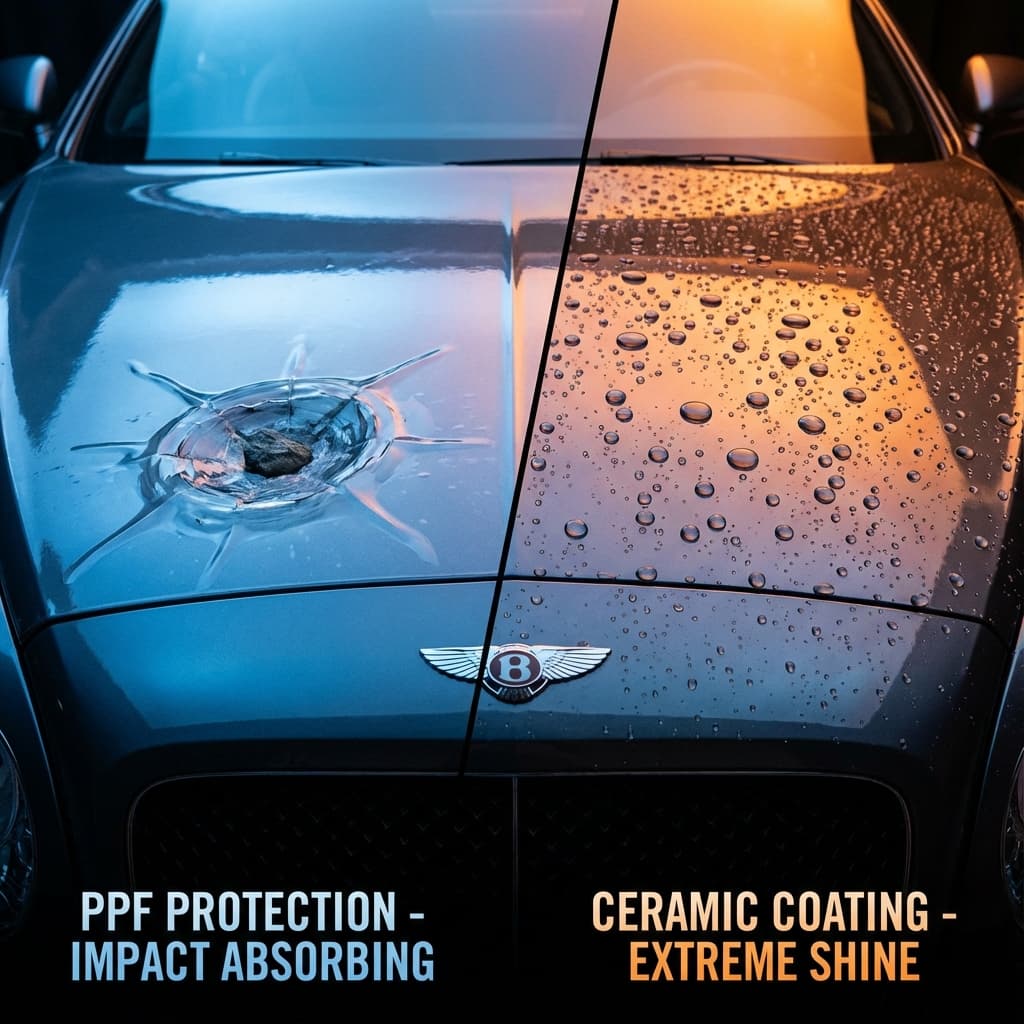
Ceramic coating's hydrophobic surface means pollen lands on a water-repelling surface rather than a flat one. When morning dew forms, the water beads rather than spreading — and when it rolls off, it takes much of the pollen with it. Even heavy pollen events leave less bonded pollen on a ceramic-coated car. During rinse, pollen sheets off easily. The risk of etching on a ceramic-coated car during a 48-hour period is very low. Before booking a coating for pollen protection, it's worth reading about what ceramic coating actually does and doesn't do so your expectations match reality.
Damp Microfiber Pass After Washing
After washing, if any pollen is still visible when the car starts to dry, one pass with a damp (not dry) microfiber towel removes it safely. The damp microfiber lifts the grain off the surface rather than dragging it across. Don't let the car air-dry with visible pollen still on the surface.
What Doesn't Work (and Makes It Worse)
Wiping Dry Pollen with a Dry Cloth
This is the most common and most damaging mistake. Pollen grains have a rough, spiky surface texture under magnification. Dragging a dry cloth across dry pollen is essentially sanding your paint with fine grit. The resulting swirl marks are very visible on dark colors and require machine polishing to remove. Always wet the surface first before any contact.
Ignoring It for a Week During Heavy Events
Etching risk increases with every wet-dry cycle the pollen sits through. One dew event followed by sun: low risk. Seven dew events and seven sunny days of baking: high risk of permanent etching. During peak poplar and birch pollen (typically mid-April to late May in Calgary), weekly washing is the bare minimum — 48-hour rinses are better.
Automatic Brush Car Washes
Brush car washes during pollen season actively grind pollen into the paint surface. The rotating brushes push pollen grains across the clear coat with friction — creating exactly the swirl marks a dry cloth wipe would cause, but at scale across the entire car. Touchless car washes (high-pressure water only) are acceptable in a pinch; brush washes are not.
PPF and Pollen: What to Expect
PPF-protected paint is largely pollen-resistant but not pollen-proof. The film surface is hydrophobic (like ceramic coating) and pollen tends to bead off during rain or rinsing. The key difference: pollen etching on a PPF-covered panel affects only the film surface, not the paint underneath. If etching does occur on PPF (which is very rare but possible on severely neglected film), the film can be removed and replaced rather than repainting.
| Surface Type | Pollen Adhesion | Etching Risk | Rinsing Needed? |
|---|---|---|---|
| Bare clear coat (unprotected) | High — spreads and bonds easily | High after 48+ hours wet+sun | Every 48 hours in peak season |
| Wax or sealant | Moderate — partial repellency | Moderate — wax degrades quickly | Every 48 hours — wax may remove with washing |
| Ceramic coating | Low — hydrophobic surface | Low — pollen beads and sheets off | Weekly wash sufficient; rinse if car stays parked |
| PPF (quality film) | Low — hydrophobic top coat | Very low — film protects paint completely | Normal washing schedule sufficient |
Related Reading
Ceramic Coating Expectations
What ceramic coating realistically does and doesn't do — including its limits against pollen and etching.
Fall Car Protection Checklist
Set your paint up for both winter and spring pollen season with the right autumn protection sequence.
Calgary Altitude & UV Paint Damage
Why Calgary's elevation makes UV and acid etching worse — and what blocks both.
Make Pollen Season a Non-Event
Ceramic coating from $799 — makes pollen sheet off your paint rather than bond to it. PPF provides the same hydrophobic protection plus physical chip resistance. Free consultation, honest recommendation.
Frequently Asked Questions
Experience The Best.
Don't let another commute compromise your vehicle. Get a quote from Calgary's Consumer Choice Award winner today.
Explore Our Services